
Museumsinsel in Berlin: an island of museums on the Spree
Published on 09/18/2026 at 17:54 | Editorial responsibility: Rafael Müller, Editor-in-Chief AD HOC NEWS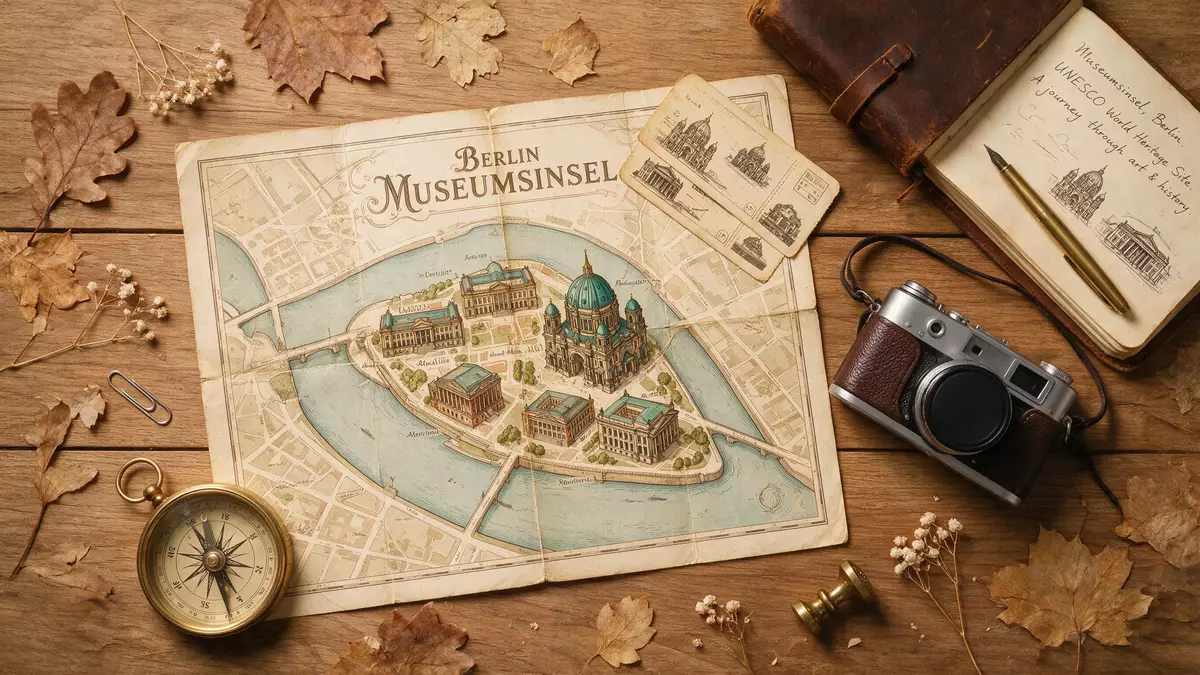
Museumsinsel, the museum island in central Berlin, is a compact ensemble of museum buildings on the northern part of the Spreeinsel, where the river curves through the historic city centre. It brings together a group of nineteenth- and early twentieth-century museums whose development between 1830 and 1930 created a continuous landscape of art and archaeology on a single island.
An island turned into a continuous museum landscape
Museumsinsel occupies the northern end of the Spreeinsel in Berlin-Mitte, framed by branches of the River Spree and by bridges that link the island to the surrounding streets. The area was progressively filled with museum buildings from 1830 to 1930, creating an almost uninterrupted sequence of façades and courtyards devoted to collections rather than to mixed urban functions.built between 1824 and 1930 The ensemble is recognised internationally through its inscription as a cultural World Heritage Site, a status granted by UNESCO in 1999 to underline its importance in the history of museum architecture.UNESCO World Heritage Site since 1999
The island’s museums are all part of the Berlin State Museums and stand in a clear sequence from south to north: the Altes Museum, Neues Museum, Alte Nationalgalerie, Bode-Museum and Pergamonmuseum.Altes Museum, Neues Museum, Alte Nationalgalerie, Bode-Museum and Pergamonmuseum Together they occupy an area of several hectares on the island, with paths, stairways and open spaces between them that link the buildings into a shared precinct for art and archaeology.8.6 hectares on the northern end of the island The presence of the Berlin Cathedral and the Lustgarten immediately beside the museums adds church architecture and an open park to the built landscape, making the island a place where different monumental forms stand side by side.
Five museums, five architectural languages
Each major building on Museumsinsel belongs to a particular moment in German architecture and gives the island its layered character. The Altes Museum on the Lustgarten side dates from 1830 and represents the earliest part of the ensemble, with a strong colonnaded front that faces the open square.Altes Museum (1830) The Neues Museum followed in the mid-nineteenth century and, in its rebuilt form, combines historical structure with carefully restored interiors and displays that bring antiquities into a sequence of galleries.
Further along the island, the Alte Nationalgalerie rises as a temple-like structure above a stepped base, completed in the 1870s and devoted to nineteenth-century art. At the northern tip, the Bode-Museum presents a more sculptural massing towards the river, dating from the early twentieth century and forming a distinct terminus to the island’s row of buildings. The Pergamonmuseum, completed around 1930, stands close to the river and is known for housing reconstructed monumental structures from excavations in the eastern Mediterranean and the Near East.reconstructions such as the Pergamon Altar and Ishtar Gate The addition of the James-Simon-Galerie as a modern entrance and exhibition building has introduced a contemporary architectural voice that connects the historic museums with a shared foyer and services.James-Simon-Galerie
Collections spanning millennia on a single island
Within these buildings, Museumsinsel presents collections that cover several thousand years of cultural history. The range extends from the early civilisations of Egypt and the Ancient Near East through Greek and Roman antiquity, mediaeval art from Christian and Islamic traditions, and European painting and sculpture up to the nineteenth century.6000 years of cultural history Highlights include large architectural reconstructions in the Pergamonmuseum, where visitors encounter the Pergamon Altar with its frieze, the Market Gate of Miletus and the Ishtar Gate with the processional way from Babylon assembled within vast halls.
Elsewhere on the island, galleries focus on sculpture, numismatics, painting and applied arts from Europe and beyond, giving different perspectives on similar periods. The Alte Nationalgalerie concentrates on nineteenth-century art, while the Altes Museum and Neues Museum present antiquities and archaeological collections in rooms designed around them. Taken together, these museums illustrate changing approaches to exhibition design across a century, with each building conceived to relate its architecture to the works on display.evolution of approaches to museum design The World Heritage inscription draws attention to this relationship between building and collection as much as to the artefacts themselves.
Visiting Museumsinsel: what travellers from Western Europe should know
- Museumsinsel stands in the Mitte district on the northern part of the Spreeinsel in central Berlin and is reached across bridges from streets such as Unter den Linden.
- The precinct includes broad external steps, internal staircases and long corridors in several museums, so a visit involves walking between buildings and using flights of stairs.
- Underground line U5 serves the dedicated Museumsinsel station, and S-Bahn services stop at Hackescher Markt within walking distance of the island.
- Parking spaces are scarce directly beside the museums, and approaches on foot often start from nearby streets and squares around the river.
- The official language is German and the currency is the euro.
Searching for Museumsinsel on social platforms
These links open searches for Museumsinsel on each platform.
Frequently asked questions about Museumsinsel
Where is Museumsinsel located?
Museumsinsel is on the northern part of the Spreeinsel in the Mitte district of Berlin, surrounded by branches of the River Spree and linked by several bridges.
What can visitors expect on a visit to Museumsinsel?
Visitors encounter a continuous precinct of museum buildings housing collections from ancient Egypt and the Ancient Near East through classical antiquity to European art of the nineteenth century.
What makes Museumsinsel distinctive among museum sites?
Museumsinsel is distinctive because five major museums built between 1830 and 1930 stand together on a single island and are recognised collectively as a UNESCO World Heritage Site.


