
Myeongdong, where Seoul’s shopping streets meet Gothic brick
Published on 09/23/2026 at 20:44 | Editorial responsibility: Rafael Müller, Editor-in-Chief AD HOC NEWS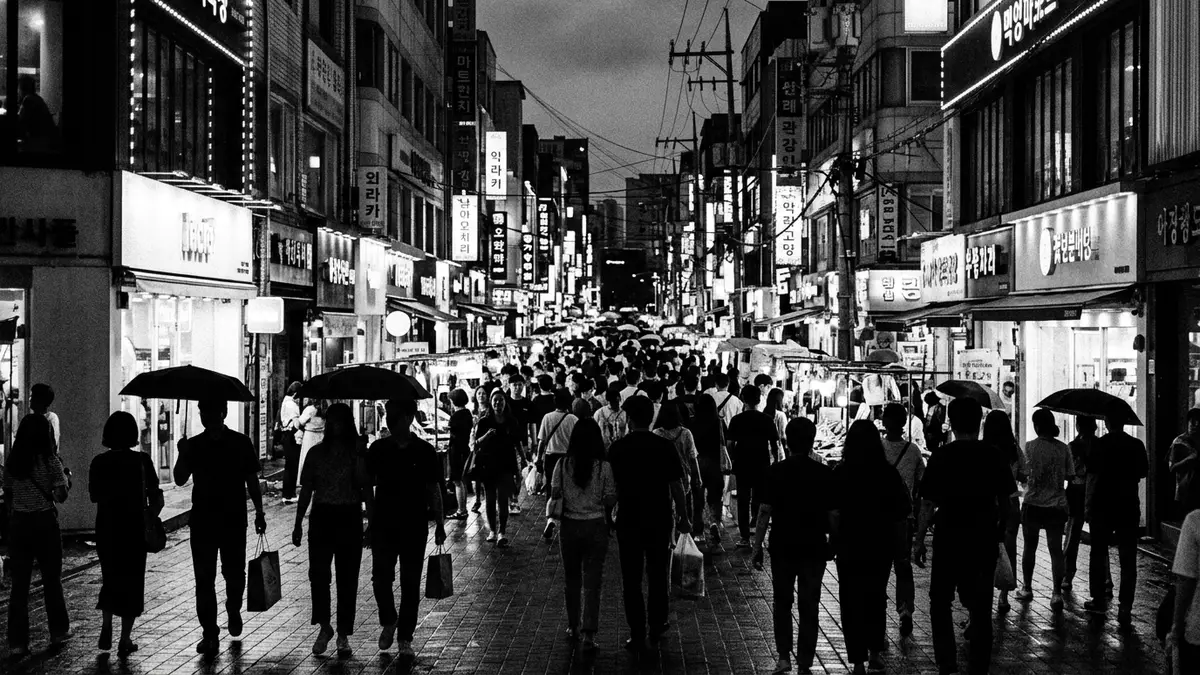
Myeongdong is a compact Seoul district where dense shopping streets meet the red-brick Gothic lines of Myeongdong Cathedral. The neighbourhood combines cosmetics, fashion, food stalls, department stores and cultural landmarks within Jung-gu.
Myeongdong’s streets form a commercial district
Myeongdong occupies central Seoul near Myeongdong Station and the major roads of Jung-gu. Its retail streets contain Korean cosmetics shops, fashion outlets, department stores, restaurants and temporary food stalls. The district functions as a shopping area, a food destination and a route between several central Seoul neighbourhoods.
The streets are arranged around Myeongdong-gil and adjoining lanes. Some routes carry vehicles, while other sections operate as pedestrian shopping streets. Underground retail areas extend the commercial landscape beneath the pavement, with shops selling clothing, souvenirs and pop-culture goods. Myeongdong’s shopping streets are connected to Subway Line 4 at Myeongdong Station.
From Joseon-era district to Seoul landmark
Myeongdong was a residential area during the Joseon Period before commercial activity reshaped the neighbourhood. Department stores, boutiques, cafés, restaurants and cultural venues later formed the urban character visible along its lanes.
Myeongdong Theater is associated with the district’s performing-arts history, while UNESCO Hall and the Korean National Commission for UNESCO mark the cultural side of the area. Da-dong and Mugyo-dong contain established restaurants and food streets among office buildings. These places give the district a second identity beyond retail.
Myeongdong Cathedral’s red brick and Gothic form
Myeongdong Cathedral was constructed in 1898 during the late Joseon Period. Its red-brick walls, pointed arches and tall central tower give the commercial district a historic architectural landmark. The building is recognised as the first brick church in Korea built in the Gothic style. Myeongdong Cathedral’s 1898 date places it within the final years of the Joseon dynasty.
The cathedral stands at the end of UNESCO-gil, above the surrounding retail lanes. Stained-glass windows and interior pillars continue the Gothic vocabulary inside. A crypt, café, gallery and bookshop occupy the cathedral complex. The red brick creates a clear visual contrast with the shop signs, glass façades and illuminated displays of Myeongdong.
Visiting Myeongdong: what travellers from Western Europe should know
- Myeongdong lies in Jung-gu, central Seoul. Subway Line 4 serves Myeongdong Station, with exits leading towards the shopping streets.
- The district is built around compact streets and adjoining lanes. The approach to Myeongdong Cathedral rises from the main shopping area.
- Namsan rises south of the district, while Namdaemun Market lies nearby to the south-west and Eulji-ro extends northwards.
- The official language is Korean and the currency is the South Korean won.
Searching for Myeongdong on social platforms
These links open searches for Myeongdong on each platform.
Frequently asked questions about Myeongdong
Where is Myeongdong?
Myeongdong is a central district of Seoul in Jung-gu. Myeongdong Station on Subway Line 4 serves the main shopping area.
What can visitors expect in Myeongdong?
The district contains cosmetics shops, fashion retailers, restaurants, department stores, street-food stalls, cultural venues and compact pedestrian lanes.
What makes Myeongdong distinctive?
Myeongdong combines a dense commercial district with Myeongdong Cathedral, a red-brick Gothic church constructed in 1898 during the late Joseon Period.


