
Mysore Palace and the granite face of Mysuru
Published on 09/17/2026 at 18:14 | Editorial responsibility: Rafael Müller, Editor-in-Chief AD HOC NEWS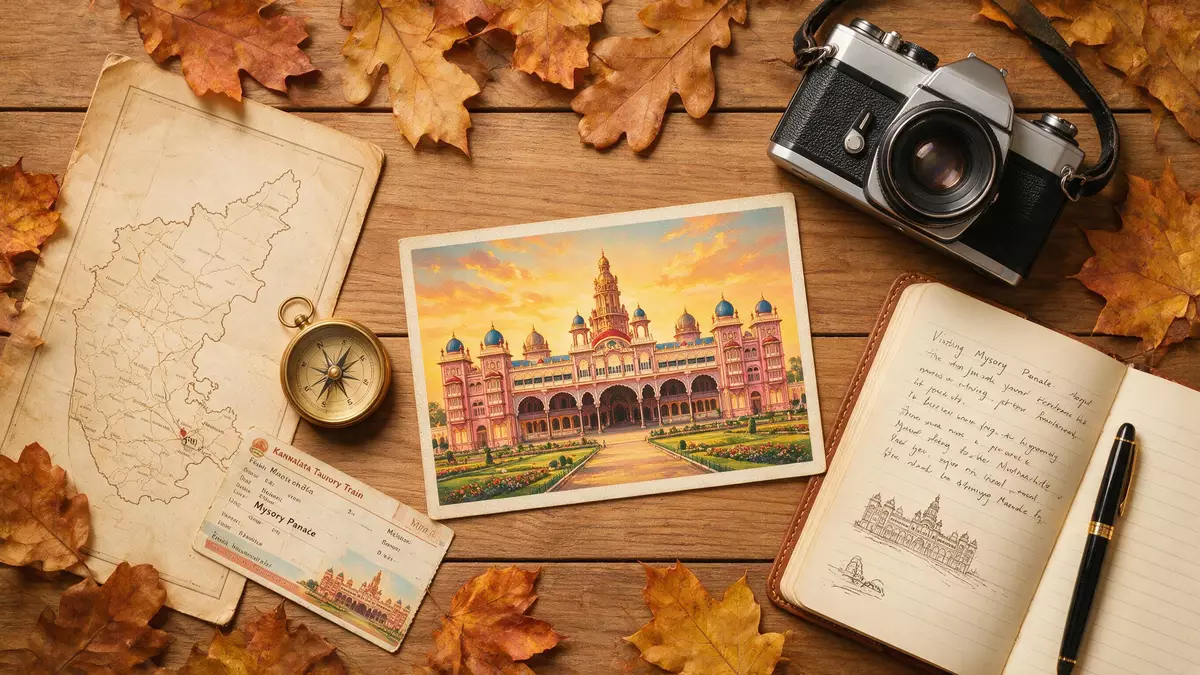
Mysore Palace stands in Mysuru as a grey granite and Indo-Saracenic composition, also known as Amba Vilas Palace. Completed in 1912 and associated with Henry Irwin, it gives the city centre a formal royal presence.
Mysore Palace in granite and Indo-Saracenic form
The palace rises in a layered mass of granite, arches and domed pavilions. Its profile includes a five-storey tower and a gilded dome, details that make the exterior easy to read from a distance.
The building combines Indo-Saracenic architecture with elements drawn from Islamic, Rajput, Hoysala and Gothic traditions. That mixture is part of its identity, and it places the palace within the broader language of princely architecture in British India.grey granite, Indo-Saracenic
Henry Irwin and the early twentieth century palace
The present palace is linked to the Wadiyar dynasty and to the reign of Krishnaraja Wadiyar IV. Henry Irwin is the architect most closely connected with the standing building, which was completed in 1912.completed in 1912
That date matters because it places the palace in the opening years of the twentieth century, when imperial-era public and royal buildings often borrowed from several historic styles at once. Mysore Palace fits that pattern without losing its own courtly identity, and the result is a building that feels ceremonial rather than domestic.Henry Irwin
Amba Vilas and the palace complex around it
Amba Vilas Palace is the other name commonly used for Mysore Palace, and the complex includes a palace interior, gardens and temple structures. The name links the building to its courtly setting in Mysuru and to the long history of the Wadiyar household.Amba Vilas Palace
The palace is part of a larger city fabric that includes the centre of Mysuru and the broader royal landscape of Karnataka. In English-language accounts, Mysore Palace is the form most readers meet first, while Mysuru remains the city name used locally and in official Indian usage.city of Mysuru
Visiting Mysore Palace: what travellers from Western Europe should know
- The palace stands in central Mysuru, in Karnataka, and can be approached by road through the city centre. Mysuru Junction and Mysuru Bus Stand are the most useful transport references nearby.
- The palace complex is substantial rather than compact. Expect long exterior elevations, formal gateways and a building that is read as much by façade as by plan.
- The site includes temples within the wider complex. That combination of royal residence and sacred structures gives the place a layered character within a single enclosure.
- The palace sits within the urban plain of Mysuru rather than on a steep hill. The terrain is level, with the Chamundi Hills forming a separate backdrop to the city.
Searching for Mysore Palace on social platforms
These links open searches for Mysore Palace on each platform.
Frequently asked questions about Mysore Palace
Where is Mysore Palace?
Mysore Palace is in Mysuru, Karnataka, in southern India. It sits in the city centre and is closely associated with the Wadiyar royal tradition.
What should a visit focus on?
The exterior, the towers, the domes and the formal scale of the complex are the clearest features to take in. The palace is a royal residence in form and a museum in use.
What makes Mysore Palace distinctive?
Its grey granite body and Indo-Saracenic vocabulary set it apart within the city. The combination of Henry Irwin’s design and the 1912 completion date gives it a clear historical frame.


