

Mystras, a Byzantine hill city above Sparta
Published on 08/18/2026 at 13:37 | Editorial responsibility: Rafael Müller, Editor-in-Chief AD HOC NEWS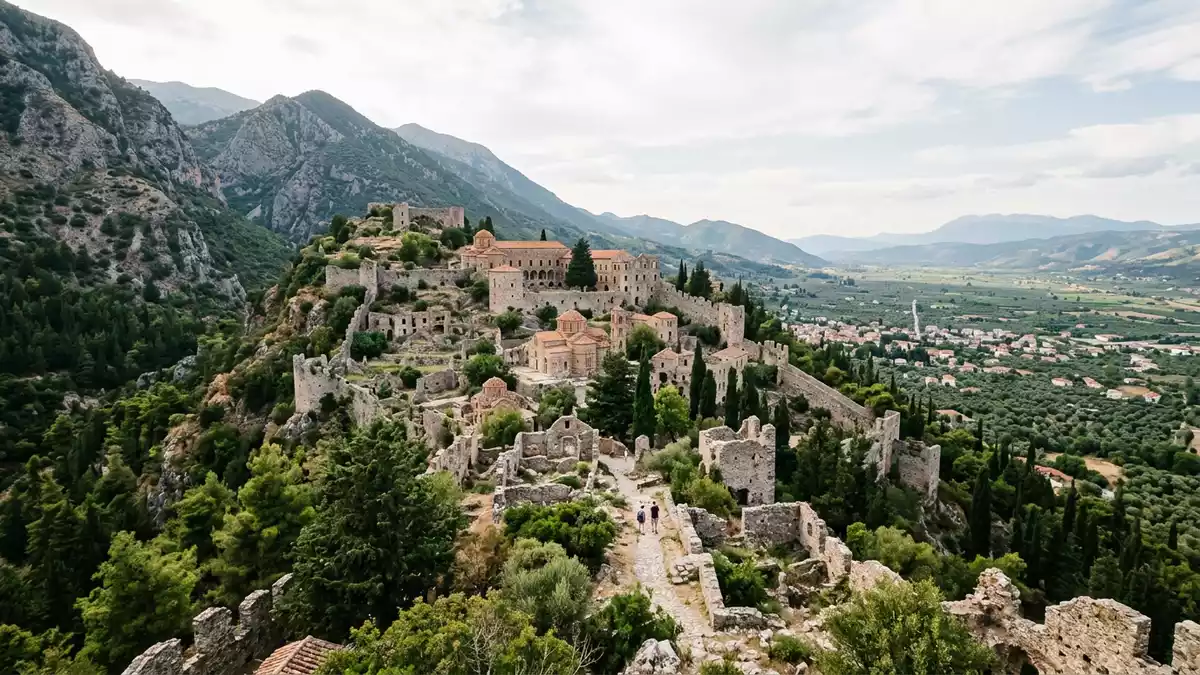
High on a hillside above Sparta, the ruined city of Mystras forms a stepped landscape of stone houses, churches and fortifications that once controlled the Peloponnese. Founded in 1249 by the Frankish prince William II of Villehardouin and later reshaped under the Byzantine Despotate of the Morea, it is now an archaeological site recognised as a UNESCO World Heritage Site.
A Byzantine capital on a Taygetos spur
Mystras clings to a rocky spur on the lower slopes of Mount Taygetos in Laconia, a short distance west of modern Sparta in southern Greece. The position gives wide views over the valley of the Eurotas river and sets the city against the mountain backdrop of the Taygetos range.Mystras is located in Laconia
The site began as a fortress created in 1249 by William II of Villehardouin, prince of Achaea, who established a stronghold overlooking ancient Sparta.The castle of Mystras was built in 1249 In the later fourteenth century, Mystras became the capital of the Byzantine Despotate of the Morea, turning from a frontier castle into a political and cultural centre for the Peloponnese.It served as the provincial capital of the Despotate of the Morea
Terraced streets, palaces and painted churches
Walking through Mystras means moving between distinct layers of the former city, arranged on the slope in zones described as an upper town, a lower town and an outer town.There are three distinctive zones in the fortress Narrow stone paths and stairways link ruined houses, defensive walls and small squares that once formed neighbourhoods along the hillside.
Near the top of the hill stand the remains of the fortress and the later palace complex, which once housed the despots who ruled the Morea.Mystras became the headquarters of the Despotate of the Morea Below them lie monasteries and parish churches decorated with Byzantine wall paintings, alongside the shells of mansions and more modest dwellings built in stone and brick.
From abandonment to World Heritage status
After Mystras surrendered to the Ottoman Turks in 1460, the hill city continued to be inhabited under changing rulers before being abandoned in 1832, when the population shifted to the plain near the site of ancient Sparta.The city was abandoned in 1832 The houses, churches and fortifications then stood as ruins, gradually turning into an archaeological landscape.
In 1989 the Archaeological Site of Mystras was inscribed on the UNESCO World Heritage List for its exceptionally well-preserved late Byzantine town planning, secular and church architecture and wall paintings.The Archaeological Site of Mystras was inscribed on the UNESCO World Heritage List in 1989 The designation covers the castle, palaces, monasteries, churches and the remains of the urban fabric spread across the hillside, as well as an on-site museum interpreting the history of the city.Mystras is a UNESCO World Heritage Site with partially restored ruins
Visiting Mystras: what travellers from Western Europe should know
- Mystras stands on a hill north-west of modern Sparta in the Peloponnese, reached by road from the city and signposted as the Archaeological Site of Mystras.
- The terrain is steep, with stone paths and staircases linking the lower areas of the site to the castle at the top of the hill.
- Many routes within the archaeological site involve uneven surfaces and significant changes in height between the different urban zones.
- The official language is Greek and the currency is the euro.
- Entry requirements depend on your nationality; UK travellers can check the FCDO travel advice at gov.uk/foreign-travel-advice, Irish travellers the Department of Foreign Affairs at ireland.ie.
Searching for Mystras on social platforms
These links open searches for Mystras on each platform.Frequently asked questions about Mystras
Where is Mystras and what kind of place is it?
Mystras is a ruined Byzantine hill city above Sparta in southern Greece, built on a rocky spur of Mount Taygetos and preserved as an archaeological site.
What can visitors expect when exploring Mystras?
Visitors move through terraced streets, ruined houses, palaces and monasteries, linked by stone paths and staircases across the hillside.
What makes Mystras distinctive among historical sites in Greece?
Mystras combines a complete late Byzantine urban layout with palaces and painted churches on a single steep hill, recognised through its UNESCO World Heritage status.


