

Namaqualand’s spring flowers and red desert roads
Published on 08/11/2026 at 15:03 | Editorial responsibility: Rafael Müller, Editor-in-Chief AD HOC NEWS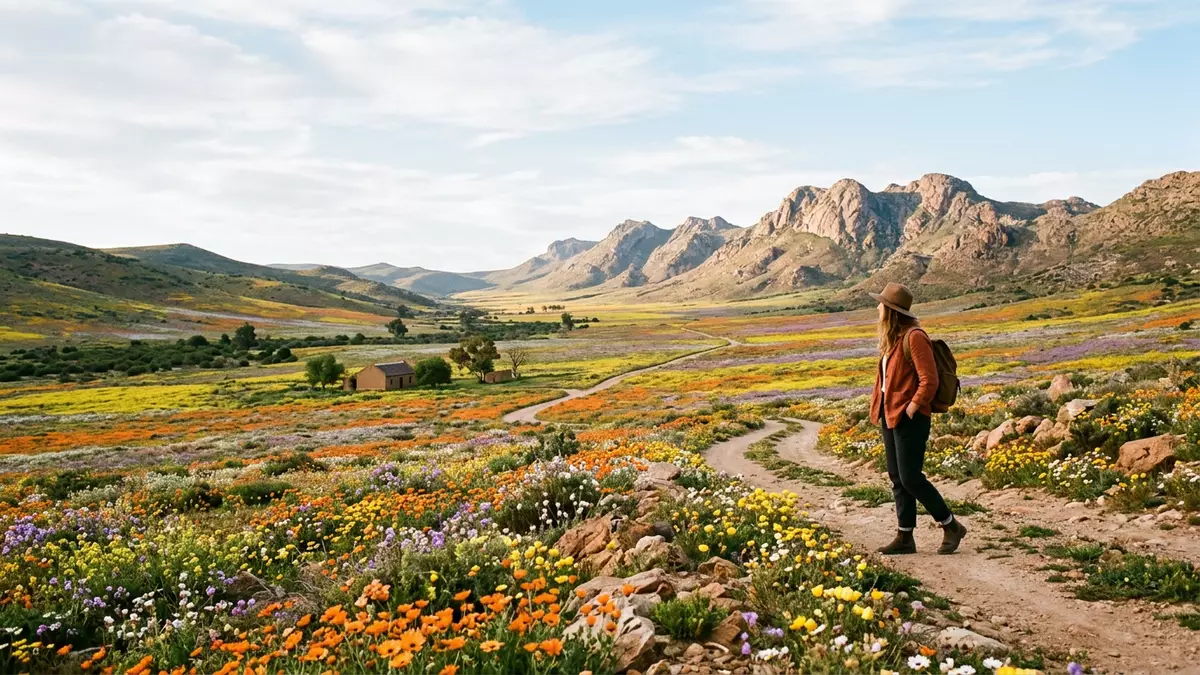
Namaqualand stretches across the arid north-west of South Africa, with Springbok as its best-known town. In spring, the region’s open landscapes are marked by low succulents, sandy plains and sudden sweeps of colour.
Springbok and the Namaqualand landscape
Springbok sits among granite hills and wide, dry country that feels built for distance rather than enclosure. The town is the main gateway to a region that runs towards the Orange River and the Atlantic edge of the Northern Cape.
That setting matters because Namaqualand is not a single park or valley. It is a broad natural region, with farms, road corridors, rocky outcrops and flower-filled patches that change with rain and soil.
Flowers, succulents and the dry season
The region is most closely associated with its wildflower season, when annual daisies and other plants can cover sections of the land. Outside that period, the same ground shows its harder character: stony soil, drought-tolerant shrubs and long horizons.
Namaqualand is also part of a larger succulent-rich belt in southern Africa. The plant life includes species adapted to low rainfall, strong sun and thin soils, making the region a strong example of desert-edge ecology.
Roads, reserves and the wider region
Much of the interest in Namaqualand lies in movement through it. Travellers follow provincial roads between small settlements, farm country and conservation areas, with the scenery changing from bare rock to spring growth and back again.
Springbok anchors that experience with services, accommodation and access to the surrounding district. From there, the region opens towards places such as the Goegap Nature Reserve and the broader Namaqualand flower country.
Visiting Namaqualand: what travellers from Western Europe should know
- Namaqualand is reached from Springbok and other towns in the Northern Cape by road.
- Admission and opening hours are set by the site's operator and change with the season; the official website is the only binding source.
- The most striking flower displays are usually associated with spring, after winter rain.
- Some routes are gravel, and parts of the region involve long stretches of open road.
- English is widely understood in towns, and South African rand is used for everyday payments.
- Entry requirements depend on your nationality. UK travellers should check the FCDO travel advice at gov.uk/foreign-travel-advice; Irish travellers the Department of Foreign Affairs at ireland.ie; EU and EEA citizens their own national foreign ministry.
Searching for Namaqualand on social platforms
These links open searches for Namaqualand on each platform.
Frequently asked questions about Namaqualand
Where is Namaqualand?
Namaqualand lies in north-western South Africa, with Springbok serving as the main town many travellers use as a base. It extends across arid country towards the coast and the Orange River.
What should a visit feel like?
Expect long road sections, dry terrain and, in the flower season, bright patches of colour across the landscape. Away from that season, the region is quieter in tone and more stark in appearance.
What makes Namaqualand distinctive?
Its blend of desert, succulent vegetation and seasonal wildflowers gives the region a strong identity. The contrast between bare ground and sudden bloom is its most recognisable feature.


