Nami-seom’s tree-lined escape on the Bukhan River
Published on 08/12/2026 at 14:05 | Editorial responsibility: Rafael Müller, Editor-in-Chief AD HOC NEWS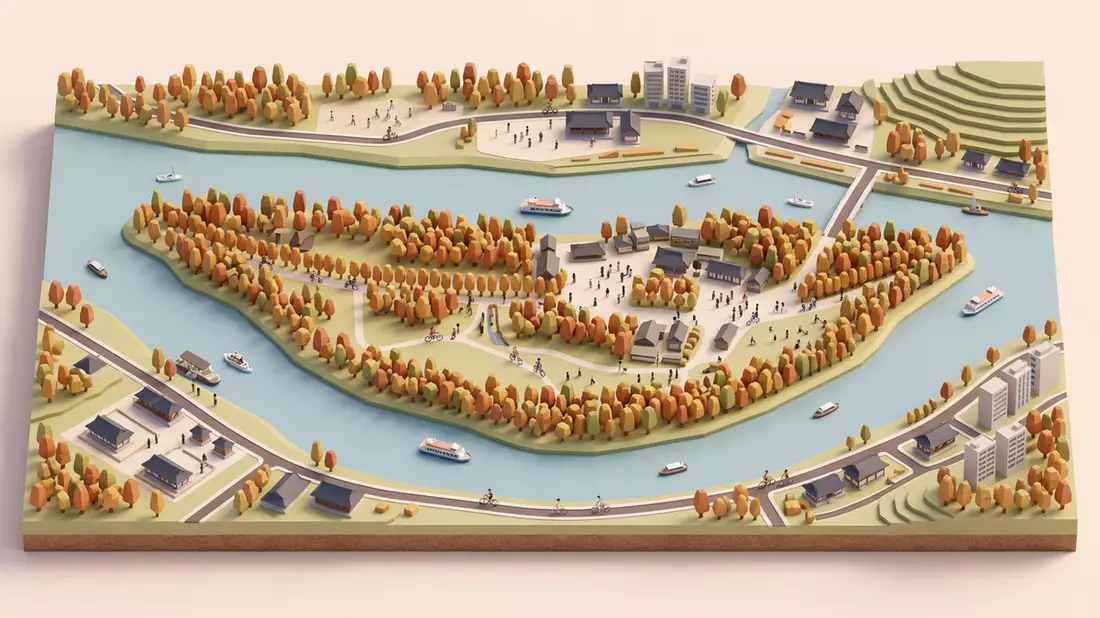
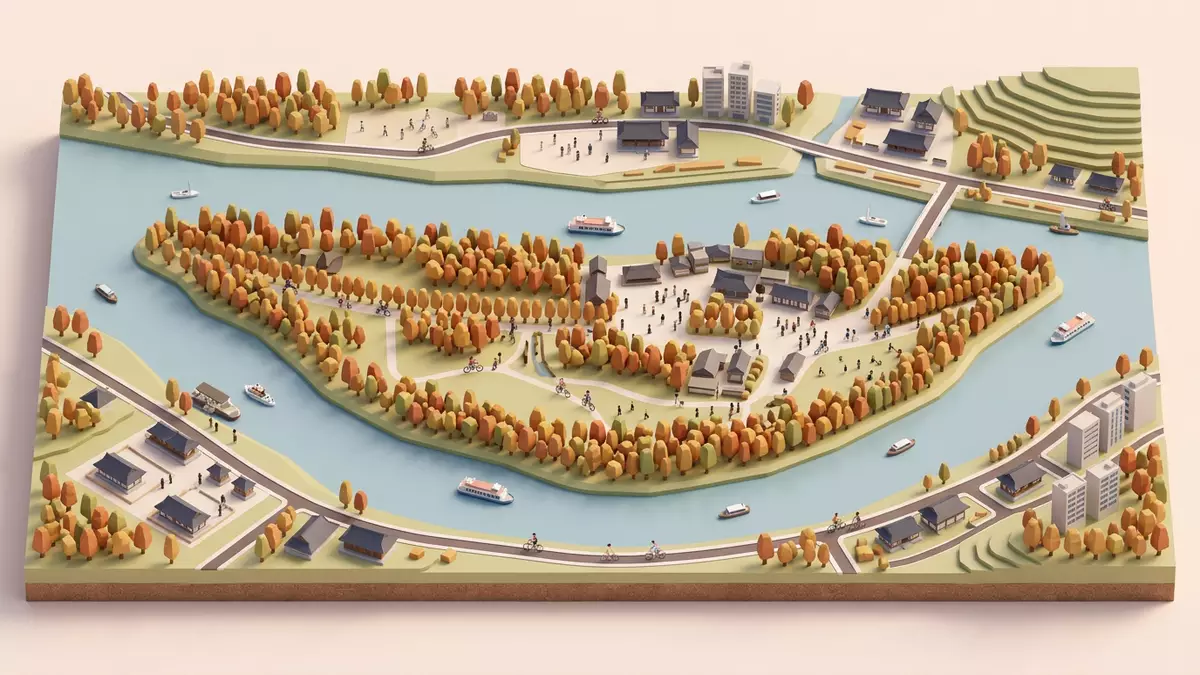
Nami-seom, a small river island near Chuncheon in Gangwon-do, turns a broad curve of the Bukhan River into a carefully composed landscape of trees, paths and open water. Formed as the Bukhan River backed up behind Cheongpyeong Dam in 1944, this half-moon-shaped island has grown into a self-contained world of ordered avenues and riverside clearings in the hills north-east of Seoul.
From Bukhan River sandbank to half-moon island
Nami-seom sits in the Bukhan River, the northern branch of the Han River system that threads through the mountains north of Seoul and Chuncheon.Nami-seom is described as a half-moon-shaped river island whose outline mirrors the sweep of the channel around it. The island took on this permanent form when the water level rose after the completion of Cheongpyeong Dam in 1944, cutting what had been higher ground off from the surrounding valleys and enclosing it with water on all sides.Cheongpyeong Dam on the Bukhangang fixed the island’s present outline
The name recalls General Nami, a military figure of the early Joseon dynasty, who is associated with a burial site on the island.General Nami of the fifteenth-century Joseon period lends the island its name The link to a Joseon-era commander gives a historical layer to a place otherwise defined by twentieth-century engineering and contemporary landscaping. Visiting Nami-seom means walking through a landscape shaped by a mid-twentieth-century dam project while the memory of a fifteenth-century figure lingers in the name engraved on stones and signboards.
Tree-lined avenues and curated landscapes
The most striking feature of Nami-seom on arrival is the way trees dominate its interior. Long, straight avenues of tall trunks run across the island, flanked by carefully maintained paths and low planting. Rows of gingko, pine and other species stand in deliberate patterns, turning simple walks into progressions of repeated forms and colours under the changing light. Between these planted corridors lie lawns, garden areas and small clearings where the river becomes visible again between the trunks.
The planting extends down towards the riverbank, where paths run close to the water and occasional viewing points open out across the Bukhan River towards the forested hills of Gangwon-do.Descriptions of Nami-seom emphasise its extensive tree cover and riverside walks Scattered through the trees stand small structures such as pavilions, sculptures and modest exhibition spaces, each occupying its own pocket of space without breaking the island’s broad pattern of avenues and open lawns. The effect is that of a park laid out with the precision of a garden but on the footprint of a river islet.
A cultural island between Chuncheon and Gapyeong
Administratively, Nami-seom belongs with Chuncheon in Gangwon-do, yet on maps it lies close to the border with Gapyeong County in neighbouring Gyeonggi-do.The island’s address places it in Namsan-myeon, Chuncheon-si, Gangwon-do This edge position between provinces mirrors its role as a day-trip landscape for visitors travelling out from Seoul and the regional cities. A short ferry connects the island with the wharf on the mainland, and boat crossings become part of the experience of passing from ordinary roads and rail lines onto a self-contained cultural space in the river.Access is by ferry from the Namisum dock on the riverbank
Within this setting, Nami-seom combines planted landscapes with cultural facilities. Small museums, performance spaces and craft studios occupy parts of the island, drawing on Korean music, art and handicrafts in a compact area that can be crossed on foot.Facilities such as the Song Museum and handicraft studios underline its role as a cultural park The combination of tree-lined paths, river views and these modest cultural venues sets Nami-seom apart from many other river islands, which remain either undeveloped or given over entirely to infrastructure. Here, the island serves as a deliberate retreat for walking, viewing and exploring Korean cultural themes in miniature.
Visiting Nami-seom: what travellers from Western Europe should know
- Nami-seom lies in the Bukhan River near Chuncheon in Gangwon-do, with access from the riverside wharf near Gapyeong by a short ferry crossing.
- The island is compact enough to explore on foot, but paths can be long and flat, and some areas involve unpaved ground that can feel uneven underfoot.
- Forested hills rise around the Bukhan River valley, and the island’s riverside setting means weather can feel exposed in open sections and sheltered where the tree avenues are dense.
- The official language is Korean and the currency is the South Korean won. Entry requirements depend on your nationality; UK travellers can check the FCDO travel advice at gov.uk/foreign-travel-advice, Irish travellers the Department of Foreign Affairs at ireland.ie.
Searching for Nami-seom on social platforms
These links open searches for Nami-seom on each platform.
Frequently asked questions about Nami-seom
Where is Nami-seom in relation to Chuncheon and Seoul?
Nami-seom lies on the Bukhan River near Chuncheon in Gangwon-do, north-east of Seoul, with the mainland access point near Gapyeong on the intercity rail line.
What should visitors expect when they arrive on the island?
Visitors step into an island laid out with tree-lined avenues, lawns, riverside paths and small cultural venues, all compact enough to explore on foot in a day.
What makes Nami-seom distinctive among South Korean destinations?
Nami-seom combines a mid-twentieth-century artificial river island, a fifteenth-century Joseon namesake and contemporary tree-planted landscapes into a single, carefully curated setting on the Bukhan River.