Nara Koen and the deer, shrines and lawns of Nara
Published on 08/10/2026 at 15:11 | Editorial responsibility: Rafael Müller, Editor-in-Chief AD HOC NEWS
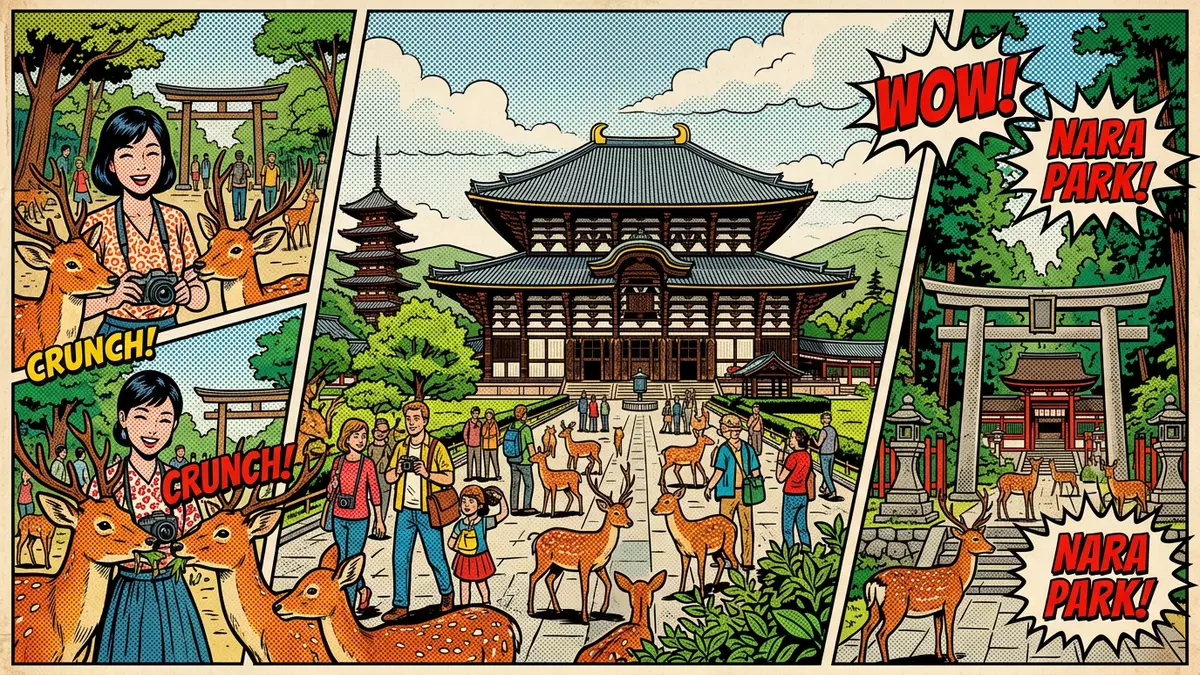
Nara Koen spreads across the city of Nara as a large park landscape where shrine precincts, temple grounds and open lawns sit within walking distance of one another. The deer are the most immediate sight, but the park also holds some of Japan’s best-known early Buddhist monuments and the grounds of Kasuga Taisha.
Deer, lawns and long views through Nara Koen
The park is not a single enclosed garden. It reads more like a green district, with paths, ponds, wooded sections and open grassland stretching between major cultural sites. The free-roaming sika deer move through these spaces and give the whole area a distinctive rhythm.
That mix of open ground and formal religious compounds is central to Nara Koen’s character. A walk through it can move from broad public lawns to cypress-lined shrine approaches and then on to stone paving and older temple architecture.
Kasuga Taisha and the sacred landscape
Kasuga Taisha sits within the park and remains one of its defining landmarks. The shrine was established in 768, during the Nara period, and its grounds are marked by lanterns, wooded approaches and carefully maintained pathways.
The setting around Kasuga Taisha is part of the attraction. The shrine complex opens onto forest and parkland rather than a dense urban street pattern, so the route between its buildings and the wider park feels spacious and gradual.
Temples and early Japanese stonework
Nara Koen also includes major temple sites associated with the city’s role as an early capital. Todaiji is the most famous of these, with its great hall and monumental wooden scale, while nearby precincts preserve stone lanterns, gates and older religious architecture.
These structures make the park more than a place for strolling. They anchor it in the eighth century, when Nara served as the political centre of Japan, and they give the landscape a strong historical frame without turning it into a museum district.
Visiting Nara Koen: what travellers from Western Europe should know
- Nara Koen lies in Nara, in the Kansai region of Japan, and is reached from central Nara on foot or by local rail and bus connections.
- Admission arrangements and opening hours are set by the site's operator and change with the season; the official website is the only binding source.
- Spring and autumn bring the most comfortable walking conditions, while early morning offers the calmest light across the lawns and shrine grounds.
- The park covers a large area with uneven paths, wooded slopes and long stretches on foot, so comfortable shoes are sensible.
- Cash is still useful in Japan, though card payment is common at larger establishments; polite behaviour around the deer and shrine grounds matters.
- Entry requirements depend on your nationality. UK travellers should check the FCDO travel advice at gov.uk/foreign-travel-advice; Irish travellers the Department of Foreign Affairs at ireland.ie; EU and EEA citizens their own national foreign ministry.
Searching for Nara Koen on social platforms
These links open searches for Nara Koen on each platform.
Frequently asked questions about Nara Koen
Where is Nara Koen?
Nara Koen lies in the city of Nara in Japan, within easy reach of the main historic district. Its grounds stretch around some of the city's most important temples and shrines.
What should visitors expect?
Expect a large park with deer, open lawns, wooded sections and major religious sites. The experience combines walking, sightseeing and time among some of Nara’s best-known monuments.
What makes Nara Koen distinctive?
Its unusual quality is the way a public park, sacred precincts and ancient architecture share the same landscape. That combination gives the area a strong sense of continuity with Nara’s past.