
National Museum of Cambodia and its terracotta courtyards
Published on 09/22/2026 at 16:50 | Editorial responsibility: Rafael Müller, Editor-in-Chief AD HOC NEWS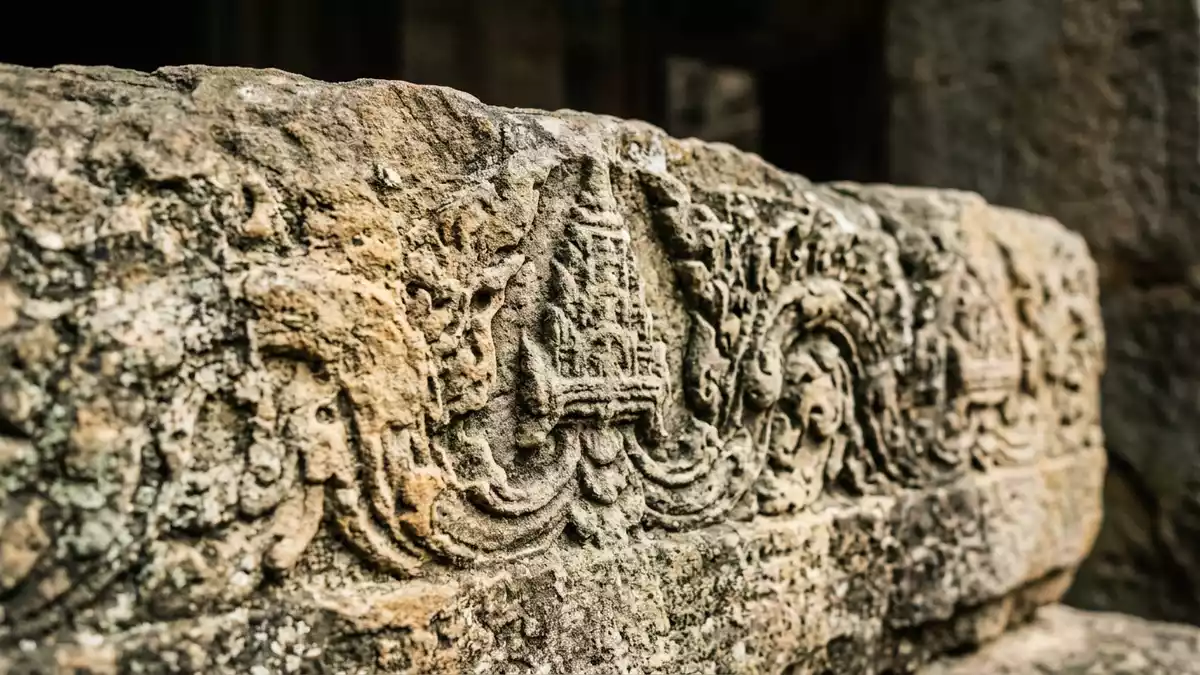
National Museum of Cambodia is arranged around terracotta courtyards in central Phnom Penh. Its red pavilions, tiered roofs and Khmer-inspired details place the building itself beside a collection spanning Cambodia’s long artistic history.
Red pavilions around a Cambodian courtyard
The museum occupies a compound bordered by Street 178, Street 13 and Street 184, immediately north of the Royal Palace. Galleries open towards planted courtyards, while covered walkways and colonnades connect the low buildings around them.
George Groslier designed the principal building. The historian, curator and author shaped a museum in the language of traditional Khmer architecture, with layered roofs, sculpted pediments and slender tower-like roof features. The building’s deep red surfaces and terracotta character remain central to its appearance.
From Musée Albert Sarraut to National Museum of Cambodia
The foundation stone was laid on 15 August 1917. Construction continued through the French colonial period, and the museum was inaugurated on 13 April 1920 in the presence of King Sisowath.
The institution first carried the name Musée Albert Sarraut. Its buildings were completed in stages between 1917 and 1924, including extensions to the eastern façade. Cambodian architect Vann Molyvann supervised renovation of the central east façade in 1968. The museum became part of Cambodia’s national cultural administration after the country’s independence.
Khmer art from prehistory to the post-Angkorian period
The collection covers stone, metal, wood and ceramics. Its objects range across prehistoric, pre-Angkorian, Angkorian and post-Angkorian periods, giving the galleries a broad chronological frame.
Stone sculpture forms a major part of the displays, including Hindu and Buddhist images associated with Cambodia’s temple culture. Ceramics, bronzes, carved wood and ethnographic objects extend the collection beyond sculpture. The museum holds more than 14,000 objects, although only part of the collection is displayed in the galleries.
The Angkorian material connects the museum with the artistic world of the Khmer Empire. Figures of deities, guardians and Buddhas stand alongside architectural fragments and everyday objects. Together, they show how religious art, court culture and skilled craft developed across successive periods.
Visiting National Museum of Cambodia: what travellers from Western Europe should know
- National Museum of Cambodia is in central Phnom Penh, north of the Royal Palace. The visitor entrance is at the corner of Street 13 and Street 178.
- The compound is urban and largely level, but the galleries are linked by covered passages around courtyards. Visitors move between separate pavilions rather than through one continuous block.
- The official language is Khmer and the currency is the Cambodian riel.
- Nearby landmarks include the Royal Palace and Veal Preah Man square. Street 13 forms the eastern edge of the museum compound.
Searching for National Museum of Cambodia on social platforms
These links open searches for National Museum of Cambodia on each platform.
Frequently asked questions about National Museum of Cambodia
Where is National Museum of Cambodia?
It is in central Phnom Penh, immediately north of the Royal Palace. The compound is bordered by Street 178, Street 13 and Street 184.
What can visitors expect inside?
The galleries present Khmer sculpture, ceramics, metalwork, wood carvings and ethnographic objects. The displays cover prehistoric, pre-Angkorian, Angkorian and post-Angkorian periods.
What makes the museum distinctive?
The terracotta-coloured building is arranged around courtyards and carries Khmer temple-inspired architectural details. George Groslier designed the complex, which was inaugurated in 1920.


