
Ngorongoro Crater: a vast volcanic bowl of life
Published on 09/21/2026 at 06:24 | Editorial responsibility: Rafael Müller, Editor-in-Chief AD HOC NEWS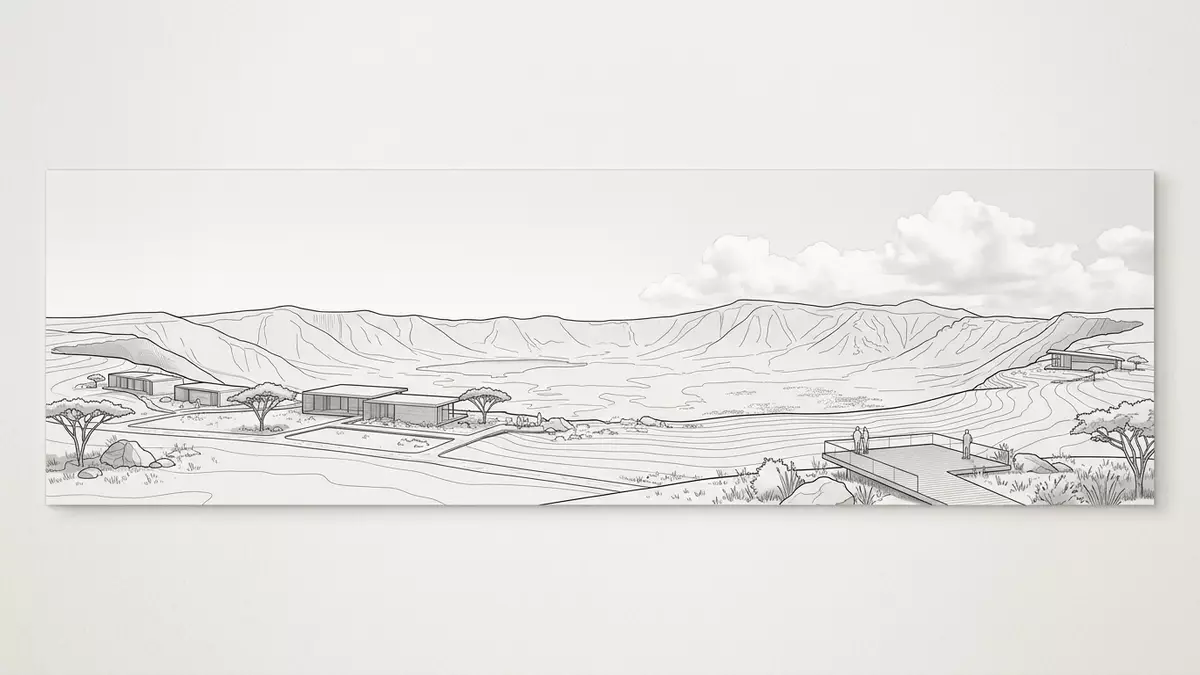
Ngorongoro Crater in northern Tanzania is a vast volcanic basin where steep green walls enclose an almost self-contained landscape of grassland, marsh, woodland and lake. At safari level it looks like an immense natural amphitheatre, but in geological terms it is a caldera formed from the collapse of an ancient volcano in the Eastern Rift Valley in the Pliocene and Pleistocene eras.Ngorongoro crater is the largest unbroken caldera
A caldera bowl shaped by rifting and collapse
The Ngorongoro Conservation Area sits within the Gregory Rift section of the East African Rift System, a zone where the crust has been pulled apart and faulted, allowing magma to rise and build volcanoes over millions of years.Ngorongoro Volcanic Highlands in the Gregory Rift Valley Ngorongoro Crater itself formed when a large shield volcano, built of lava ranging from basalt to rhyolite, lost support in its interior and its summit collapsed down, leaving a broad, steep-sided depression rather than a peak.collapse of the volcanic summit forming the caldera
The resulting crater is roughly 20 to 22 km across, with walls that rise about 610 m above the floor and a rim elevation around 3,000 m (9,843 ft).22 kilometres in diameter with 610 metre walls Within that floor, small volcanic cones and low knolls break the surface in places, and a shallow alkaline lake occupies one of the lowest points. Streams such as the Munge River and springs feed swamps and wetlands inside the basin, while the crater rim carries patches of montane forest above the grasslands below.Munge River, hot springs and alkaline Lake Magadi
Part of a wider volcanic and World Heritage landscape
Ngorongoro Crater is one of several large collapse features in the Ngorongoro Volcanic Highlands, alongside the craters of Olmoti and Empakaai to the north, and it lies among at least nine major volcanoes built in phases of intense volcanism over the past four million years.nine volcanoes of the Ngorongoro highlands The crater and its surrounding highlands form part of a wider system of rifts and lava fields that link westwards to the Eyasi Rift and eastwards towards Lakes Manyara and Natron, where younger cones such as Ol Doinyo Lengai remain active.volcanic evolution along the Eyasi and Gregory rifts
The Ngorongoro Conservation Area, designated in 1979 and later recognised as a mixed natural and cultural World Heritage property, includes the crater along with surrounding plains and the famous Olduvai Gorge, a deep ravine where important early hominin fossils were excavated.World Heritage listing and Olduvai Gorge Within this protected area, wildlife moves between the enclosed basin of Ngorongoro Crater and the broader Serengeti ecosystem, while pastoral communities on the highlands live with views into one of the most clearly defined volcanic collapse structures on Earth.Ngorongoro Conservation Area brochure
A dense wildlife basin on a crater floor
From the rim, the crater floor looks like a patchwork of open grassland, seasonal marsh, permanent swamp and water, each supporting different animal communities. Safari vehicles follow a network of tracks across this basin, passing grazing herds, scattered acacia trees and stretches of short turf at an altitude of about 1,800 m (5,906 ft).grassy crater floor at 1,800 m Lions and other predators rest on low rises, while hippos occupy pools and channels; along the alkaline lake, flocks of birds gather on the water’s edge.lions on the crater floor and lake basin
The crater’s enclosed shape creates an internally drained basin, with most surface water flowing towards the central lake and swamps rather than out to distant rivers.internally drained crater basin That combination of grassland, wetland and woodland within a single, clearly defined volcanic structure makes Ngorongoro Crater a place where geological forms and ecological communities can be observed together: the height of the rim, the layout of the floor and the position of the lake are as much part of the scene as the herds moving across it.geotouristic attraction of the Gregory Rift
Visiting Ngorongoro Crater: what travellers from Western Europe should know
- Ngorongoro Crater lies within the Ngorongoro Conservation Area in northern Tanzania, south-east of Serengeti National Park, and is reached by road from the town of Karatu and from nearby airstrips serving safari traffic.
- The rim sits at around 3,000 m (9,843 ft) above sea level, and visits that descend onto the floor involve travelling down and up steep access roads and spending time at an altitude of about 1,800 m (5,906 ft).
- The terrain on the crater floor is mostly open grassland crossed by vehicle tracks, with some sections near swamps and streams that can be soft under tyre and areas of shallow water around the alkaline lake.
- The official language is Swahili and the currency is the Tanzanian shilling.
- Entry requirements depend on your nationality; UK travellers can check the FCDO travel advice at gov.uk/foreign-travel-advice, Irish travellers the Department of Foreign Affairs at ireland.ie.
Searching for Ngorongoro Crater on social platforms
These links open searches for Ngorongoro Crater on each platform.
Frequently asked questions about Ngorongoro Crater
Where is Ngorongoro Crater?
Ngorongoro Crater lies within the Ngorongoro Conservation Area in northern Tanzania, on the eastern side of the Serengeti ecosystem and along the Eastern (Great) Rift Valley.
What should visitors expect when they reach the crater?
Visitors encounter a steep-sided volcanic basin with a high rim, an open grassland floor at about 1,800 m (5,906 ft), swamps, an alkaline lake and dense wildlife visible from vehicle tracks.
What makes Ngorongoro Crater distinctive among volcanic sites?
Ngorongoro Crater is a large unflooded and unbroken volcanic caldera where the geology of rifting and collapse, the enclosed basin and the concentration of wildlife can all be observed within one defined landscape.


