

Nyhavn and the canal-front houses of Kopenhagen
Published on 08/09/2026 at 15:03 | Editorial responsibility: Rafael Müller, Editor-in-Chief AD HOC NEWS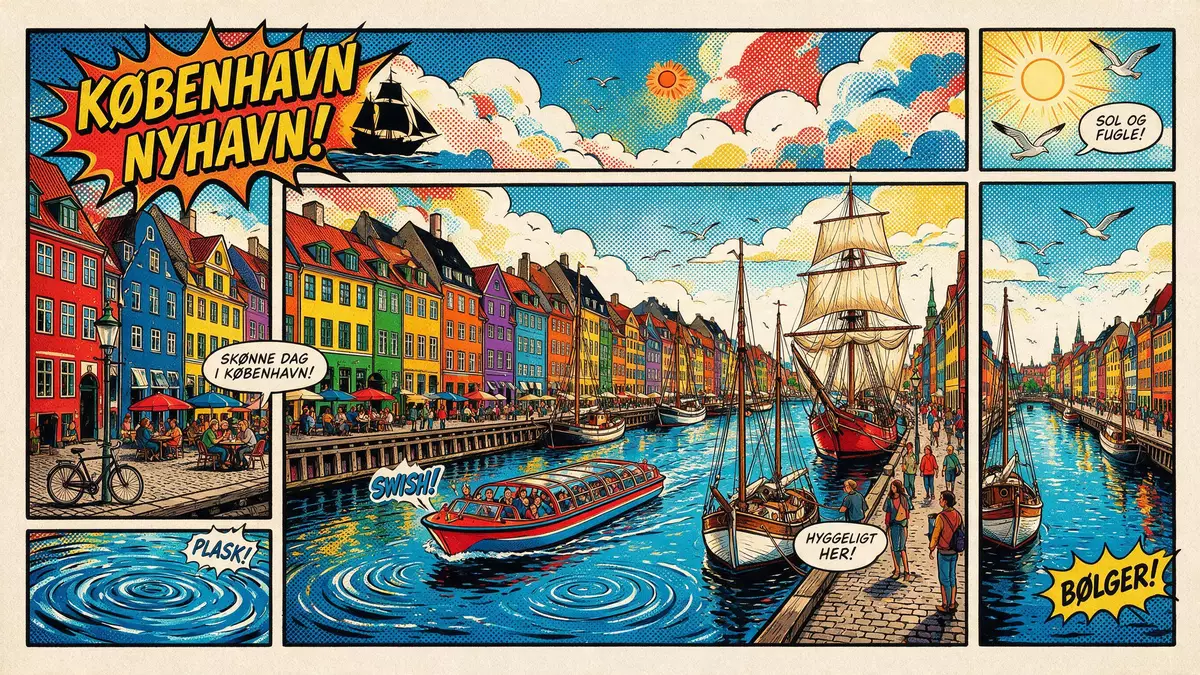
Nyhavn is the canal-side quarter where 17th-century houses line a narrow harbour basin in central Kopenhagen. Its painted façades, moored boats and cobbled edges give the waterfront a strong horizontal rhythm against the water.
Nyhavn’s canal houses and harbour edge
The name means “new harbour”, and the district began in the 1670s under Christian V as a port cut into the city edge. Merchants’ houses rose along both sides, and several survive in the long, narrow plots that face the canal.
The row on the south side is the better known image of Nyhavn, with timber fronts, gabled roofs and colour-washed walls. Nearby, the square at Kongens Nytorv gives the quarter a formal city edge, while the water keeps the scene open and linear.
From merchant port to café quarter
Nyhavn carries traces of its older harbour role in the boats, quay walls and house fronts that face the water. The basin remains a canal, not a decorative pool, and the street behind it keeps the shape of a working city frontage.
The district is linked with Hans Christian Andersen, who lived at several addresses in Nyhavn during the nineteenth century. That literary association sits beside the older merchant fabric rather than replacing it.
Colour, reflection and city scale
The painted houses do much of the visual work here. Their muted reds, yellows and blues read differently in daylight and in reflection, while the masts and rigging add vertical lines above the low roofs.
Nyhavn is compact, but it opens onto the broader geometry of central Kopenhagen. The canal, quay and street create a clear sequence of spaces, from the harbour edge to the city blocks behind it.
Visiting Nyhavn: what travellers from Western Europe should know
- The site is in central Kopenhagen and is reached on foot, by bicycle, by bus and by harbour boat.
- Admission arrangements and opening hours are set by the site's operator and change with the season; the official website is the only binding source.
- Late afternoon and evening bring stronger light on the façades, while winter visits show the harbour edge with fewer boats on the water.
- The quays are level in places but the surface can be uneven, and the waterfront can be busy with pedestrians.
- Restaurants, cafés and small shops around the harbour accept ordinary card payments, and Danish is the main local language.
- Entry requirements depend on your nationality. UK travellers should check the FCDO travel advice at gov.uk/foreign-travel-advice; Irish travellers the Department of Foreign Affairs at ireland.ie; EU and EEA citizens their own national foreign ministry.
Searching for Nyhavn on social platforms
These links open searches for Nyhavn on each platform.
Frequently asked questions about Nyhavn
Where is Nyhavn?
Nyhavn lies in central Kopenhagen beside the harbour basin that opens towards the inner city. Kongens Nytorv is nearby, and the quarter connects the water to the city grid.
What should visitors expect?
A short harbourfront walk with painted houses, boats, cafés and a busy public edge. It is a place for looking across water, pausing by the quay and moving between the canal and nearby streets.
What makes Nyhavn distinctive?
Its strength is the combination of 17th-century harbour form, narrow house fronts and vivid façades along one compact waterway. The literary link to Hans Christian Andersen adds another layer to a place that still reads as a harbour.


