

Nyhavn’s canal-front houses and harbour basin
Published on 09/15/2026 at 14:16 | Editorial responsibility: Rafael Müller, Editor-in-Chief AD HOC NEWS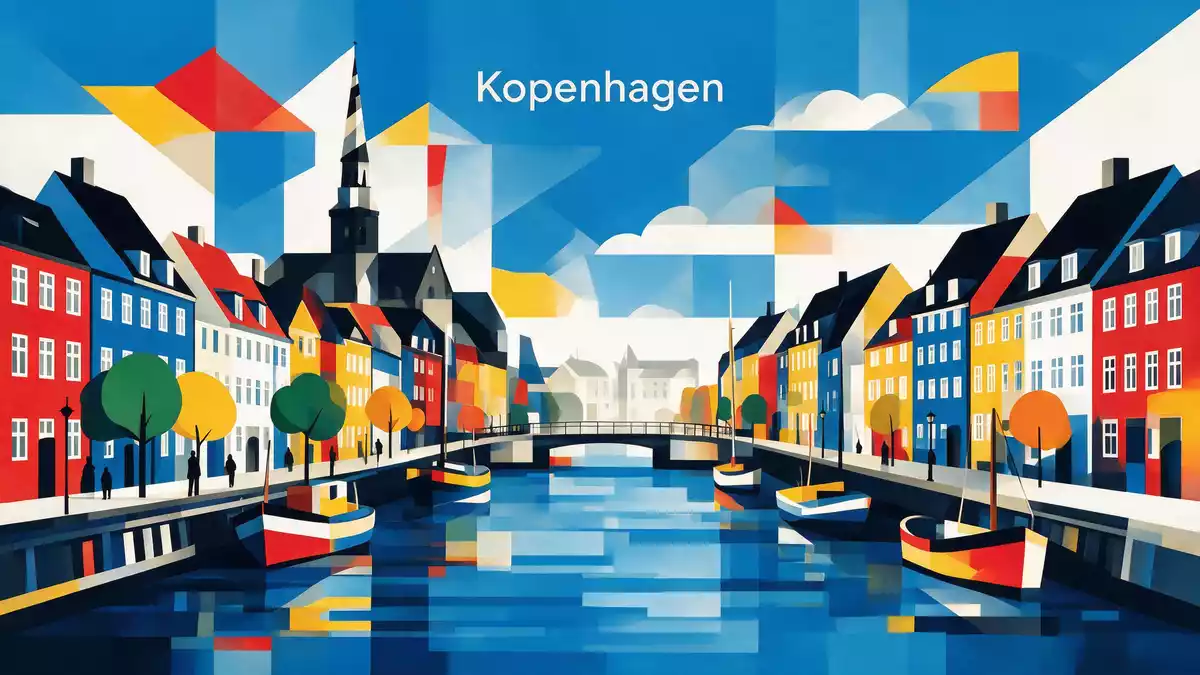
Nyhavn is Copenhagen’s canal-side quarter, where painted houses face a narrow harbour basin in the city centre. It was laid out under Christian V in the 1670s, and Hans Christian Andersen later lived along the canal.
Nyhavn’s canal and street frontage
The name means “New Harbour”, and the place still reads as a harbour cut into the urban fabric. The water runs between long quays, with gabled houses pressed close to the edge and a straight line of façades along both sides.late seventeenth century King Christian V
Nyhavn began as a man-made waterway linking the harbour to Kongens Nytorv, the square at the inland end of the canal. Its current view combines water, brick, timber and plaster in a compact frontage that keeps the old harbour shape visible.Kongens Nytorv
Houses, harbour life and literary memory
The canal edges are lined with townhouses from the seventeenth and eighteenth centuries, and the colour range gives the quay its strongest visual note. Several façades carry links to Hans Christian Andersen, whose addresses at Nyhavn 20, 67 and 18 place a literary figure directly on the waterfront.painted townhouses Hans Christian Andersen
The canal also preserves the memory of a working port, with the basin and quays laid out for ships and cargo. That mixture of waterside houses, mercantile scale and domestic frontages gives Nyhavn a clear urban form that differs from a simple promenade.working commercial harbour
Nyhavn’s place in Copenhagen’s centre
Nyhavn sits beside Kongens Nytorv, near the old inner city, and its canal remains one of the clearest links between square and water. The setting brings seventeenth-century planning, later townhouse fronts and harbour geography into a single view.
The basin is narrow enough that the opposite quay stays close in sight, while the houses extend as a continuous line beside the water. That simple geometry is part of the district’s identity and keeps the canal easy to read from the street.
Visiting Nyhavn: what travellers from Western Europe should know
- Nyhavn lies in central Copenhagen beside Kongens Nytorv. Metro and bus connections reach the square, and the canal frontage is reached on foot from the surrounding streets.
- The quays are level, with water on one side and building fronts on the other. The area is a street-and-canal setting rather than a stepped landscape.
- English is widely used, and the official language is Danish. The currency is the Danish krone.
- Nyhavn is closely linked with Hans Christian Andersen’s addresses at numbers 20, 67 and 18. The façades at those points are part of the canal walk.
Searching for Nyhavn on social platforms
These links open searches for Nyhavn on each platform.
Frequently asked questions about Nyhavn
Where is Nyhavn?
Nyhavn is in central Copenhagen, running from Kongens Nytorv to the harbour basin. It sits in Denmark’s capital as a canal-front district rather than a separate quarter.
What does a visit involve?
The area is a waterside walk past coloured houses, old façades and moored vessels. The setting is flat and urban, with the canal and the quay kept close together.
What makes Nyhavn distinctive?
Its most striking feature is the combination of a seventeenth-century harbour cut, townhouse rows and Andersen’s former addresses. The result is a compact waterfront where architecture and literary memory overlap.


