Okavango Delta, an inland maze of water and islands
Published on 08/15/2026 at 14:48 | Editorial responsibility: Rafael Müller, Editor-in-Chief AD HOC NEWS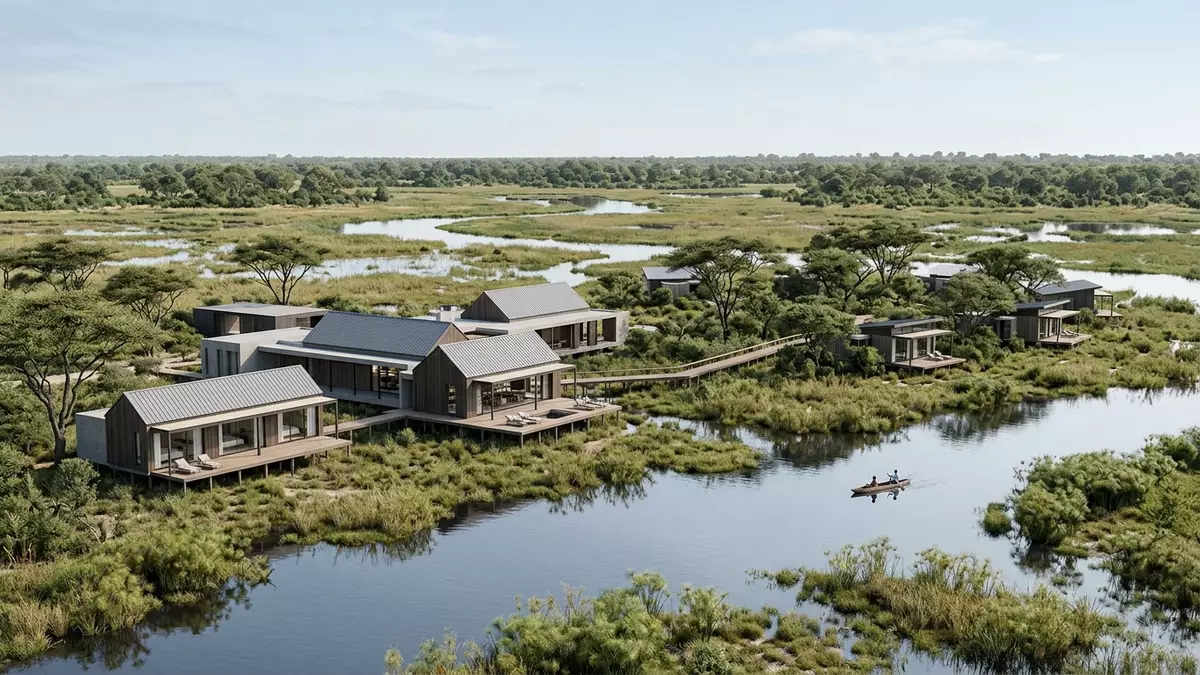
Okavango Delta in northern Botswana is a vast inland wetland where the Okavango River spreads into channels, lagoons and floodplains instead of reaching the sea. The delta lies north of Maun and forms a green fan of water and grassland on the edge of the Kalahari Desert, recognised both as a Ramsar Wetland of International Importance and as a UNESCO World Heritage Site.
An inland delta that never reaches the sea
Geographically, Okavango Delta is a large low?gradient alluvial fan in north?western Botswana, forming one of the few major interior delta systems that do not drain into an ocean. The Okavango River rises in Angola, flows through Namibia and then disperses across northern Botswana, where its waters spread over the sand of the Kalahari Basin rather than carving a single channel towards the coast.major interior delta system The result is a broad fan of permanent marsh and seasonally flooded plains, with water levels rising as rains in the upstream catchment arrive months later at the delta.
The World Heritage inscription describes permanent swamps covering about 600,000 ha and a surrounding area of seasonally flooded grassland that can reach up to 1,200,000 ha in wetter years.permanent swamps and grassland Beyond the core property, the Okavango Delta System is recognised under the Ramsar Convention as a wetland of international importance, with a designated area exceeding 5,500,000 ha that reaches towards the border with Namibia and links to the Kwando and Linyanti river systems.Okavango Delta System Ramsar area
Water, channels and islands on the edge of the Kalahari
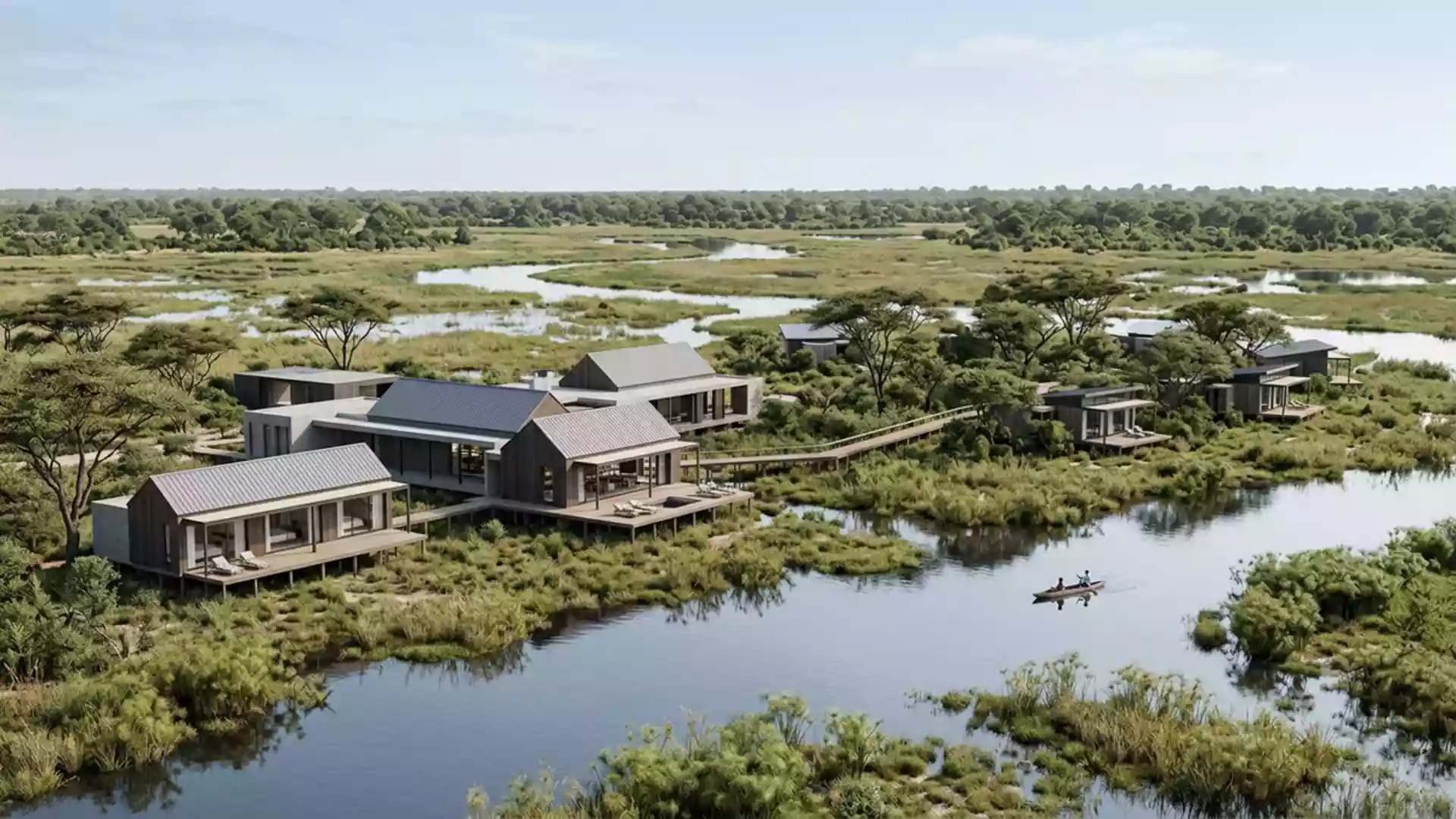
Standing on an island within Okavango Delta, the landscape is defined by water threaded through dry land. Narrow channels split and rejoin around reed beds, opening into lagoons edged by papyrus and aquatic grasses, while tree?covered islands rise slightly above the floodplain. During high water, more of the sandy basin is inundated and the green of the wetlands contrasts with the surrounding Kalahari vegetation that stays drier further from the rivers.complex network of channels and lagoons In lower water periods, the pattern of exposed channels and islands becomes clearer, revealing the underlying fan?shaped form.
Scientifically, the delta has been described as one of the largest inland wetland complexes in the world, with estimates of the broader alluvial fan reaching tens of thousands of square kilometres including permanent and seasonal wetlands.large inland wetland complex The annual flood pulses spread over long distances across a very slight gradient, creating a mosaic of habitats where water depth, vegetation and soil change over short spans, from open water to flooded grassland to dry woodland on higher ground.
Protected wetland of international significance
Okavango Delta holds formal international protection under both the Ramsar Convention and the World Heritage Convention. It was designated as a Ramsar Wetland of International Importance in 1996, under criteria recognising representative, rare or unique wetland types and sites of international significance for conserving biological diversity and supporting waterbirds.Ramsar Wetland of International Importance In 2014 the Okavango Delta was inscribed on the UNESCO World Heritage List as a natural site, evaluated under criteria vii, ix and x, which relate to exceptional natural beauty, significant ecological and biological processes and important habitats for biodiversity.World Heritage inscription criteria
The Ramsar Site description notes that the designated wetland covers more than 5,537,400 ha, extending beyond the World Heritage property to include the Botswanan portions of the Okavango and Kwando/Linyanti river systems and the intervening land.extent of the Ramsar Site The World Heritage property itself encompasses 2,023,590 ha, surrounded by a buffer zone of 2,286,630 ha that links the protected core with wider conservation areas and community lands.World Heritage property and buffer zone Together, these overlapping designations underline the global recognition of Okavango Delta as a major intact wetland system, with conservation frameworks that involve Botswana and its neighbours along the shared river basin.
Visiting Okavango Delta: what travellers from Western Europe should know
- Okavango Delta lies in north?western Botswana, with Maun at the south?eastern edge of the basin; Maun serves as the primary gateway town, linked to the delta by roads and airstrips used for access.
- The terrain within the delta alternates between open water, flooded grassland and dry islands, so moving around involves travelling by boat on shallow channels and walking on uneven, sandy ground.
- The surrounding region forms part of the broader Kalahari Basin, and journeys into the delta often begin along the Thamalakane River near Maun before reaching the more humid wetland landscapes further north.
- The official language is English and the currency is the Botswana pula.
- Entry requirements depend on your nationality; UK travellers can check the FCDO travel advice at gov.uk/foreign-travel-advice, Irish travellers the Department of Foreign Affairs at ireland.ie.
Searching for Okavango Delta on social platforms
These links open searches for Okavango Delta on each platform.Frequently asked questions about Okavango Delta
Where is Okavango Delta in relation to Maun?
Okavango Delta lies in north?western Botswana, with Maun at the south?eastern edge of the basin; the town spreads along the Thamalakane River before the wetlands begin further north.
What kind of landscape can visitors expect in Okavango Delta?
The delta combines narrow channels, lagoons, permanent marshes, seasonally flooded grassland and tree?covered islands set within the sandy Kalahari Basin, with water and dry land interwoven.
What makes Okavango Delta distinctive among river deltas?
It is a large inland alluvial fan where the Okavango River disperses across the Kalahari without reaching the sea, recognised internationally as an intact wetland system under both Ramsar and UNESCO designations.