
Old San Juan: a walled Caribbean city of colour and stone
Published on 09/21/2026 at 22:55 | Editorial responsibility: Rafael Müller, Editor-in-Chief AD HOC NEWS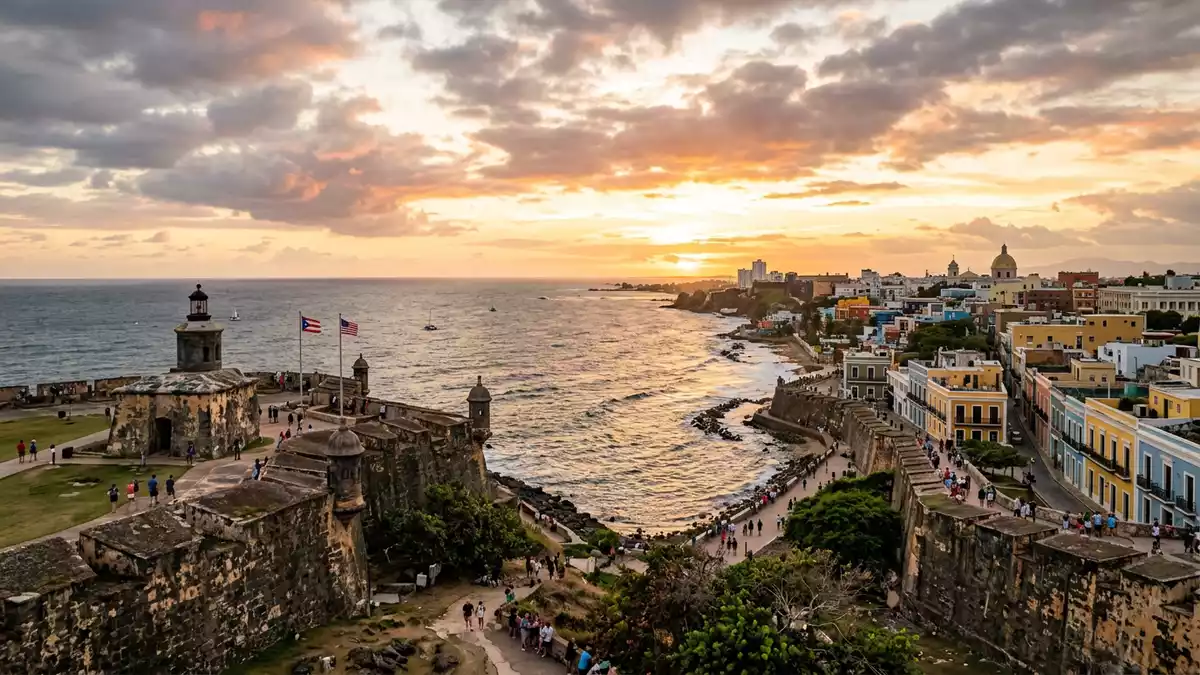
Old San Juan is the historic walled quarter of San Juan on a small islet off the northern coast of Puerto Rico, a compact cityscape where massive fortifications frame streets of brightly painted houses and churches.Old San Juan is recognised as a National Historic Landmark District and forms part of a UNESCO World Heritage inscription focused on its fortresses and city walls.La Fortaleza and San Juan National Historic Site
The old Caribbean stronghold on the San Juan Islet
Geographically, Old San Juan occupies the north?western corner of the San Juan Islet, a small island linked to the rest of metropolitan San Juan by bridges and causeways.the northwest triangle of San Juan Islet The district roughly corresponds to historic sub?barrios such as Ballajá, Catedral, Marina, Mercado, San Cristóbal and San Francisco within the wider San Juan Antiguo area, names that still appear on maps and plaques.
The settlement on this islet dates back to the early sixteenth century, when Spanish colonial authorities shaped a fortified port city facing the Atlantic Ocean.Founded in 1519 with Ponce de León as its highest authority Over time, stone ramparts, bastions and gates enclosed the town, creating a defensive ring between the urban grid and the sea. Walking into the district, the sense of entering a bounded historical space remains clear: long stretches of masonry walls separate the quarter from the water and from newer neighbourhoods inland.
Fortresses, walls and a harbour city in stone
Old San Juan is best known for its network of fortifications, now preserved as the San Juan National Historic Site, which together illustrate centuries of Spanish military engineering in the Caribbean.San Juan National Historic Site in the Old San Juan section At the north?western tip stands Castillo San Felipe del Morro, commonly called El Morro, a stone fortress projecting out towards the ocean with thick walls layered around an open interior and terraces facing the sea.Castillo San Felipe del Morro
To the east, Castillo San Cristóbal stretches across the landward side of the district, a sprawling complex of ramparts, tunnels and open platforms that once guarded the approaches from the interior of Puerto Rico.San Cristóbal fortresses Between and around these forts runs the old city wall with its gates and coastal walks, including the distinctive Puerta de San Juan, a gate in the masonry facing the harbour. Together, fortresses, walls and harbour views make the defensive character of the old city visible at almost every turn.
Streets, churches and plazas in the historic district
Within the ring of fortifications, Old San Juan’s street grid climbs and descends over gentle slopes, lined with cobblestones and blocks of townhouses painted in strong colours. Many of these buildings date from the sixteenth and seventeenth centuries and show Spanish colonial features such as tiled roofs and balconies, while later additions brought neoclassical and other influences into the mix.Spanish colonial facades dating back to the 16th and 17th century Squares break up the grid, with palms, benches and civic buildings giving each open space its own character.
Religious and civic monuments punctuate this compact area. San Juan Cathedral, a major church in the district, has origins in the sixteenth century and stands near Plaza de la Catedral, while the smaller Church of San José reflects early ecclesiastical architecture in Puerto Rico.historic churches such as San José and San Juan Cathedral La Fortaleza, the governor’s residence overlooking the harbour, represents another layer of power and history, standing among administrative buildings such as the San Juan City Hall. Museums, former barracks like Ballajá and small chapels including Capilla del Cristo add further stops for those interested in the built heritage of the island.La Casa Blanca, Capilla del Cristo and Ballajá Barracks
Visiting Old San Juan: what travellers from Western Europe should know
- Old San Juan occupies the western corner of the San Juan Islet on Puerto Rico’s north coast, linked to mainland districts by road bridges and close to San Juan’s cruise piers.
- The terrain inside the walled quarter includes cobbled streets, short slopes and staircases within forts and on the city walls, so visiting the ramparts involves climbing steps and walking on uneven surfaces.
- The harbour front and coastal walks beneath the city walls give views over the Atlantic and the entrance to San Juan Bay, with green open areas near El Morro where the fort meets the sea.
- The official language is Spanish and the currency is the United States dollar.
- Entry requirements depend on your nationality; UK travellers can check the FCDO travel advice at gov.uk/foreign-travel-advice, Irish travellers the Department of Foreign Affairs at ireland.ie.
Searching for Old San Juan on social platforms
These links open searches for Old San Juan on each platform.Frequently asked questions about Old San Juan
Where is Old San Juan located within Puerto Rico?
Old San Juan lies on the San Juan Islet off the northern coast of Puerto Rico, forming the historic core of the wider San Juan urban area.
What can visitors expect when walking through Old San Juan?
Visitors encounter cobbled streets, colourful townhouses, plazas and major historic sites, all contained within substantial stone fortifications facing both the harbour and the Atlantic.
What makes Old San Juan distinctive among Caribbean cities?
Its combination of sixteenth?century fortresses, intact city walls and a dense grid of Spanish colonial architecture within a compact walled peninsula gives Old San Juan a character that is strongly shaped by stone, colour and the sea.


