Old Trafford and Manchester’s vast football ground
Published on 08/09/2026 at 15:15 | Editorial responsibility: Rafael Müller, Editor-in-Chief AD HOC NEWS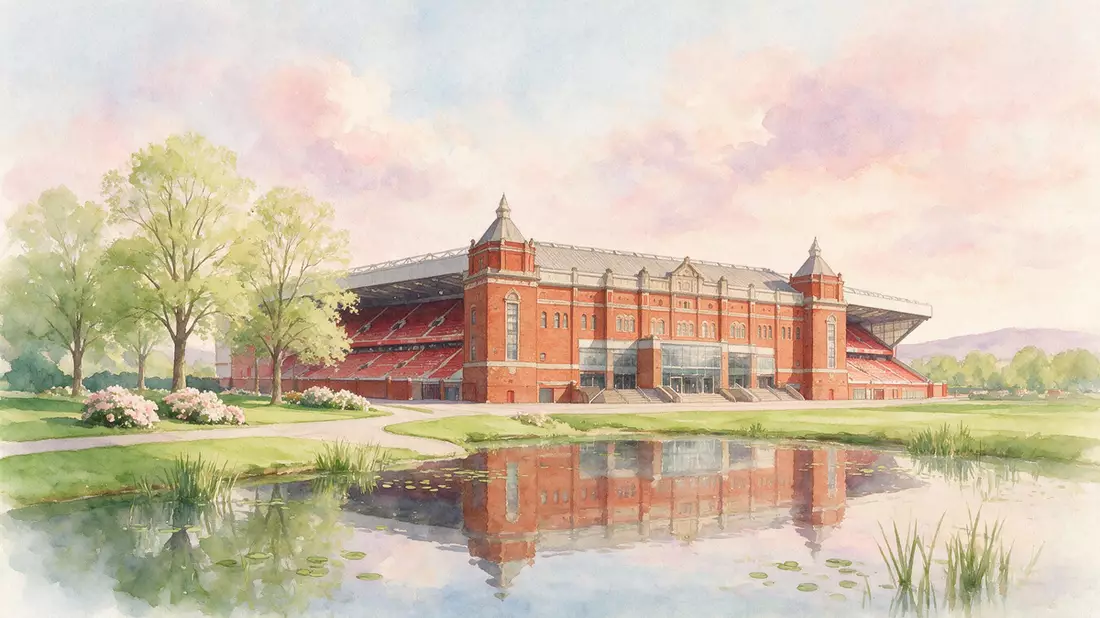
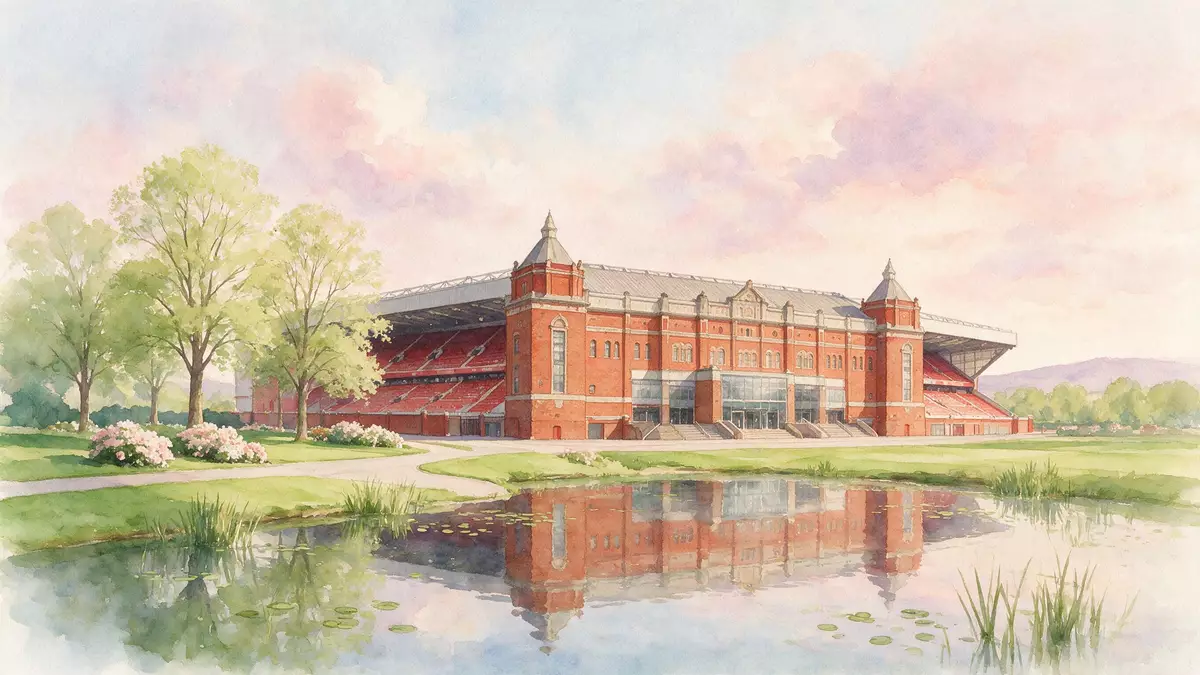
Old Trafford is Manchester United’s home ground in Manchester, a football stadium that pairs red-brick mass with long tiers of seating. Opened in 1910, it remains one of England’s best-known sporting structures and one of the most recognisable landmarks in the city.
Brick, steel and the long stand fronts
The stadium’s scale is visible before any match begins. Broad stand fronts, floodlights and the pitch’s deep rectangle give Old Trafford a strong, compact profile against the surrounding streets.
Its fabric mixes red brick with steel and concrete, a combination that reflects early twentieth-century stadium building and later expansion. The result is a place that reads as both historical and heavily used, with each stand carrying a different layer of the stadium’s life.
A ground shaped by football history
Old Trafford was designed by Archibald Leitch, the Scottish architect whose work also includes major football grounds in Britain. The stadium opened in 1910 and has long been tied to Manchester United, a club founded in 1878.
The site has hosted league football, cup ties and international fixtures, but its identity comes most strongly from club football. The bowl-like arrangement of the stands keeps attention on the pitch, while the upper tiers make the ground feel enclosed and direct.
Inside the Stretford End and beyond
Different parts of Old Trafford have distinct names that matter to supporters and regular visitors. The Stretford End, the Sir Alex Ferguson Stand and the South Stand give the stadium its familiar internal geography.
Those names also mark the ground’s layered history. Old Trafford is a working stadium, a museum setting and a symbol of Manchester football culture all at once.
Visiting Old Trafford: what travellers from Western Europe should know
- Old Trafford is in Manchester and is reached by rail, tram and road from the city centre.
- Admission arrangements and opening hours are set by the site's operator and change with the season; the official website is the only binding source.
- Late morning and afternoon visits suit the stadium’s open interior and surrounding concourses.
- The site involves steps, large stands and long internal walks, so comfortable footwear helps.
- English is the main language on site, and card payment is widely used for most everyday purchases.
- Entry requirements depend on your nationality. UK travellers should check the FCDO travel advice at gov.uk/foreign-travel-advice; Irish travellers the Department of Foreign Affairs at ireland.ie; EU and EEA citizens their own national foreign ministry.
Searching for Old Trafford on social platforms
These links open searches for Old Trafford on each platform.
Frequently asked questions about Old Trafford
Where is Old Trafford?
Old Trafford is in Manchester, in north-west England, and it is associated with Manchester United. The stadium sits in a built-up district with rail and tram connections.
What should visitors expect?
Expect a large football ground with stands, concourses, stairways and clear club branding. The interior is shaped by the seating bowl and the pitch.
What makes it distinctive?
Its distinctive character comes from the combination of early twentieth-century origins, later expansion and strong club identity. The red-brick and steel exterior gives it a recognisable presence in the city.