
Palau de la Musica Catalana, a stained?glass concert hall in Barcelona
Published on 09/17/2026 at 08:56 | Editorial responsibility: Rafael Müller, Editor-in-Chief AD HOC NEWS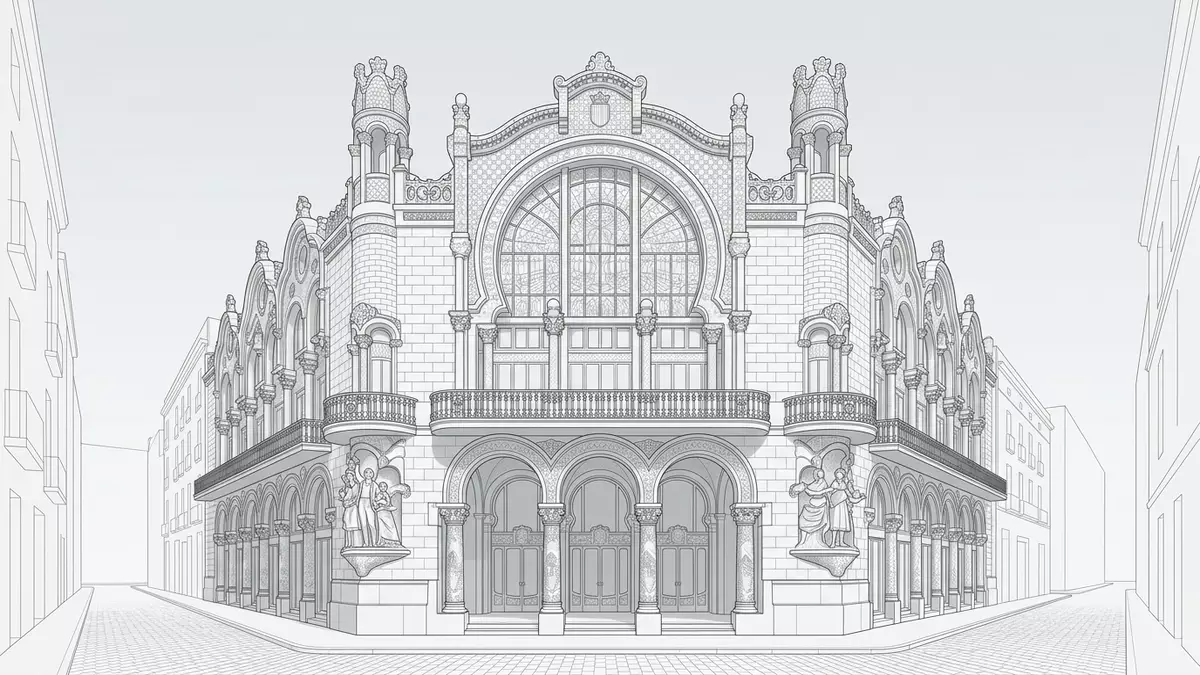
In Barcelona’s historic centre, Palau de la Musica Catalana turns the idea of a concert hall into a luminous sculpture of glass, mosaics and carved stone. Conceived in the early twentieth century, it fuses Catalan Modernisme with choral music to create a building that feels as crafted as any performance on its stage.
A Modernista palace built for song
Palau de la Musica Catalana stands in central Barcelona, close to the edge of the city’s Gothic Quarter and within walking distance of Plaça de Catalunya. It is a purpose-built concert hall, commissioned by the Orfeó Català choral society, a cultural association founded in 1891 that became a driving force in Catalonia’s musical life.concert hall in Barcelona The building’s urban plot is compact, so the architecture rises in layers, with its elaborate façades pressed into narrow streets.
Construction began in 1905 and the hall was inaugurated in 1908, during the height of Catalan Modernisme, the local version of European Art Nouveau.built between 1905 and 1908 The architect was Lluís Domènech i Montaner, a leading figure of the movement and a contemporary of Antoni Gaudí, whose other major work in Barcelona is the Hospital de Sant Pau.Lluís Domènech i Montaner Domènech i Montaner’s design integrates brick, stone, coloured ceramics, iron and glass into a single composition that reads as architecture and artwork at once.
Façades layered with sculpture and mosaic
The exterior of Palau de la Musica Catalana wraps a corner block with richly modelled façades. On the main elevation, slender columns clad in patterned ceramic support balconies, while a large sculptural group erupts near the entrance, combining human figures, musical motifs and heraldic emblems.essential jewel of Modernisme Above, the upper storeys carry broad windows framed by floral ornament, revealing that light is central to the building’s character.
Where neighbouring streets are largely stone and brick, the Palau’s façades bring glazed colour into the scene. The structural frame uses iron to open wide wall areas, which are then filled with glass and decorative work rather than solid masonry.innovative iron structure and glass walls This approach makes the transition from outside to inside feel gradual: even before entering, a visitor sees fragments of the colourful interior filtered through the façade.
A concert hall bathed in stained?glass light
Inside, the main auditorium is the best-known space of Palau de la Musica Catalana. Seating rises on several levels around a central stage, with rows arranged in a horseshoe form that keeps the audience close to the performers. Almost every surface is ornamented: mosaic-clad columns flank the stage, sculpted busts and reliefs celebrate composers, and floral patterns run across balustrades and walls.thoroughly Modernista interior
Above the seating hangs a spectacular stained?glass feature described as an inverted dome, which draws daylight down into the hall and makes colour part of the architectural experience.stained glass dome Large windows on the side walls add further natural illumination, so performances take place in a space shaped as much by light as by sound. Elsewhere in the building, circulation areas and foyers continue the decorative theme, with patterned tiles underfoot, carved details at handrail level and stained glass set into internal partitions.
Modernisme, UNESCO and contemporary use
Palau de la Musica Catalana is recognised internationally as a major work of Catalan Modernisme and as part of the shared World Heritage of architecture. In 1997, UNESCO inscribed the Palau together with Hospital de Sant Pau on its World Heritage List, highlighting the way Domènech i Montaner combined structure and applied arts at an urban scale.UNESCO World Heritage List It is one of several heritage sites in Barcelona that mark the city’s turn?of?the?century building boom.
The original commissioner, Orfeó Català, remains closely associated with the hall, and the building continues to function as a venue for concerts and cultural events.headquarters of the Orfeó Català A later extension added Petit Palau, a smaller, modern auditorium designed by architect Óscar Tusquets and completed in the early 2000s, which offers a contrasting contemporary setting for chamber music alongside the historic main hall.Petit Palau concert space
Visiting Palau de la Musica Catalana: what travellers from Western Europe should know
- Palau de la Musica Catalana stands in central Barcelona, a short walk north-east of the city’s Gothic Quarter and near Via Laietana, with several metro stations nearby.central Barcelona location
- The building occupies a tight urban plot, so access involves streets with limited open space and interior circulation that includes staircases and level changes between foyers and auditoriums.address on C. Palau de la Música
- Barcelona is in Spain, where the official language is Spanish alongside Catalan, and the currency is the euro (EUR).
Searching for Palau de la Musica Catalana on social platforms
These links open searches for Palau de la Musica Catalana on each platform.Frequently asked questions about Palau de la Musica Catalana
Where is Palau de la Musica Catalana located?
Palau de la Musica Catalana stands in central Barcelona, in the Ciutat Vella district near the Gothic Quarter, with its main entrance on Carrer del Palau de la Música.
What can visitors expect inside the building?
Visitors encounter richly decorated foyers and a main auditorium where mosaics, sculpture and stained glass surround the seating, capped by an inverted stained?glass feature that fills the hall with coloured daylight.
What makes Palau de la Musica Catalana distinctive among concert halls?
Its synthesis of architecture and applied arts, its Catalan Modernisme style by Lluís Domènech i Montaner and its recognition as a UNESCO World Heritage Site together make the Palau an exceptional historic concert venue.


