
Palazzo Ducale in Venedig: Venice’s layered Gothic palace
Published on 08/16/2026 at 14:06 | Editorial responsibility: Rafael Müller, Editor-in-Chief AD HOC NEWS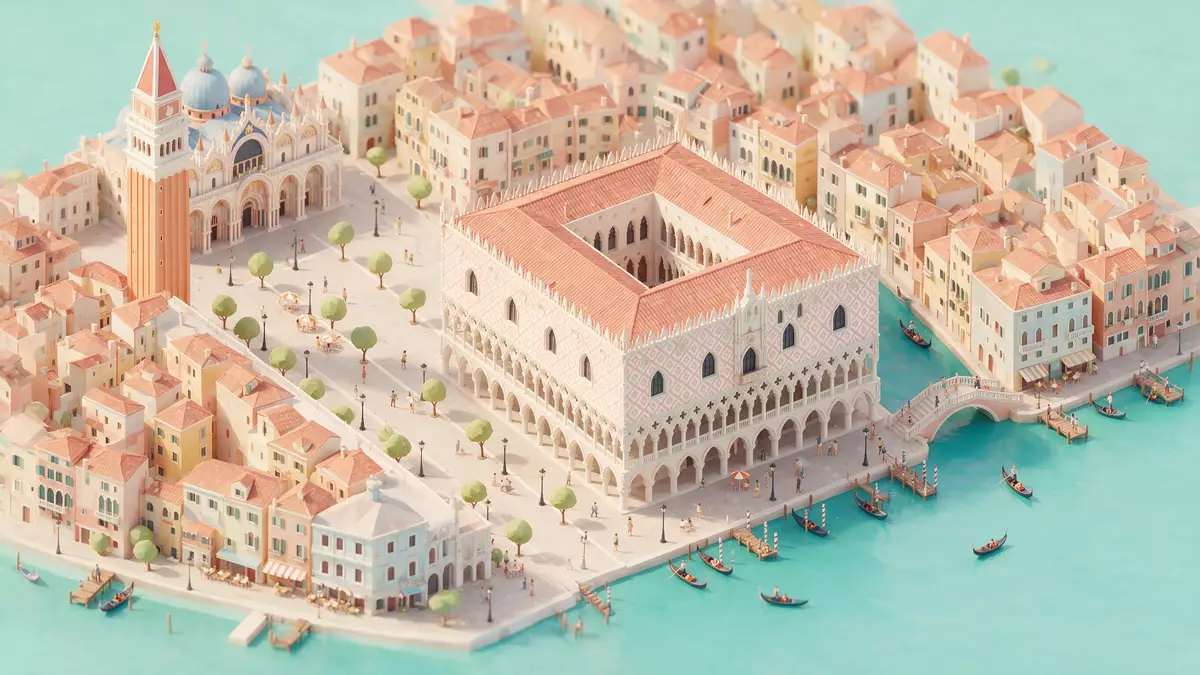
Palazzo Ducale, the Doge’s Palace in Venedig, stands beside St Mark’s Basilica as the former seat of government and residence of the doge of the Venetian Republic, with its present Gothic form dating from the fourteenth and fifteenth centuries.present form in the early 14th century The palace is built around a central courtyard, combining Venetian Gothic architecture with later Renaissance and Mannerist additions.
From fortified seat to open Gothic palace
The origins of Palazzo Ducale reach back to the ninth century, when Venice first established a dedicated seat of power facing the basin of San Marco.origins in the 9th century Early phases took the form of a fortified complex with corner towers, reflecting the need to protect the institutions of the young republic and its magistrates.fortified central core with towers
Construction in its recognisable Gothic guise began in the fourteenth century and continued into the fifteenth century, generating the long façades that visitors see facing the Molo and the Piazzetta San Marco.completion undertaken in 1424 Over these centuries the palace evolved from a closed fortress into an open arcade-lined building, with loggias and tracery that expose the halls and chambers to the lagoon light while still marking the boundary between civic space and the inner courtyard.
Architecture and wings around the courtyard
Palazzo Ducale is organised around a central courtyard, with wings facing St Mark’s Basin, St Mark’s Square and the canal side that carries the doge’s apartments and offices of state.wings towards basin, square and canal The wing towards the basin is the oldest in its current form, rebuilt from 1340 onwards, while the side towards the square reached its present configuration from 1424, extending the rhythm of columns and tracery along the Piazzetta.
The canal-side wing dates from the Renaissance period between 1483 and 1565 and houses the doge’s residential apartments alongside key government chambers, introducing classical details into a complex otherwise dominated by Gothic arches and ornamental stonework.Renaissance canal-side wing Within, grand staircases such as the Scala dei Giganti and ceremonial spaces like the Sala del Maggior Consiglio demonstrate how architecture and painting were used together to frame assemblies of the republic’s councils.Scala dei Giganti and council hall
Government chambers, prisons and later museum life
For centuries Palazzo Ducale functioned simultaneously as residential palace, meeting place of councils and ministries, and seat of judicial power, concentrating the institutions of the Venetian state in one perimeter.meeting place of councils and ministries Inside, visitors encounter chambers that once held the Great Council, courtrooms where legal matters were decided and rooms reserved for the doge, whose role as elected leader of the republic shaped the palace’s ceremonial routes.government offices and residence of the doge
In the seventeenth century the New Prisons were built and linked to the palace by the enclosed Bridge of Sighs, creating a sequence from courtrooms to detention cells across the canal.New Prisons and Bridge of Sighs After the fall of the republic in 1797 and the later annexation of Venice to the Kingdom of Italy, the building ceased to function as a centre of republican government and was gradually adapted to house museum collections; by the twentieth century it formed part of the network of civic museums managed by the MUVE foundation.museum venue within MUVE
Visiting Palazzo Ducale: what travellers from Western Europe should know
- Palazzo Ducale stands on Piazza San Marco in Venedig, directly beside St Mark’s Basilica and facing both the Piazzetta and the basin of San Marco; it is reached on foot from the central waterfront vaporetto stops.
- The palace interior is spread over several levels connected by staircases such as the Scala dei Giganti; visiting the higher halls involves climbing long flights of steps.
- Across the canal from the palace lie the New Prisons, connected by the covered Bridge of Sighs; standard visit routes include enclosed passageways linking the two structures.
- The official language is Italian and the currency is the euro.
Searching for Palazzo Ducale on social platforms
These links open searches for Palazzo Ducale on each platform.
Frequently asked questions about Palazzo Ducale
Where is Palazzo Ducale located in Venedig?
Palazzo Ducale stands on Piazza San Marco in Venedig, beside St Mark’s Basilica and facing both the Piazzetta San Marco and the basin of San Marco.
What should visitors expect inside Palazzo Ducale?
Visitors encounter grand staircases, council halls, judicial chambers and former apartments of the doge arranged around a central courtyard, with routes that cross towards the New Prisons.
What makes Palazzo Ducale distinctive among Venice’s buildings?
Palazzo Ducale is distinctive for combining fourteenth and fifteenth century Venetian Gothic façades with later Renaissance elements, while housing the historic governmental institutions of the former republic in one complex.


