
Palia Poli Rodou and the stone walls of medieval Rhodos
Published on 09/23/2026 at 17:39 | Editorial responsibility: Rafael Müller, Editor-in-Chief AD HOC NEWS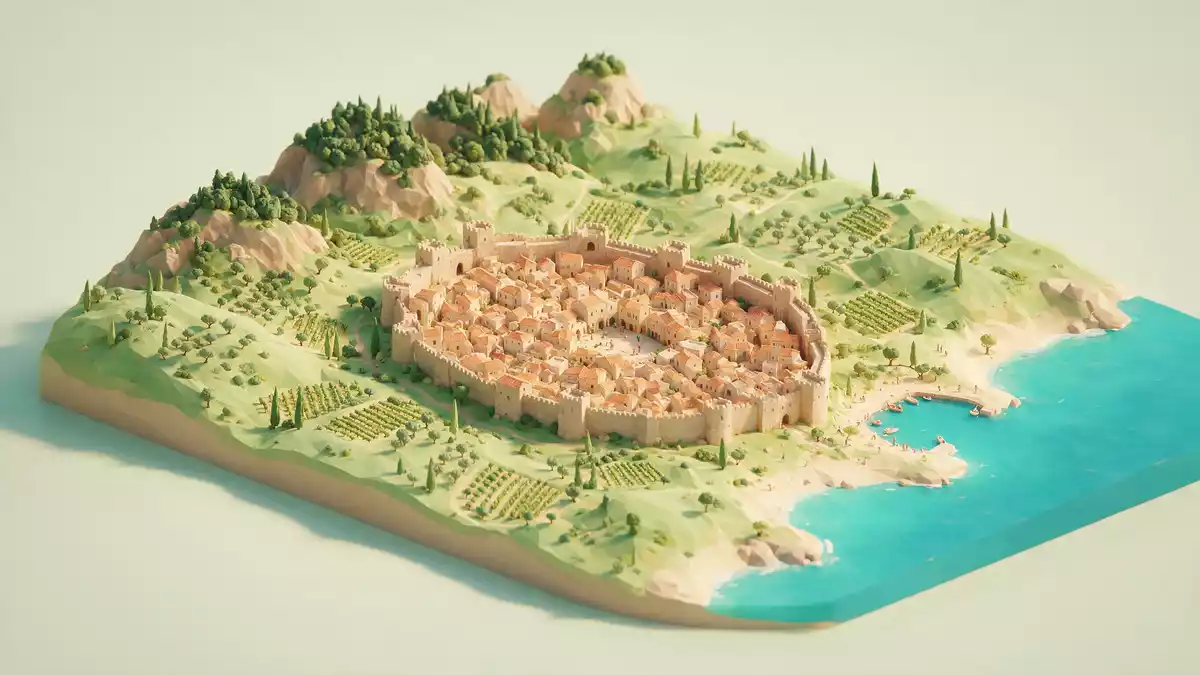
Palia Poli Rodou is the walled historic city at the centre of Rhodos, where streets, gates, courtyards and monumental buildings remain enclosed by medieval fortifications. The city’s visible character comes from the meeting of Gothic architecture, Ottoman buildings and Aegean urban traditions within one compact quarter.
Palia Poli Rodou behind its medieval walls
The fortifications form the clearest physical boundary of Palia Poli Rodou. Stone ramparts, bastions, gates and a broad dry moat surround the historic city, while narrow streets lead between houses, religious buildings and public monuments. The walls belong to a long defensive tradition on Rhodos, with medieval construction reshaping earlier urban defences.
The Order of the Knights Hospitaller established its headquarters on Rhodos in 1309. Between the fourteenth and early sixteenth centuries, the order strengthened the city and developed the upper town around institutions linked with military and religious administration. The Medieval City of Rhodes entered the UNESCO World Heritage List in 1988.
The walls are not an isolated monument. They enclose an urban landscape with streets, squares, houses and major buildings. The physical relationship between the ramparts and the town remains central to understanding Palia Poli Rodou as a city, rather than as a single castle.
The Knights’ quarter and the upper city
The northern part of Palia Poli Rodou contains the upper city associated with the Knights Hospitaller. The Palace of the Grand Master, the former Hospital and the Street of the Knights form its most recognisable group of Gothic monuments. Their stone façades, arched openings and heavy masonry give this quarter a strongly medieval architectural language.
The Street of the Knights runs through the upper city towards the Palace of the Grand Master. Buildings connected with different langues, or regional divisions of the order, lined the street. The result is a sequence of façades and entrances rather than a single ceremonial building. The history of the Knights Hospitaller remains visible in this arrangement of streets and institutions.
The Palace of the Grand Master occupies a fortified position within the upper city. Its large stone volume, towers and internal rooms reflect the political and military importance of the order. The former Hospital, with its arcades and substantial masonry, represents another part of the medieval city’s institutional landscape.
Gothic forms dominate the upper city, but local materials and island traditions prevent the quarter from resembling a northern European town. The architecture belongs to the eastern Mediterranean, where western medieval forms met Byzantine inheritances and Aegean building practices.
Ottoman layers within a Gothic city
Palia Poli Rodou changed after the Ottoman capture of Rhodos in 1522. Mosques, baths, inns and domestic buildings added new forms to the medieval streets. Some Christian churches became mosques, while other buildings continued within a changed social and religious setting.
The Suleiman Mosque, the Ibrahim Pasha Mosque and the Turkish baths belong to this Ottoman layer. Their presence makes the city’s architectural history broader than the period of the Knights Hospitaller. Courtyards, domes, fountains and plastered surfaces appear beside the darker stonework of the upper city.
Ottoman Rhodos did not erase the medieval fortifications. The walls, gates and main urban divisions continued to define the city. The result is a place where different historical periods remain legible within the same streets, rather than separated into distant archaeological zones.
The city also preserves traces of the Italian administration that followed the occupation of Rhodos in 1912. Restoration campaigns altered parts of the monumental quarter and contributed to the appearance of buildings seen along the principal routes. The layers of Rhodian history extend from antiquity through the Byzantine, Knights Hospitaller, Ottoman and Italian periods.
Rhodos itself has a much older urban history. The city was founded in 408 BC, and its harbour connected the island with maritime routes across the eastern Mediterranean. Palia Poli Rodou belongs to this longer history while retaining its strongest visual identity from the medieval and Ottoman centuries.
In 1522, Sultan Suleiman the Magnificent took Rhodos after a prolonged siege. The transfer of power marked the end of the Knights’ rule, but not the end of the city’s importance. Palia Poli Rodou continued as an inhabited urban quarter, with its buildings adapted to new communities and institutions.
Visiting Palia Poli Rodou: what travellers from Western Europe should know
- Palia Poli Rodou occupies the historic centre of Rhodos Town on the northern part of the island. The quarter is reached through its monumental gates from the modern city.
- The streets inside the walls include uneven paving, steps and narrow passages. Comfortable footwear suits the stone surfaces and changing levels.
- The upper city contains the Palace of the Grand Master, the Street of the Knights and the former Hospital. The lower city contains Ottoman monuments, shops, houses and religious buildings.
- The official language is Greek and the currency is the euro.
Searching for Palia Poli Rodou on social platforms
These links open searches for Palia Poli Rodou on each platform.
Frequently asked questions about Palia Poli Rodou
Where is Palia Poli Rodou?
Palia Poli Rodou is the historic walled city in Rhodos Town, on the island of Rhodos in Greece. It occupies the northern part of the modern city centre.
What can visitors see inside the walls?
The quarter contains medieval ramparts, gates, the Palace of the Grand Master, the Street of the Knights, the former Hospital, Ottoman mosques, baths and traditional urban streets.
What makes Palia Poli Rodou distinctive?
Its distinctive character comes from the close concentration of Gothic, Byzantine, Ottoman and Aegean architectural layers within a fortified medieval city. The UNESCO designation covers the historic urban ensemble.


