
Palm Jumeirah: Dubai’s palm-shaped island
Published on 09/22/2026 at 06:39 | Editorial responsibility: Rafael Müller, Editor-in-Chief AD HOC NEWS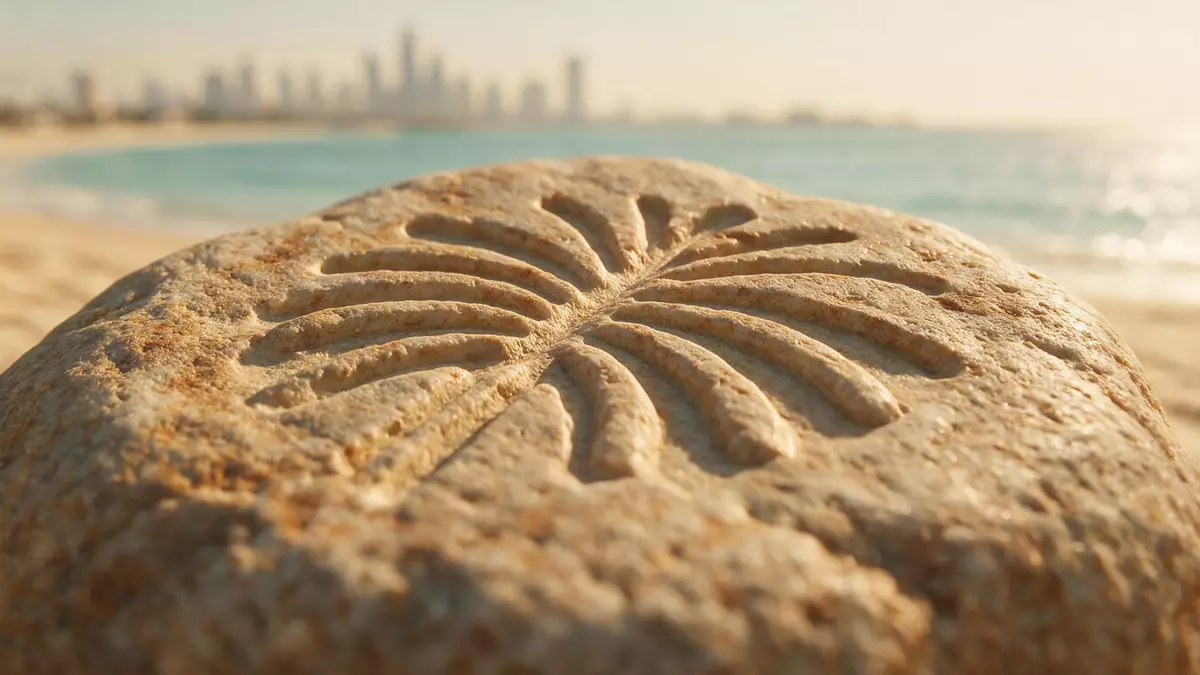
Palm Jumeirah is an artificial island in Dubai, shaped as a palm tree and extending into the Arabian Gulf. Its trunk, fronds and crescent form a large coastal district where engineered land, residential buildings, hotels and leisure sites meet the sea.
The palm form on Dubai’s coast
Seen from above, Palm Jumeirah has a central trunk, branching fronds and a surrounding crescent. The arrangement is the defining physical feature of the island, and it remains legible across maps, aerial views and the coastline itself.
The trunk connects the island with Dubai’s mainland and contains roads, buildings, promenades and transport links. The fronds extend from this central spine, while the crescent forms an outer arc across the seaward edge.
Land, water and the Arabian Gulf
Palm Jumeirah belongs to Dubai, one of the seven emirates of the United Arab Emirates. The island is made from reclaimed land, with rock and sand forming its foundation beneath residential and hotel districts.
The surrounding water gives the island its clearest visual contrast. Streets and buildings occupy the reclaimed land, while beaches, marinas and Gulf waters define its edges. The crescent is also associated with major resort architecture, including Atlantis, The Palm.
Dubai’s planned island district
Construction of Palm Jumeirah began in the early 2000s, and the island became part of Dubai’s expanding coastal urban landscape. Nakheel developed the project as a large mixed-use district with homes, hotels, retail areas and public-facing leisure facilities.
The island’s layout combines a recognisable symbol with a functioning urban area. Palm Jumeirah is not a single building or attraction, but a network of roads, residences, beaches, hotels and transport infrastructure arranged across reclaimed ground.
Visiting Palm Jumeirah: what travellers from Western Europe should know
- Palm Jumeirah lies off Dubai’s Jumeirah coast. The Dubai Tram reaches the Palm Jumeirah station, where the Palm Monorail connects towards the island’s crescent.
- The island is largely urban and coastal, with roads, pavements, beaches and hotel grounds across the trunk and fronds. Some waterfront areas belong to private residences or resorts.
- The Palm Monorail crosses the trunk and continues towards Atlantis, The Palm on the crescent. Dubai taxis and road transport also reach the island.
- The official language is Arabic and the currency is the UAE dirham.
- Entry requirements depend on your nationality; UK travellers can check the FCDO travel advice at gov.uk/foreign-travel-advice, Irish travellers the Department of Foreign Affairs at ireland.ie.
Searching for Palm Jumeirah on social platforms
These links open searches for Palm Jumeirah on each platform.
Frequently asked questions about Palm Jumeirah
Where is Palm Jumeirah?
Palm Jumeirah lies off Dubai’s Jumeirah coast in the United Arab Emirates. It extends into the Arabian Gulf as an artificial island district.
What can visitors expect on Palm Jumeirah?
Visitors encounter roads, beaches, hotels, restaurants, residences, transport links and waterfront leisure sites. The Palm Monorail provides a distinctive way to cross the island.
What makes Palm Jumeirah distinctive?
Its reclaimed-land plan forms a palm tree, with a trunk, fronds and a crescent. The visible geometry combines a large urban district with an engineered coastal landscape.


