
Pantheon in Rome and its enduring concrete dome
Published on 09/17/2026 at 17:56 | Editorial responsibility: Rafael Müller, Editor-in-Chief AD HOC NEWS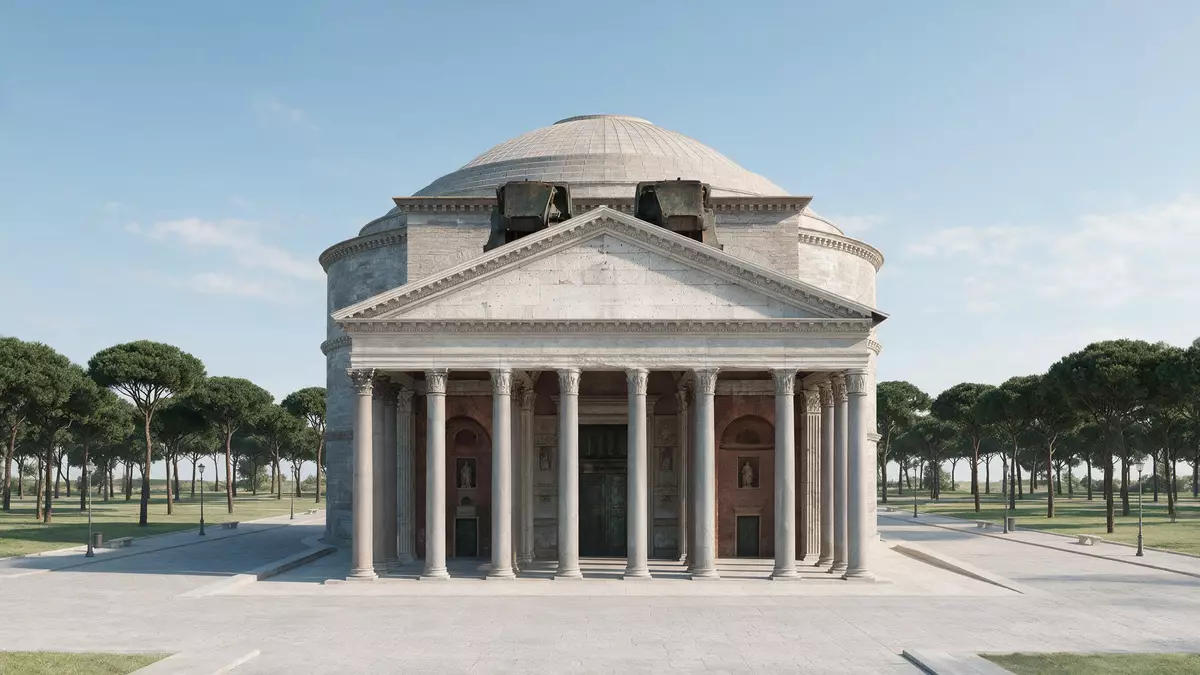
Pantheon in Rom is one of the clearest encounters with imperial Roman architecture that a traveller can have, a temple-turned-church whose vast concrete dome still crowns a lively square in the centre of Italy’s capital. Built under Emperor Hadrian in the early second century AD on a site first developed by Marcus Vipsanius Agrippa in the late first century BC, it later became the Basilica di Santa Maria ad Martyres in 609, preserving an ancient structure within a living place of worship.
A Roman temple remade under Hadrian
Pantheon began as a temple commissioned by Marcus Vipsanius Agrippa around 27 to 25 BC during the reign of Augustus, its name derived from Greek roots meaning a temple of all the gods of Rome.Marcus Vipsanius Agrippa The present building dates to the reign of Emperor Hadrian, who had the temple rebuilt between 118 and 128 AD with the rotunda and dome that define the site today.rebuilt between 118 and 128 AD Earlier structures on the site suffered fire and lightning strikes in the first and second centuries AD, giving the monument a layered history even though the current fabric reads as a single, coherent design of the high Roman Empire.
The building’s conversion to Christian worship came in 609, when Pope Boniface IV consecrated it as Santa Maria ad Martyres, a move that helped shield its ancient fabric during periods when many other classical buildings were dismantled for materials.consecrated it as Santa Maria ad Martyres Inside, this dual identity shows in the coexistence of Christian altars and chapels with inscriptions referring back to Agrippa and the imperial phase. The inscription on the portico’s frieze, which credits Agrippa as builder, remains one of the most photographed elements and ties the later Hadrianic structure visually to its Augustan origins.
The rotunda and its unreinforced concrete dome
Pantheon’s most striking feature is the great circular hall, a concrete rotunda capped by an unreinforced dome whose interior diameter is about 43.3 m (142 ft), matching the height from the floor to its highest point.interior diameter is about 43.3 m This geometric relationship means a perfect sphere can be inscribed inside the space, an idea that has shaped centuries of architectural commentary. The dome is made of Roman concrete, with the material composition and thickness believed to vary towards the top to reduce weight, and is often described as the world’s largest unreinforced concrete dome.largest unreinforced concrete dome
The interior walls of the rotunda are articulated with a sequence of arches and recesses forming chapels and niches, framed by columns and entablatures in coloured stone. Looking up, visitors see the dome’s coffering, a pattern of sunken panels that modulates the surface and, together with the change in concrete mix, reduces mass without sacrificing the overall structural form. At the apex of the dome is an opening to the sky known as the oculus, a circular aperture with a diameter of close to 9 m (29.5 ft) by many modern measurements.circular opening 8.9 metres in diameter Light entering through this oculus traces arcs across the interior surfaces as the sun moves, emphasising the interplay between geometry, material and daylight.
Portico, piazza and later burials
Approaching Pantheon from the surrounding streets of Rom’s historic centre, visitors first encounter the temple front: a deep portico with a pediment supported by ranks of Corinthian columns in granite and marble.portico with a pediment supported by ranks of columns Behind this classical façade, the cylindrical rotunda rises, its brick and concrete structure partly masked by later roofing and neighbouring buildings. The temple fronts onto Piazza della Rotonda, a square that allows the portico and pediment to be seen from different angles and gives a clear sense of the contrast between the rectilinear front and the circular volume behind.Piazza della Rotonda
Within the church, several tombs underline Pantheon’s continuing role in Italian history. Among them are the graves of important figures including the painter Raphael, whose remains have rested here since the sixteenth century, and monarchs of united Italy in the nineteenth and twentieth centuries. The coexistence of imperial Roman construction, Christian liturgy and national commemoration makes the building a layered monument: its structure speaks of the engineering capabilities of the second century, while its furnishings and burials trace political and artistic history across many later periods.
Visiting Pantheon: what travellers from Western Europe should know
- Pantheon stands in Piazza della Rotonda in Rom’s historic centre, south of the Tiber, reached on foot from landmarks such as the Trevi Fountain and by city bus routes that serve the surrounding streets.
- The interior visit involves crossing the square, stepping through the portico and moving across a stone floor inside the rotunda; there are no long stair climbs, but the space beneath the dome is large and visitors often walk circuits around the chapels.
- The official language is Italian and the currency is the euro, used for transactions in Rom and across Italy.
- Entry requirements depend on your nationality; UK travellers can check the FCDO travel advice at gov.uk/foreign-travel-advice, Irish travellers the Department of Foreign Affairs at ireland.ie.
Searching for Pantheon on social platforms
These links open searches for Pantheon on each platform.
Frequently asked questions about Pantheon
Where is Pantheon in Rom?
Pantheon stands in Piazza della Rotonda in the historic centre of Rom, in central Italy, within walking distance of several major baroque squares and fountains.
What can visitors expect inside Pantheon?
Inside, visitors find a circular hall beneath a vast concrete dome, Christian altars set into chapels around the walls and memorials including Raphael’s tomb and royal burials.
What makes Pantheon distinctive among Roman buildings?
Pantheon combines a classical portico and inscription honouring Agrippa with a rotunda covered by a large unreinforced concrete dome and an oculus, all preserved through conversion into a church in 609.


