Parc nacional d'Aiguestortes and its mountain lakes
Published on 08/09/2026 at 15:06 | Editorial responsibility: Rafael Müller, Editor-in-Chief AD HOC NEWS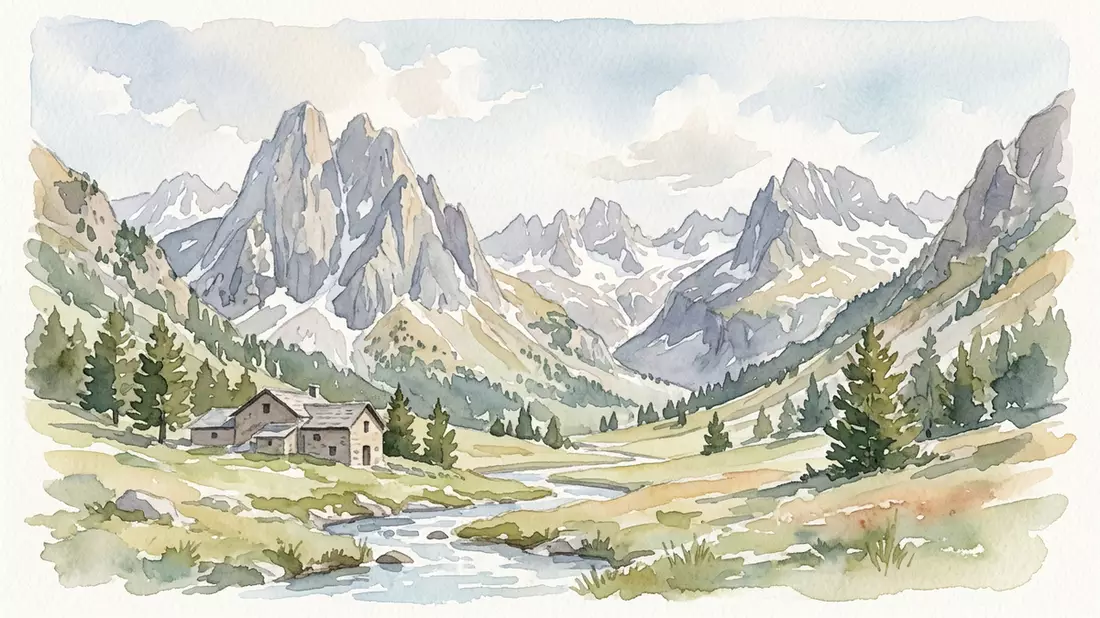
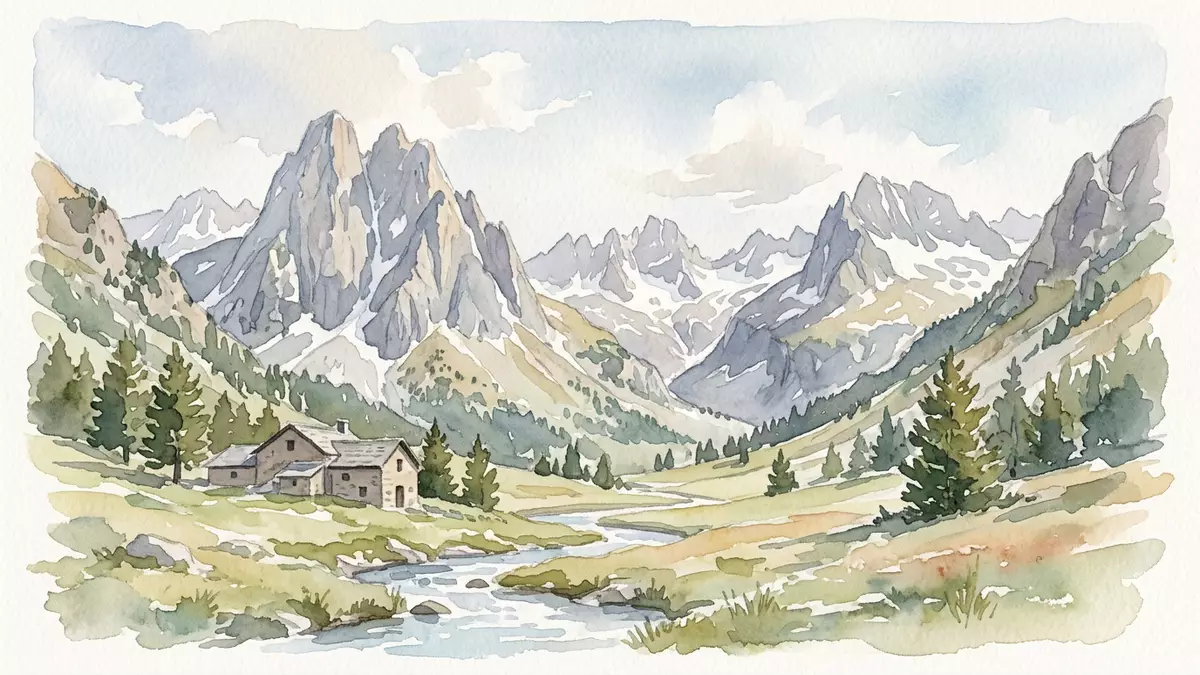
Parc nacional d'Aiguestortes is the high mountain national park around Boi in the Pyrenees, where granite ridges, streams and lakes shape nearly every view. Established in 1955, it is one of Spain’s classic protected mountain landscapes, with Catalan place names and a strong sense of altitude.
Granite valleys and water channels
The park is known for its aigua torta, or “twisted water”, the Catalan phrase that gives the park its name. Narrow channels, boulders and uneven ground give the valleys a broken, stepping rhythm rather than a broad open floor.
That mix of water and rock runs through the scenery around Boi, where the terrain changes from wooded lower slopes to open high country. Lakes, torrents and polished stone surfaces give the park a distinct mountain character that feels continuous from one viewpoint to the next.
A Pyrenean landscape shaped by height
The park lies in the central Pyrenees, and the elevation is one of its defining features. Steep-sided valleys and higher basins create a sequence of enclosed spaces, each with its own scale and atmosphere.
Granite is the dominant rock, and it gives the mountains a hard, pale surface that catches light strongly. In summer, the contrast between water, stone and alpine vegetation is one of the park’s most memorable visual qualities.
Boi and the cultural setting
Boi is the nearest named centre often linked with the park, and the surrounding Vall de Boí is also known for Romanesque churches from the eleventh and twelfth centuries. That makes the area unusually rich in both natural and historical layers.
The park and the valley belong together in a practical sense as well as a geographic one. Visitors move between mountain paths, villages and church architecture, with the landscape setting the pace of the visit.
Visiting Parc nacional d'Aiguestortes: what travellers from Western Europe should know
- The site is reached from Boi and the wider Pyrenean valleys by road, with mountain access points leading into the park.
- Admission arrangements and opening hours are set by the site's operator and change with the season; the official website is the only binding source.
- Late spring to early autumn brings the most reliable walking conditions, while higher paths can hold snow for longer.
- The site includes steep ground, uneven rock, long walking stretches and high altitude, so sturdy footwear and a measured pace matter.
- Catalan is part of daily life in the area, and Spanish is also understood; cash and cards are both useful in mountain services.
- Entry requirements depend on your nationality. UK travellers should check the FCDO travel advice at gov.uk/foreign-travel-advice; Irish travellers the Department of Foreign Affairs at ireland.ie; EU and EEA citizens their own national foreign ministry.
Searching for Parc nacional d'Aiguestortes on social platforms
These links open searches for Parc nacional d'Aiguestortes on each platform.
Frequently asked questions about Parc nacional d'Aiguestortes
Where is Parc nacional d'Aiguestortes?
It is in the Pyrenees around Boi, in Catalonia, within Spain. The park covers a high mountain landscape of valleys, lakes and granite ridges.
What should visitors expect on a visit?
Expect mountain walking, changes in altitude and uneven terrain rather than urban sightseeing. The park works best for travellers who are comfortable with long outdoor routes and changing weather.
What makes it distinctive?
Its strongest feature is the combination of water and granite, expressed in the twisted channels that gave the park its name. The setting around Boi adds Romanesque cultural landmarks to the mountain scenery.