
Parc national des Calanques, where limestone cliffs meet the Mediterranean
Published on 08/15/2026 at 14:04 | Editorial responsibility: Rafael Müller, Editor-in-Chief AD HOC NEWS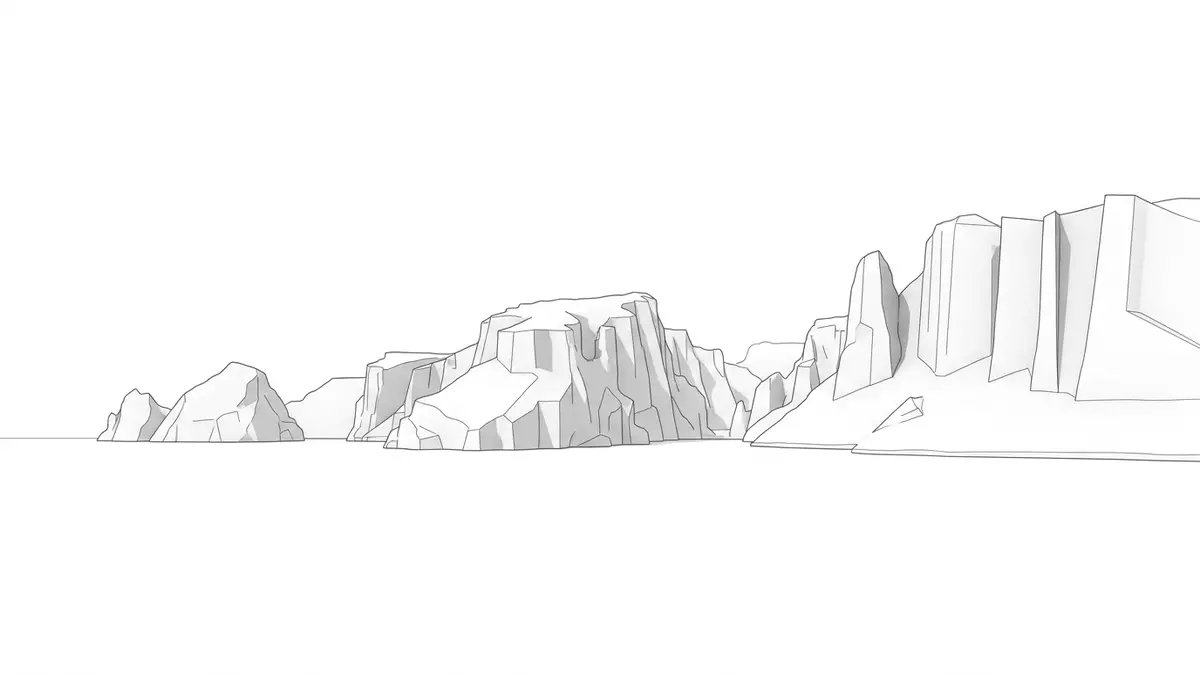
Parc national des Calanques on the Mediterranean coast near Marseille brings together pale limestone massifs, deep inlets and open sea in a single protected landscape. Established as France’s tenth national park in 2012, it spans both terrestrial slopes and marine waters along the coast between Marseille, Cassis and La Ciotat.
Limestone massifs and narrow inlets along the coast
Parc national des Calanques occupies part of the Bouches-du-Rhône department in southern France, with Marseille as its nearest major city and Cassis and La Ciotat as other coastal neighbours.Location in Bouches-du-Rhône The park covers a coastal fringe where steep massifs plunge towards the Mediterranean, cut by a succession of calanques, the narrow, steep-sided inlets that give the park its name.Calanques of Marseille and Cassis
The Calanques massif itself forms a striking mass of white limestone, described as urgonian, compact and rich in fossil material.White limestone of the Calanques massif To the east, towards La Ciotat, the terrain rises again into the Cap Canaille massif and the heights above the Calanques de La Ciotat and Ile Verte, creating a sequence of cliffs and headlands along the shoreline.Cap Canaille and Ile Verte massif
A national park linking land and sea
Parc national des Calanques is one of France’s national parks and combines a land core with a extensive marine area in the Mediterranean.Land and marine core areas The core terrestrial area extends over tens of square kilometres of massifs and coastal slopes, while the marine part spreads across a larger expanse of sea dotted with islands and rocky islets. Within this area lie the Calanques of Marseille, the islands of the Frioul archipelago and the Riou archipelago, as well as Ile Verte and the massifs of Cap Canaille and Saint-Cyr.Frioul and Riou archipelagos
The park was created by decree on 18 April 2012, formalising protection for this peri-urban coastal landscape as France’s tenth national park.Decree of 18 April 2012 Its heart covers parts of the municipal territories of Marseille, Cassis and La Ciotat, with an adjoining area involving further communes.Core area across three communes The designation brings together cliffs, inlets, offshore islands and adjoining waters under a single framework aimed at conserving both landscape and biodiversity.
Geology shaped in the age of dinosaurs
The bedrock of Parc national des Calanques was laid down as sediment in marine environments during the Mesozoic era, in particular the Jurassic and Cretaceous periods, more than 80 million years ago.Mesozoic origin of the limestone Over geological time these sediments hardened into limestone, sandstone and conglomerate rocks, then were uplifted and eroded to form the current massifs and inlets. The Calanques massif stands out for its compact, shell-rich limestone, while the Saint-Cyr range includes more dolomitic, sandy limestone.
Beyond Cassis, the Cap Canaille massif presents different rock types, with cliffs made of limestone, sandstone and a conglomerate known as poudingue, composed of cemented pebble debris.Limestone, sandstone and poudingue Together, these formations create a varied coastal relief of buttresses, ravines and slopes, where vegetation and bare rock alternate above clear Mediterranean water.
Visiting Parc national des Calanques: what travellers from Western Europe should know
- Parc national des Calanques stretches along the Mediterranean coast between the southern districts of Marseille and the small towns of Cassis and La Ciotat, and is reached from these urban areas by road and coastal paths.
- The terrain consists of steep limestone massifs with rocky trails, exposed slopes and sections where approaches on foot involve sustained gradients over uneven ground.
- The nearest major transport hub is Marseille, which has long-distance rail connections and an international airport, from which local roads lead towards the coastal suburbs and on towards Cassis and La Ciotat.
- Within the park are offshore islands including the Frioul archipelago and the Riou archipelago, reached via the sea and forming part of the marine core area.
- The official language is French and the currency is the euro.
Searching for Parc national des Calanques on social platforms
These links open searches for Parc national des Calanques on each platform.Frequently asked questions about Parc national des Calanques
Where is Parc national des Calanques located?
Parc national des Calanques lies in the Bouches-du-Rhône department of southern France along the Mediterranean coast, with Marseille as the nearest major city and Cassis and La Ciotat as other coastal towns within its area.
What should visitors expect on a visit to Parc national des Calanques?
Visitors encounter steep limestone massifs, narrow calanques leading to the sea, rocky trails and, offshore, islands such as the Frioul and Riou archipelagos within the marine area of the park.
What makes Parc national des Calanques distinctive among France’s national parks?
Parc national des Calanques is distinctive for combining a peri-urban coastal setting near Marseille with both terrestrial and marine core areas, where cliffs, inlets, islands and Mediterranean waters are protected together.


