
Parque Nacional Manuel Antonio where forest meets Pacific bays
Published on 09/19/2026 at 19:27 | Editorial responsibility: Rafael Müller, Editor-in-Chief AD HOC NEWS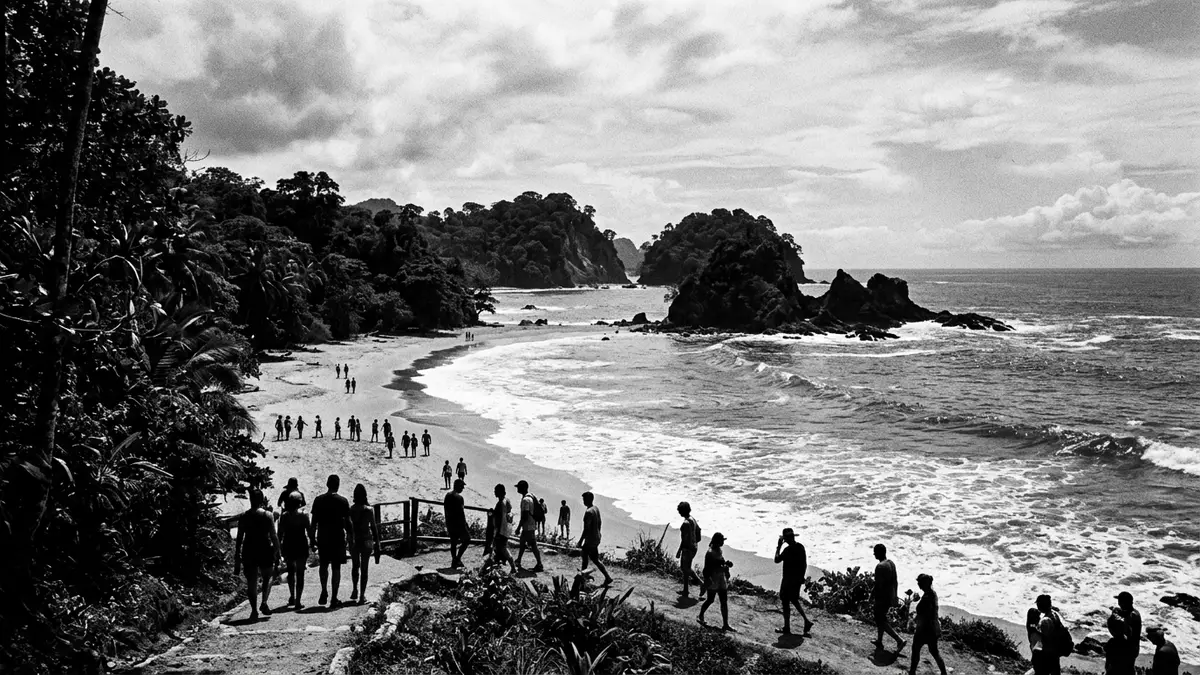
Parque Nacional Manuel Antonio on Costa Rica’s central Pacific coast is a compact national park where dense coastal forest meets pale sand and rocky bays in a tightly drawn protected area. Created in 1972 to safeguard both land and sea along this stretch of shoreline, it lies just south of Quepos in Puntarenas province on the country’s Pacific side.
Forest ridges dropping into sheltered coves
Parque Nacional Manuel Antonio occupies a short section of coast where low forested hills run out into headlands and small peninsulas, breaking the shoreline into a series of coves and beaches backed by steep slopes. The protected land area covers around 1,983 ha, while marine zones surrounding the headlands and offshore rocks extend conservation well out into the Pacific waters.protected land area Within this compact footprint, the terrain shifts quickly from shaded forest paths to open sands facing small islands and exposed rock platforms.
The coastline inside the park includes beaches such as Manuel Antonio and Espadilla Sur, reached from inland paths where forest canopy gives way abruptly to wide arcs of sand fronted by gentle surf. Offshore, clusters of rocky islets rise from the sea, forming a backdrop to the bays and providing habitat for seabirds above the waterline. The combination of enclosed coves, projecting promontories and nearshore rocks gives this short length of coast a varied profile despite the park’s modest size.Manuel Antonio National Park
A protected mosaic of land and sea since 1972
Parque Nacional Manuel Antonio was established as a national park in 1972, joining Costa Rica’s wider system of protected areas in the Central Pacific Conservation Area.established as a national park It protects a belt of tropical forest, coastal habitats and adjoining marine environments in a relatively small unit compared with some of the country’s larger reserves. The designation covers both terrestrial zones and waters around the headlands and islands, making it a notable example of a park that formally links land and sea protection along one stretch of shoreline.protected areas in the Central Pacific
Within the forested part of Parque Nacional Manuel Antonio, walking routes lead through secondary and primary growth with views opening intermittently towards the Pacific. The vegetation includes species typical of Costa Rica’s central Pacific lowland rainforest, with broad-leaved trees, lianas and dense understorey along the slopes. Clearings near the bays mark former coastal grazing and dwelling areas that were incorporated into the park’s boundary when it was declared, leaving pockets where forest is regenerating among older stands.history of Quepos and Manuel Antonio
Wildlife in a compact coastal setting
The mix of lowland forest, mangrove patches and coastal habitats inside Parque Nacional Manuel Antonio supports a wide range of animals that visitors might encounter along the paths and shores. Mammals recorded in the park include white-faced capuchin monkeys, howler monkeys and three-toed sloths, which use the forest canopy and edges near clearings. Agoutis and raccoons move on the ground and around picnic zones close to the beaches.wildlife recorded in the park Reptiles such as iguanas and various lizards bask on rocks and fallen trunks, while numerous bird species pass through the mixed habitats.
Marine life along the coast includes fish, crustaceans and other organisms associated with rocky shores and sandy bays, and offshore waters form part of migratory routes for larger species that pass the headlands. The presence of forest right to the shore gives many animals continuous cover almost to the waterline, an arrangement that is relatively rare on settled coasts where buildings or roads often separate woodland from the beach. This close meeting of rainforest and ocean, coupled with the park’s small size and varied terrain, gives Parque Nacional Manuel Antonio a distinct ecological character among Costa Rica’s Pacific protected areas.Nationaal park Manuel Antonio
Visiting Parque Nacional Manuel Antonio: what travellers from Western Europe should know
- Parque Nacional Manuel Antonio lies on Costa Rica’s central Pacific coast just south of Quepos, at the end of the road through the Manuel Antonio district.
- Inside the park, marked trails include sections of boardwalk and compacted earth paths with short, sometimes steep gradients linking forest viewpoints and beaches.
- The terrain alternates between shaded forest and exposed sand, and approaches to some viewpoints involve stairs and uneven ground on coastal slopes.
- The official language is Spanish and the currency is the Costa Rican colón.
- Entry requirements depend on your nationality; UK travellers can check the FCDO travel advice at gov.uk/foreign-travel-advice, Irish travellers the Department of Foreign Affairs at ireland.ie.
Searching for Parque Nacional Manuel Antonio on social platforms
These links open searches for Parque Nacional Manuel Antonio on each platform.Frequently asked questions about Parque Nacional Manuel Antonio
Where is Parque Nacional Manuel Antonio located?
Parque Nacional Manuel Antonio is on Costa Rica’s central Pacific coast in Puntarenas province, just south of Quepos and around 157 km south of San José.
What can visitors expect inside the park?
Visitors encounter forest trails, viewpoints over the Pacific, sandy bays backed by slopes and offshore rocky islets within a compact mixed terrestrial and marine protected area.
What makes Parque Nacional Manuel Antonio distinctive among Costa Rican parks?
It combines lowland rainforest, beaches and nearshore marine protection in a relatively small area, bringing forest right down to the ocean along a short stretch of coastal headlands.


