
Parque Nacional Tortuguero: canals, rainforest and sea turtles
Published on 09/18/2026 at 19:20 | Editorial responsibility: Rafael Müller, Editor-in-Chief AD HOC NEWS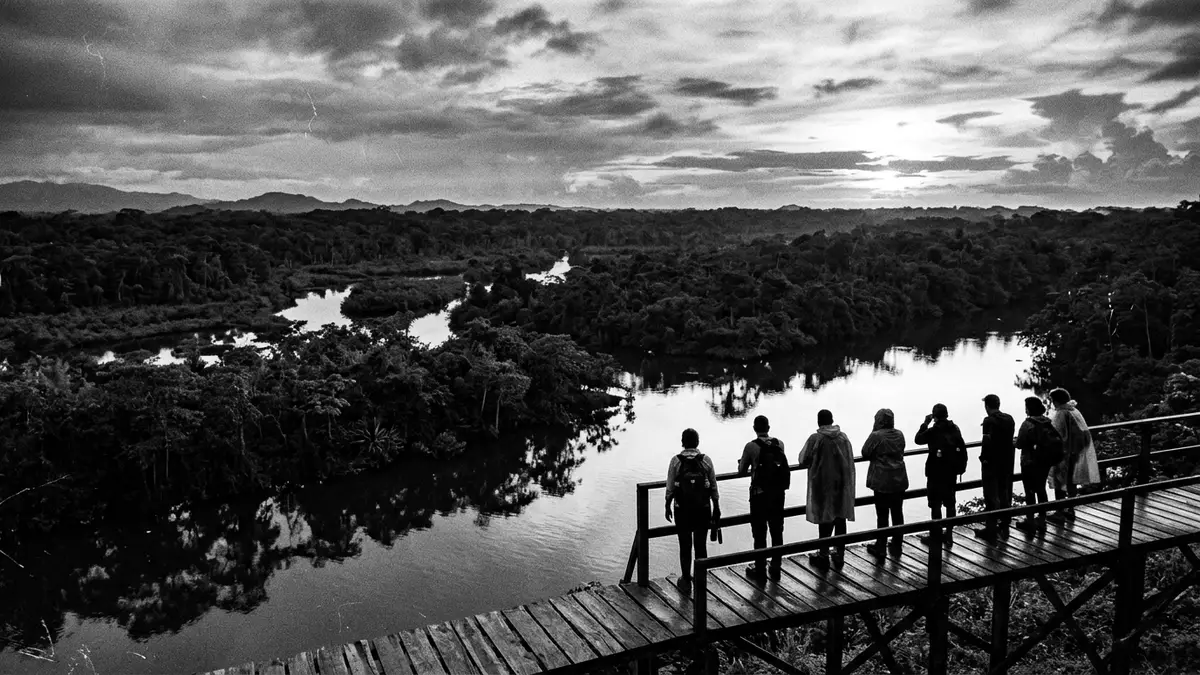
Parque Nacional Tortuguero on Costa Rica’s northeastern Caribbean coast is a lowland rainforest and wetland landscape shaped by canals, lagoons and long Caribbean beaches around the small village of Tortuguero in Limón Province. Created as a national park in 1970 within the Tortuguero Conservation Area, it protects a mosaic of freshwater and marine habitats that has gained international recognition for green sea turtle nesting along its shore.Tortuguero National Park in Limón Province
A flooded forest reached by water
The defining experience of Parque Nacional Tortuguero is arriving by water into a flooded forest landscape where canals serve as thoroughfares instead of roads. The park occupies tens of thousands of hectares of freshwater canals, swamps and beaches along Costa Rica’s northeastern Caribbean coast, with elevations rising from sea level to low hills such as Cerro Tortuguero.Tortuguero National Park spans 76,937 hectares Within this protected area, visitors navigate narrow channels edged by lowland tropical rainforest, passing stands of palms, buttressed trees and thick understorey vegetation mirrored in dark water.
The roadless character of the park shapes its layout: Tortuguero village faces the Caribbean Sea on one side and inland canals on the other, and park headquarters stand near the settlement at Cuatro Esquinas just south of the village.Park headquarters at Cuatro Esquinas Boat traffic replaces road traffic here, with long, low vessels moving between the village and park sectors along marked waterways lined by forest and occasional clearings.
Rain, habitats and biodiversity in the Caribbean lowlands
Parque Nacional Tortuguero lies in one of Costa Rica’s wettest regions, and the high rainfall supports a range of habitats that stack from sea to interior forest. Within the park boundaries lie tropical wet forest, mangrove forest, palm swamps, beaches, estuaries and freshwater riverine systems that together form eleven ecological habitats.Multiple habitats including tropical wet forest The low relief and abundant water create a flat floodplain parted by canals, lagoons and natural waterways that carry sediment and organic matter between forest and sea.
This varied terrain supports an extensive list of species, from tree and plant diversity to mammals and birds visible along the canals. Sources document more than 400 tree species and thousands of plant species, alongside three monkey species, sloths, American crocodiles and caimans in the waterways and wetlands.More than 350 bird species and 400 tree species Bird records mention hundreds of species, including herons, kingfishers and parrots, reflecting the mix of forest edge, open water and coastal habitats found within short distances of one another.
Sea turtles on a Caribbean nesting beach
Beyond the canals and forest, the open Caribbean shoreline gives Parque Nacional Tortuguero a second, distinctive identity as a key nesting area for sea turtles. The park holds the largest documented green sea turtle nesting beach in the Western Hemisphere, and its long stretch of sand provides nesting sites for leatherback, hawksbill and loggerhead sea turtles as well.Green turtle nesting beach in the Western Hemisphere The combination of protected status, controlled access and remote location has made this coastline a focal point for marine turtle conservation in the Caribbean.
Tortuguero’s importance for wetlands and coastal ecosystems has also been recognised through international designations. In 1991 the Ramsar Convention on Wetlands acknowledged the site for the diversity and ecological value of its wetlands and for the protection of flora and fauna in these habitats.Recognition under the Ramsar Convention Together with its status as part of the Tortuguero Conservation Area administered by Costa Rica’s National System of Conservation Areas, this frames the park as a long-term conservation landscape rather than a single attraction; forests, waterways and nesting beaches form one protected whole.
Visiting Parque Nacional Tortuguero: what travellers from Western Europe should know
- Parque Nacional Tortuguero surrounds Tortuguero village on Costa Rica’s northeastern Caribbean coast in Limón Province, and access to the park sectors and settlement is by riverboat along inland canals or by domestic flight on small aircraft rather than by road.
- The terrain consists of flat floodplain, wetlands and lowland rainforest with many routes following canals; movement in the park commonly involves travelling in boats along narrow waterways and walking on trails that can be wet and uneven under dense vegetation.
- Parque Nacional Tortuguero lies outside the UK, Ireland and the EU. Entry requirements depend on your nationality; UK travellers can check the FCDO travel advice at gov.uk/foreign-travel-advice, Irish travellers the Department of Foreign Affairs at ireland.ie.
- The official language is Spanish and the currency is the Costa Rican colón, used in Tortuguero village and in services linked to visits to the surrounding park.
Searching for Parque Nacional Tortuguero on social platforms
These links open searches for Parque Nacional Tortuguero on each platform.Frequently asked questions about Parque Nacional Tortuguero
Where is Parque Nacional Tortuguero?
Parque Nacional Tortuguero is in Limón Province on Costa Rica’s northeastern Caribbean coast, surrounding Tortuguero village and extending inland over canals, rainforest and coastal wetlands.
What should visitors expect on a visit to Parque Nacional Tortuguero?
Visitors encounter a roadless landscape of canals, lagoons, lowland rainforest and Caribbean beaches, reaching park sectors by boat or small aircraft and exploring waterways and forest trails.
What makes Parque Nacional Tortuguero distinctive among Costa Rican parks?
The park combines an extensive canal and wetland system with tropical rainforest and a major Caribbean nesting beach that supports green sea turtles and other marine turtle species under long-standing protection.


