Persepolis and its stone terraces above Shiraz
Published on 08/06/2026 at 18:45 | Editorial responsibility: Rafael Müller, Editor-in-Chief AD HOC NEWS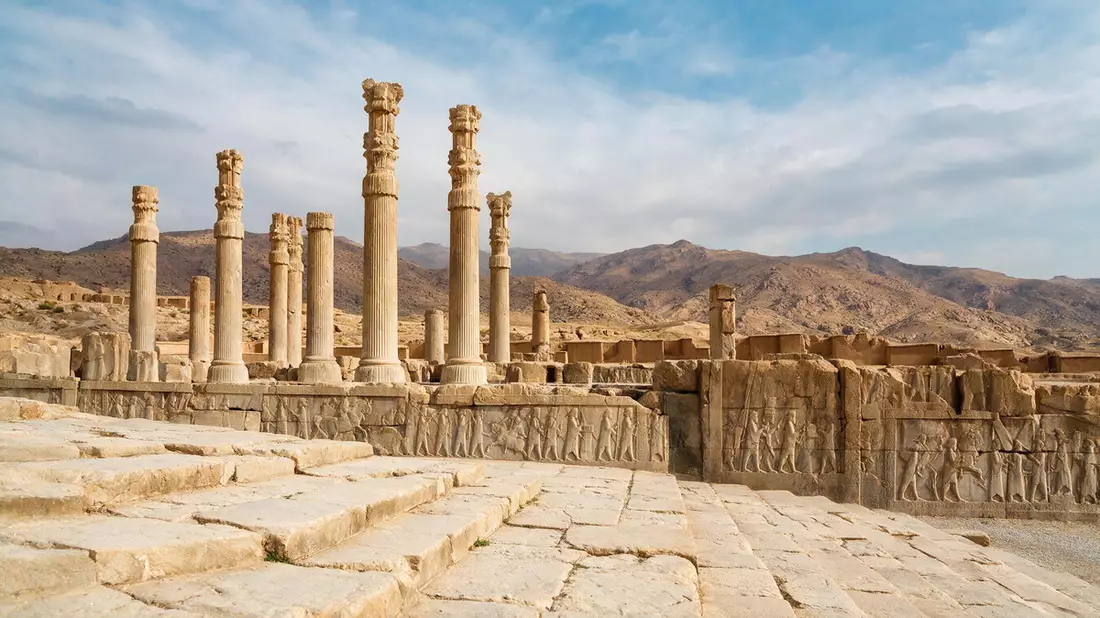
The stone terrace above the plain
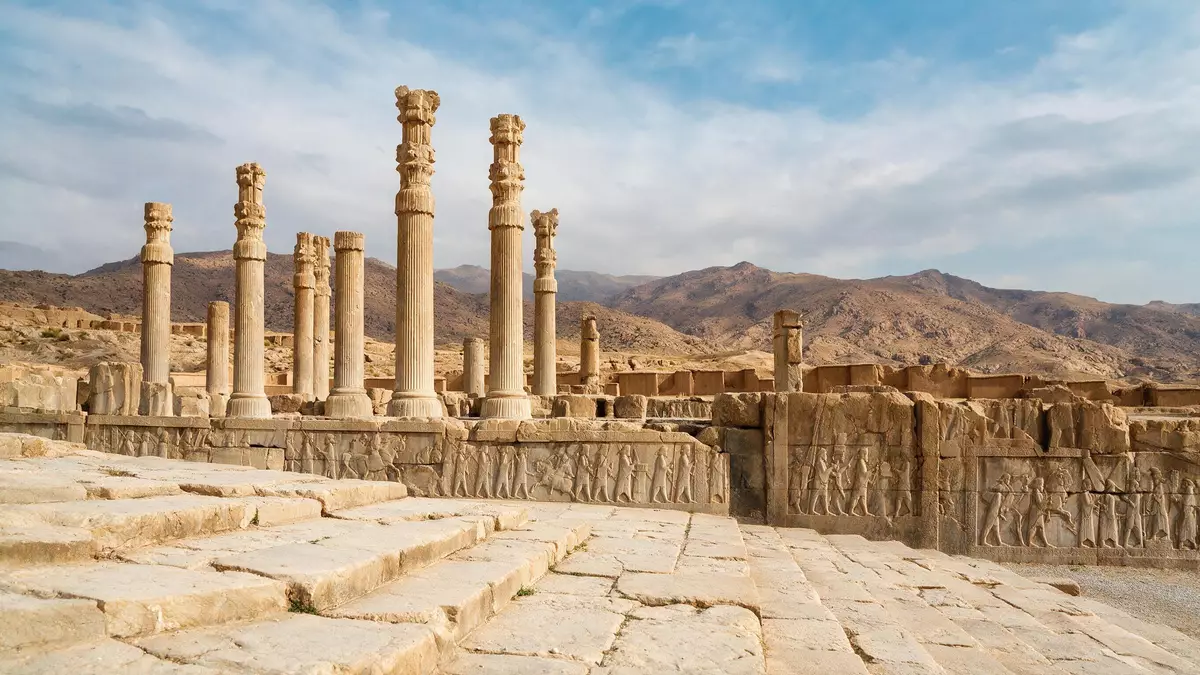
Persepolis stands on a broad stone terrace near Shiraz in southern Iran. The remains are part of the ceremonial centre of the Achaemenid Empire, with stairways, colonnades and carved reliefs spread across the platform.
The site is best known for the scale of its surviving masonry. Tall column bases, broken shafts and doorway carvings still mark the plan of halls and gateways, while the terrace itself gives the ruins a clear outline against the plain.
Reliefs, halls and gateways
Many of the surviving surfaces are carved in low relief. Processions of courtiers, tribute bearers and guards run along walls and doorways, giving the site a strongly ordered visual rhythm.
The standing remains include several monumental gateways and the traces of large audience halls. The stone work varies from heavy blocks in the terrace to finer carving on the staircases and door jambs, so the site reads as both platform and palace complex.
A royal setting in the Achaemenid world
Persepolis dates to the Achaemenid period and is traditionally dated to the late sixth century BC, with later additions over generations. It remained a ceremonial and administrative centre of imperial power, and its architecture reflects that formal role through scale, symmetry and display.
The site was later damaged by fire, and the ruins preserve that long change from royal complex to archaeological monument. What survives is not a single building but a layered landscape of terraces, entrances and decorated stone surfaces.
Visiting Persepolis: what travellers from Western Europe should know
- Persepolis is reached from Shiraz by road. The ruins are set on an open terrace, with stone steps and uneven ground across the site.
- Admission arrangements and opening hours are set by the site's operator and change with the season; the official website is the only binding source.
- Timed tickets or daily limits may apply, so it is worth checking the official booking page before travelling.
- Spring and autumn usually suit a visit best, with lighter heat than the Iranian summer. Morning light is also useful for seeing the reliefs clearly.
- The site itself involves walking over stone paving, steps and exposed ground, with little shelter from sun or wind.
- Entry requirements depend on your nationality. UK travellers should check the FCDO travel advice at gov.uk/foreign-travel-advice; Irish travellers the Department of Foreign Affairs at ireland.ie; EU and EEA citizens their own national foreign ministry.
Searching for Persepolis on social platforms
These links open searches for Persepolis on each platform.
Frequently asked questions about Persepolis
Where is Persepolis?
Persepolis stands near Shiraz in southern Iran, on a stone terrace beside the plain. It is one of the best-known archaeological sites of the Achaemenid world.
What does a visit involve?
Expect an open ruin field with steps, carved walls and scattered columns. The ground is uneven in places, and the site is exposed to sun.
What makes Persepolis distinctive?
Its stone terrace, monumental stairways and reliefs create a strong visual unity. The surviving fragments still make the scale of the imperial complex easy to read.