
Persepolis, the terraced throne of the Achaemenid kings
Published on 09/02/2026 at 15:54 | Editorial responsibility: Rafael Müller, Editor-in-Chief AD HOC NEWS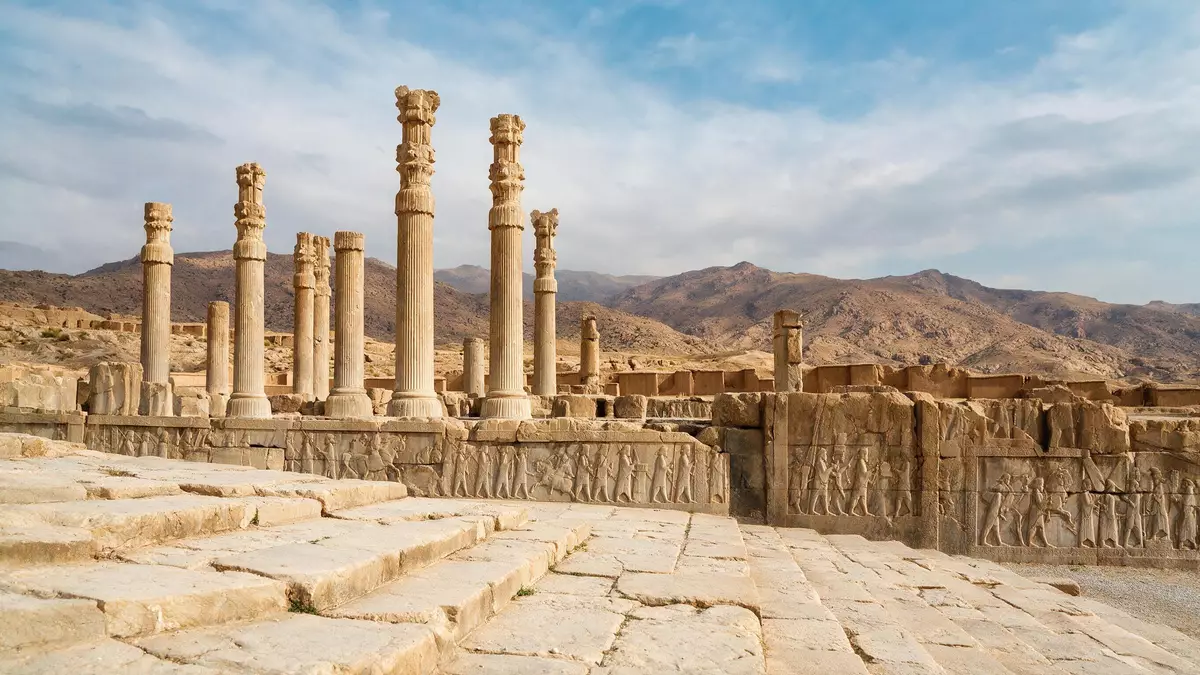
Persepolis near Shiraz in Iran is an ancient royal complex raised on a broad stone terrace as the ceremonial capital of the Achaemenid Empire in the late sixth century BC. Founded by Darius I around 518 BC and extended by his successors Xerxes I and Artaxerxes I, it concentrates palaces, audience halls and treasuries in a single monumental platform that continues to dominate the surrounding plain.
A terrace city for an empire
Persepolis stands on a half-natural, half-built terrace at the foot of Kuh-e Rahmat, a low limestone ridge in the Fars region of south-western Iran. The site lies north-east of Shiraz on the Marvdasht plain, close to the courses of the Pulvar and Kor rivers, which frame the wider landscape of fields and low hills.its position near Shiraz The terrace itself forms a kind of raised stone stage, roughly rectangular in plan, into which stairways, gateways and platform walls are cut and assembled in pale limestone.
Darius I, ruling from 522 to 486 BC, began construction of Persepolis around 518 BC as a formal seat for the Achaemenid dynasty in its Persian homeland.construction begins around 518 BC Subsequent kings, notably Xerxes I and Artaxerxes I, added further audience halls, palaces and service buildings over several generations, creating a terraced ensemble that combined ceremonial, administrative and storage functions within one fortified precinct.built over roughly 150 years
Apadana and the Gate of All Nations
The ceremonial route through Persepolis begins with the great staircases that rise from the plain to the terrace, leading towards the structure known as the Gate of All Nations. This gateway, largely attributed to the building programme of Xerxes I, formed a covered threshold at the western edge of the terrace through which delegations entered the complex.the Gate of All Nations at the western approach Its doorways are flanked by colossal stone guardian figures with powerful bodies and carved wings, adapted from earlier Assyrian and Babylonian imagery.
Beyond the gate, the route continues towards the Apadana, the principal audience hall of Persepolis and one of the most studied structures at the site.the Apadana audience hall The Apadana once stood as a vast hypostyle hall carried on dozens of tall, slender columns with elaborately carved capitals, some bearing paired animal forms. Around its base, stairway walls preserve extensive reliefs showing processions of figures in finely detailed garments, including Persian courtiers and delegates from across the empire. Many visitors focus on these carved scenes, which present lines of dignitaries bringing textiles, vessels, animals and other tribute towards the central power.
Reliefs, royal buildings and World Heritage status
Elsewhere on the terrace, further palaces built for Darius I and Xerxes I occupy stone platforms that step away from the main audience halls. These buildings, known today by names such as Tachara and Hadish, share materials and construction techniques with the Apadana but have more intimate scales and different internal arrangements.palaces by Darius and Xerxes A large Throne Hall, supported by a grid of columns, adds another reception space to the ensemble, and an extensive treasury complex stands to the side of the main ceremonial axis, where excavations have identified storerooms and administrative areas.
The stone reliefs across Persepolis are among its most distinctive features, extending beyond the Apadana stairways to terrace walls and doorways. In addition to delegations from different lands, they show royal guards, lotus motifs, lions and bulls in dynamic compositions, all carved into the limestone surfaces with a high degree of precision.reliefs of guards and delegations The scale of the terrace, the quality of the carving and the concentration of royal architecture led to the inscription of Persepolis on the UNESCO World Heritage List in 1979 as a cultural site that bears outstanding testimony to Achaemenid civilisation.inscribed on the World Heritage List in 1979
Visiting Persepolis: what travellers from Western Europe should know
- Persepolis lies north-east of Shiraz on the Marvdasht plain in Fars province, and is reached overland from Shiraz by road through agricultural countryside and low hills.
- On the terrace itself, the main route involves broad external stairways and long walks across uneven stone surfaces, so visiting the different halls and gateways requires steady footing and comfort with outdoor steps.
- The ruins stand in an open landscape near Kuh-e Rahmat with little structural shade, so the exposed setting on the stone platforms means strong sunlight on the terrace for much of the day.
- The official language is Persian and the currency is the Iranian rial.
- Entry requirements depend on your nationality; UK travellers can check the FCDO travel advice at gov.uk/foreign-travel-advice, Irish travellers the Department of Foreign Affairs at ireland.ie.
Searching for Persepolis on social platforms
These links open searches for Persepolis on each platform.
Frequently asked questions about Persepolis
Where is Persepolis in relation to Shiraz?
Persepolis stands on the Marvdasht plain in Fars province, about 50 km north-east of Shiraz, at the foot of the low limestone ridge known as Kuh-e Rahmat.
What should visitors expect when exploring Persepolis?
Visitors walk up wide exterior stairways to a raised stone terrace, then move between ruins of gateways, audience halls and palaces where carved reliefs and column bases mark the former ceremonial spaces.
What makes Persepolis distinctive among ancient sites?
Persepolis combines a large terraced platform, monumental columned halls, extensive stone reliefs and a clear association with named Achaemenid kings in a single complex that was recognised as a World Heritage Site in 1979.


