Petra's rose-red rock and carved façades
Published on 08/09/2026 at 15:07 | Editorial responsibility: Rafael Müller, Editor-in-Chief AD HOC NEWS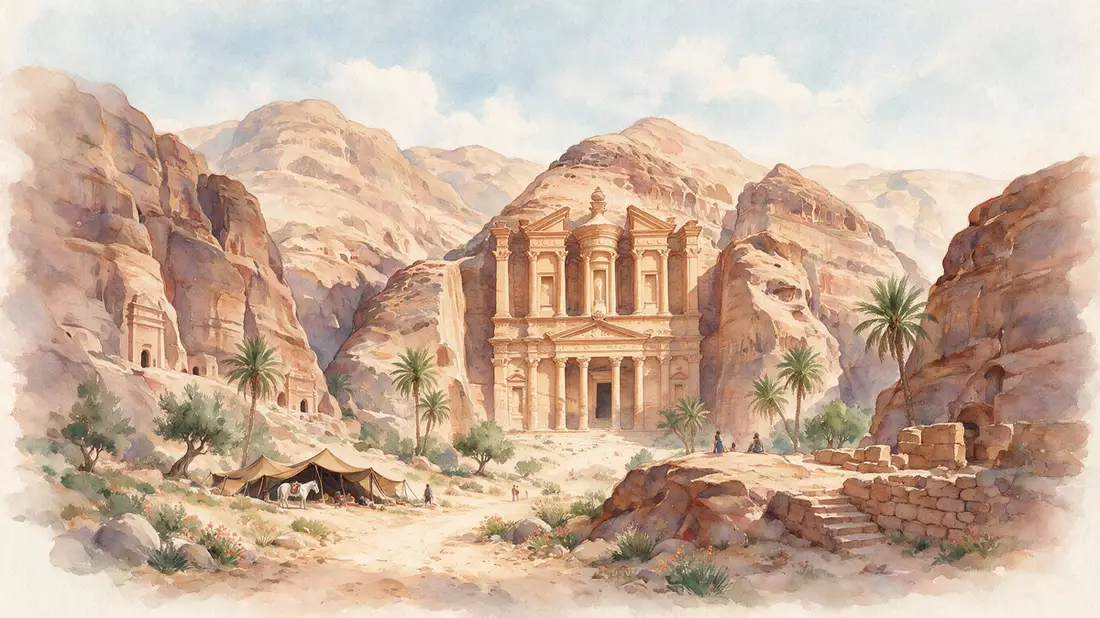
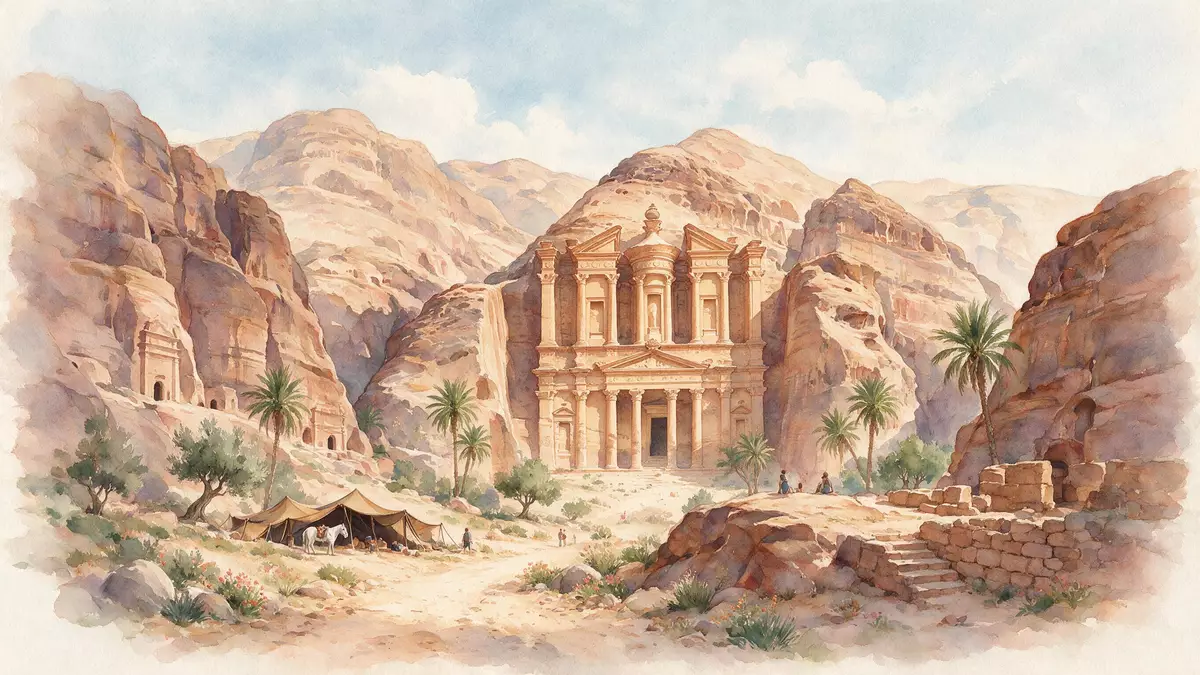
Petra in Wadi Musa is a city of carved façades, narrow passages and monumental tomb fronts cut into rose-red sandstone. Its core remains tied to the Nabataeans, the Arab trading people who made the site their capital in the Hellenistic and Roman periods.
Carved stone on a grand scale
The best-known approach runs through the Siq, a long, narrow gorge whose walls rise sharply on both sides. At its end stands the Treasury, a façade hewn from the rock face with columns, broken pediments and a deep sense of vertical drama.
Elsewhere, Petra spreads across cliffs and open ground in the same carved language. Tombs, façades, stairways and temple fronts appear directly in the sandstone, while the natural rock carries much of the architecture.
The Nabataean capital in the rock
Petra flourished under the Nabataeans, whose power is linked with trade routes across Arabia and the Levant. The city later came under Roman rule, and its layers of Nabataean and Roman work remain visible in the stone.
Among the most recognisable remains are the Royal Tombs, the theatre cut into the hillside and the Colonnaded Street. These elements show a settlement that combined ceremonial display, burial space and urban planning within a rocky landscape.
Sandstone colours and shifting forms
The sandstone changes tone across the site, moving from pale buff to red, orange and brown. Weathering has softened some edges, while other parts keep crisp carved lines and sharp shadow.
Petra also changes scale from one space to the next. A constricted approach gives way to broad openings, and small carved niches sit beside façades that rise several storeys high.
Visiting Petra: what travellers from Western Europe should know
- The site is reached from Wadi Musa by road and by foot through the main archaeological area.
- Admission arrangements and opening hours are set by the site's operator and change with the season; the official website is the only binding source.
- Spring and autumn suit long walks best, while early morning and late afternoon give softer light on the rock.
- The ground includes uneven paths, rock-cut steps and long distances on foot, with some sections exposed to sun.
- Arabic is the local language, and cash and card payment are both used in the town; restrictions may apply on site.
- Entry requirements depend on your nationality. UK travellers should check the FCDO travel advice at gov.uk/foreign-travel-advice; Irish travellers the Department of Foreign Affairs at ireland.ie; EU and EEA citizens their own national foreign ministry.
Searching for Petra on social platforms
These links open searches for Petra on each platform.
Frequently asked questions about Petra
Where is Petra?
Petra lies in southern Jordan, near Wadi Musa, within a landscape of sandstone cliffs and narrow gorges.
What should visitors expect?
Expect a large archaeological site with long walks, carved façades and uneven ground. Some of the most memorable views come from the approach through the Siq and the open spaces beyond it.
What makes Petra distinctive?
Its carved rock architecture defines it. The combination of Nabataean funerary monuments, Roman urban elements and dramatic sandstone geology gives the site its character.