
Piopiotahi: a glacier-carved fiord of rock and water
Published on 09/22/2026 at 12:31 | Editorial responsibility: Rafael Müller, Editor-in-Chief AD HOC NEWS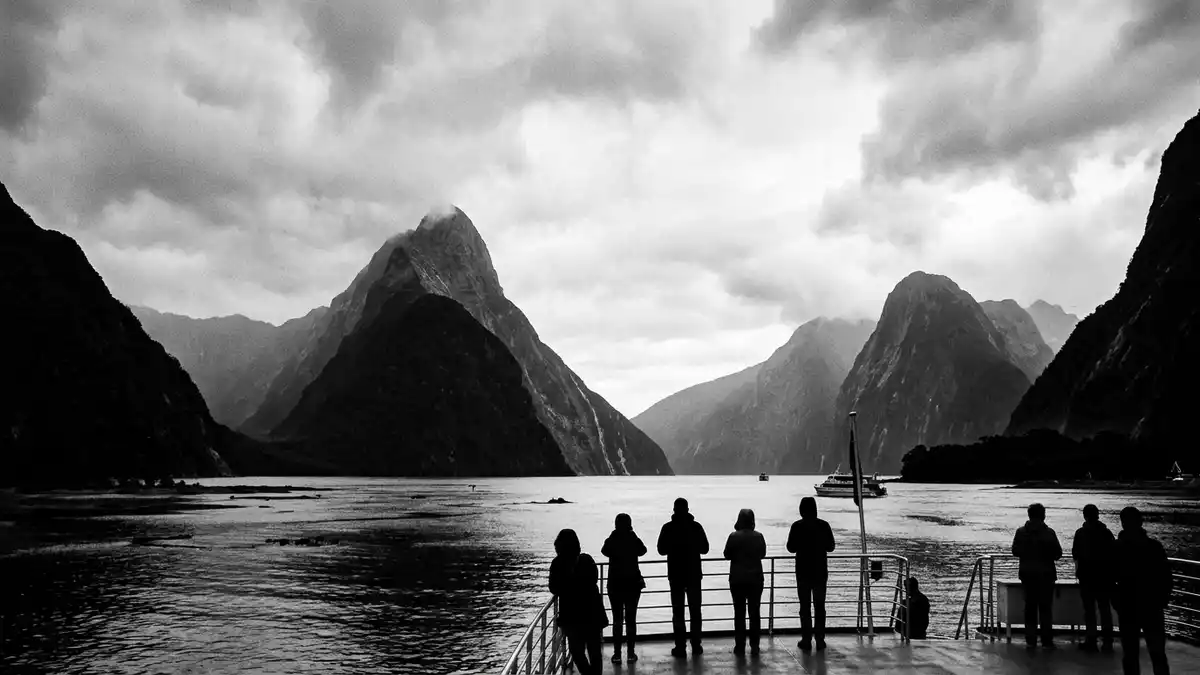
Piopiotahi is a sea-filled glacial valley on New Zealand’s South Island, where steep rock walls descend towards dark water. The place is known in English as Milford Sound, yet its physical form is that of a fiord: glaciers carved the valley before the sea entered it.
Water, rock and forest occupy the same narrow landscape. Piopiotahi lies within Fiordland National Park and the Te W?hipounamu World Heritage site, with its M?ori name connecting the landscape to the piopio, an extinct native thrush.
Piopiotahi and the shape of a glacial valley
Piopiotahi extends inland from the Tasman Sea through a long, steep-sided valley. Glacial ice carved the surrounding rock over millions of years, leaving cliffs, ridges and deep water in close relationship.
The name “Milford Sound” reflects an older European naming tradition, but “fiord” is the geological term for this landform. The distinction is visible in the valley itself, whose walls carry the marks of glacial erosion. glacial formation of Piopiotahi provides the landscape’s essential context.
From M?ori name to protected landscape
Piopiotahi means “one native thrush”, referring to the piopio. The bird is extinct, but its name remains part of the fiord’s official identity and cultural history.
Piopiotahi forms part of Fiordland National Park, a protected area covering more than 1.2 million hectares. Fiordland became a World Heritage Area in 1986, and the wider Te W?hipounamu site includes several protected landscapes on New Zealand’s South Island. Fiordland’s protected history places the fiord within a broader natural and cultural region.
The marine reserve beneath the cliffs
Protection continues below the waterline. The Piopiotahi Marine Reserve was established in 1993 along the northern side of the fiord, stretching from the settlement at the head of the inlet towards Dale Point.
The reserve covers 690 hectares and extends for 16 km. Its habitats include deep muddy fiord basins, deep reef and shallow rock walls along the shore. Piopiotahi Marine Reserve shows how the protected landscape includes both its visible cliffs and submerged environments.
Black coral is associated with the marine life of the fiord, where dark water, rock walls and deep basins create a distinctive underwater setting. The marine reserve gives the name Piopiotahi a second geographical meaning, linking the landform with the waters around it.
Visiting Piopiotahi: what travellers from Western Europe should know
- Piopiotahi lies on the west coast of New Zealand’s South Island, within Fiordland National Park. State Highway 94 reaches the settlement at the head of the fiord from the direction of Te Anau.
- The landscape combines steep mountain walls, deep water and exposed rock. Boat journeys enter the fiord from its inland head towards the Tasman Sea.
- The official language is English and the currency is the New Zealand dollar.
- Piopiotahi is a high-rainfall landscape. Waterfalls may appear on the rock walls after rain, while forest covers many slopes above the water.
- Entry requirements depend on your nationality; UK travellers can check the FCDO travel advice at gov.uk/foreign-travel-advice, Irish travellers the Department of Foreign Affairs at ireland.ie.
Searching for Piopiotahi on social platforms
These links open searches for Piopiotahi on each platform.
Frequently asked questions about Piopiotahi
Where is Piopiotahi?
Piopiotahi is on New Zealand’s South Island, within Fiordland National Park on the island’s south-western coast. The fiord opens towards the Tasman Sea.
What can visitors expect at Piopiotahi?
Visitors encounter a steep-sided glacial valley, deep water, native forest and rock walls marked by rain and waterfalls. Boat trips provide views from the water.
What makes Piopiotahi distinctive?
Its distinctive character comes from the meeting of glacier-carved rock, seawater and M?ori cultural history. The name refers to the extinct piopio and remains part of the place’s official identity.


