
Place de la Concorde as a stone stage of French history
Published on 09/21/2026 at 14:29 | Editorial responsibility: Rafael Müller, Editor-in-Chief AD HOC NEWS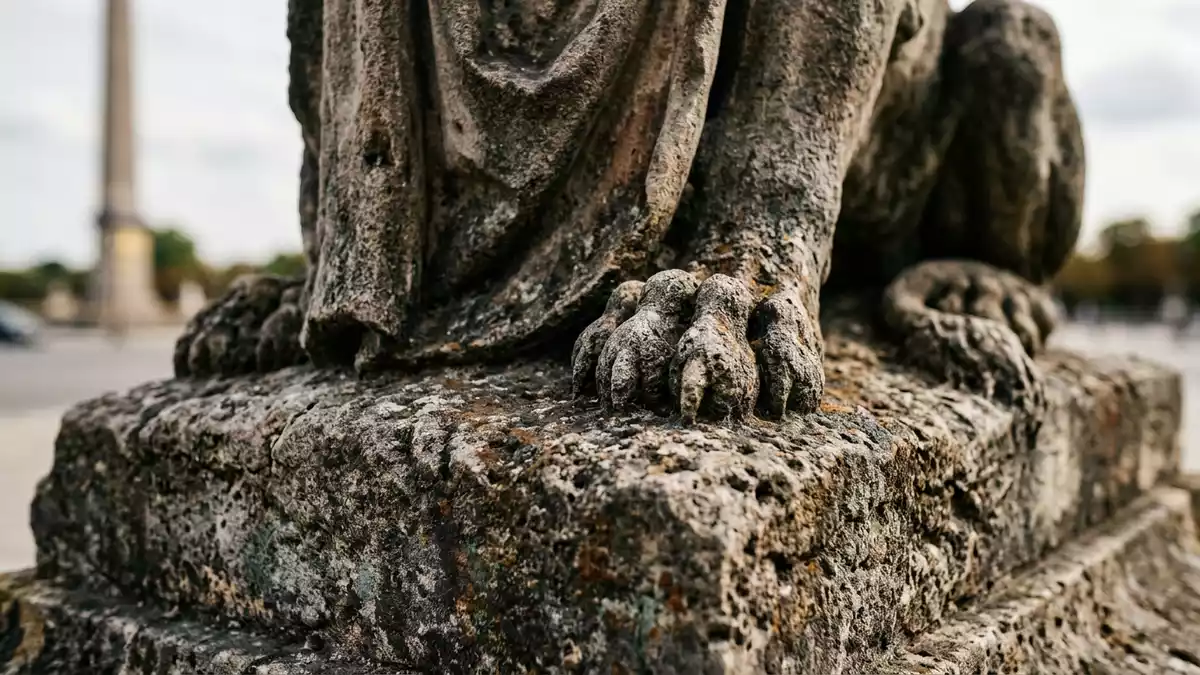
Place de la Concorde is a broad, open square on the right bank of the Seine in Paris, framed by classical architecture, statues and an Egyptian obelisk that rises over the traffic. In the eighteenth century it was created as Place Louis XV and later became the stage for key scenes of the French Revolution, before receiving its present name Place de la Concorde in 1795 as a gesture towards reconciliation.
A classical square between river and avenues
Place de la Concorde lies between the Jardin des Tuileries to the east and the Champs-Élysées to the west, with the Seine running along its southern edge and the Rue de Rivoli to the north.The square in central Paris The site was laid out in the mid eighteenth century as a formal setting for an equestrian statue of King Louis XV, with a geometrical plan that reads clearly on any map.Designed between 1757 and 1779
The architect Ange-Jacques Gabriel designed the square in the 1750s in a restrained classical style, using an octagonal outline, broad carriageways and carefully aligned vistas towards the river and the surrounding streets.Ange-Jacques Gabriel’s layout On the northern side stand grand public buildings with matching facades, including the former Garde-Meuble and the building that houses the Hôtel de Crillon, whose colonnades form a composed backdrop to the open space.
From royal celebration to revolutionary square
When the square was first created in the eighteenth century it was named Place Louis XV and centred on a statue of the king, celebrating his recovery from illness and projecting royal authority into the expanding city.The original Place Louis XV During the French Revolution that statue was pulled down and the space was renamed Place de la Révolution, reflecting the political upheaval that had overtaken the monarchy.Renamed Place de la Révolution
In 1793 a guillotine stood in the square and it was here that King Louis XVI and Queen Marie Antoinette were executed, together with figures such as Maximilien Robespierre, placing Place de la Concorde at the centre of the Reign of Terror.Executions during the Revolution In 1795 the authorities adopted the name Place de la Concorde for the square, signalling a wish for harmony after those events, and in the nineteenth century the July Monarchy under Louis-Philippe asked the architect Jacques-Ignace Hittorff to redesign the space while keeping Gabriel’s overall framework.Hittorff’s nineteenth-century redesign
Obelisk, fountains and sculpted borders
The most striking single feature of Place de la Concorde is the Luxor Obelisk, an ancient Egyptian monument that was offered to France in the 1830s by the Egyptian ruler Mehemet Ali and erected in the centre of the square a few years later.The Luxor Obelisk from Egypt Covered in hieroglyphs and raised on a pedestal, it stands between two monumental fountains that Hittorff added in the nineteenth century, the Fontaine des Mers and the Fontaine des Fleuves, whose basins and sculpted figures form a counterpart to the obelisk’s vertical shaft.Fountains and obelisk ensemble
Around the perimeter of the square stand stone balustrades, corner pavilions and eight statues representing major French cities, placed on high plinths that look in towards the open centre.Statues of French cities The combination of axial views, classical ornament and heavy traffic makes Place de la Concorde feel less like a closed plaza than a grand junction, where the structures and monuments form a fixed stone frame around the constant movement of Paris.
Visiting Place de la Concorde: what travellers from Western Europe should know
- Place de la Concorde lies on the right bank of the Seine between the Jardin des Tuileries and the Champs-Élysées, on the axis that links the Louvre with the Arc de Triomphe.
- The square is paved with broad carriageways and wide pavements, and crossing between the central island and the surrounding pavements involves negotiating multiple traffic lanes and kerbs.
- The Concorde station of the Paris Métro lies under the north side of the square, connecting Place de la Concorde to several lines in the wider network.
- The official language is French and the currency is the euro.
- Entry requirements depend on your nationality; UK travellers can check the FCDO travel advice at gov.uk/foreign-travel-advice, Irish travellers the Department of Foreign Affairs at ireland.ie.
Searching for Place de la Concorde on social platforms
These links open searches for Place de la Concorde on each platform.
Frequently asked questions about Place de la Concorde
Where is Place de la Concorde located in Paris?
Place de la Concorde lies on the right bank of the Seine between the Jardin des Tuileries and the Champs-Élysées, at the western end of the historic axis through central Paris.
What can visitors expect when they arrive at Place de la Concorde?
Visitors encounter a vast paved square dominated by the Luxor Obelisk, two monumental fountains, constant traffic and long views towards the Louvre, the Champs-Élysées and the river.
What makes Place de la Concorde distinctive among Parisian squares?
Place de la Concorde combines an eighteenth-century classical layout, a nineteenth-century Egyptian obelisk, sculpted fountains and a direct association with the French Revolution in a single open urban space.


