
Plaza de Espana in Sevilla, a sweeping arc of brick and water
Published on 09/21/2026 at 08:31 | Editorial responsibility: Rafael Müller, Editor-in-Chief AD HOC NEWS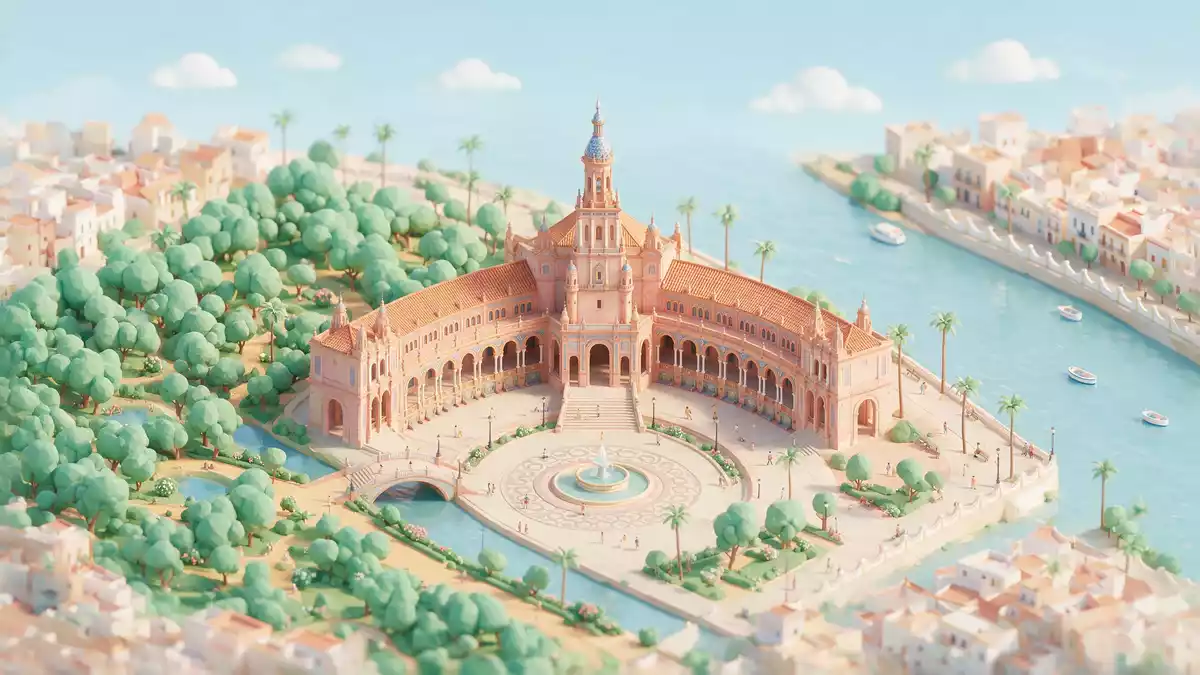
Plaza de Espana in Sevilla is a sweeping semi-circular ensemble of brick, water and glazed ceramic set along the edge of Maria Luisa Park in southern Spain. Conceived in the early twentieth century by Sevillian architect Aníbal González and completed for the Ibero-American Exposition of 1929, it turns a fairground showpiece into a lasting architectural stage of Spanish regional styles.
A semi-circular monument to a world’s fair
Plaza de Espana occupies a broad semi-circular footprint on the north-eastern side of Maria Luisa Park, where the exhibition grounds for the Ibero-American Exposition of 1929 spread out among pavilions and avenues.Maria Luisa Park Construction began in 1914 and ran through the 1920s, so the complex carries the character of early twentieth-century Andalusia.works developed between 1914 and 1929
The plaza formed the largest single construction of the exposition and acted as Spain’s national pavilion within the exhibition grounds.largest construction of the Exposición Iberoamericana Aníbal González, already known in Sevilla for other projects, laid out the great curve of buildings and colonnades that embrace the central open space.architect Aníbal González The project was substantially completed in 1928, giving visitors to the world’s fair a new architectural focus when the exposition opened in 1929.built in 1928 for the Ibero-American Exposition
Regionalism in brick, tile and wrought iron
The architecture of Plaza de Espana belongs to Spanish Regionalism, a movement that blends historic references with local materials and craft traditions.Regionalism Architecture González combined Renaissance Revival, Baroque Revival and Neo-Mudéjar elements, reworking arches, cornices and ornamental details into a single expansive composition.mixing Renaissance, Baroque and Neo-Mudéjar styles Exposed brick is set against stretches of brightly glazed ceramic, while wrought iron work adds fine lines to railings and lamps.exposed brick, ceramics and wrought iron
The main building follows the semi-circular line of the plaza, with a rhythm of galleries and arches facing the central space. At each end rises a tower that anchors the curve and is visible from surrounding parts of Sevilla.tower at either end Inside the arc, ceramic balustrades edge a canal, and bridges cross the water towards the centre, where a fountain marks the focus of the composition.complex of buildings, alcoves, bridges and canal Together, brick walls, water, planted areas and ceramic surfaces turn the plaza into an outdoor gallery of Andalusian craft.
Ceramic geography and later uses
Along the inner side of the semi-circular building, ceramic benches form a sequence dedicated to the provinces of Spain, setting maps and coats of arms into tiled panels.benches for the Spanish provinces Above them, medallions depict figures from Spanish history, adding another layer of reference to the long colonnade.medallions of historical figures Brick, stone and tile work together to give the plaza its strong visual identity, with colour concentrated around the benches and balustrades.
After the exposition ended, the main building took on a governmental role, housing offices linked to the administration of Andalusia.later government offices The wider Maria Luisa Park, with its avenues and neighbouring pavilions from the same period, keeps Plaza de Espana within a landscape of landscaped walks and exhibition architecture.park setting and exhibition Set between planted parkland and the city beyond, the plaza’s long curve and combination of materials remain one of the clearest expressions of Sevilla’s early twentieth-century architecture.
Visiting Plaza de Espana: what travellers from Western Europe should know
- Plaza de Espana stands on the south side of central Sevilla, within Maria Luisa Park, and is reached along city streets that lead into the park’s avenues.
- The plaza’s central area is level, but access to the upper galleries and viewpoints runs through staircases and ramps inside the semi-circular building.
- The canal and fountain sit within the open space of the plaza, with low balustrades and bridges that separate walkways from the water.
- The official language is Spanish and the currency is the euro.
Searching for Plaza de Espana on social platforms
These links open searches for Plaza de Espana on each platform.
Frequently asked questions about Plaza de Espana
Where is Plaza de Espana in Sevilla?
Plaza de Espana stands within Maria Luisa Park on the southern side of central Sevilla, forming part of the ensemble of buildings linked to the Ibero-American Exposition of 1929.
What can visitors expect when they arrive at Plaza de Espana?
Visitors encounter a broad semi-circular plaza framed by brick galleries, towers and a canal, with ceramic benches, bridges and a central fountain set within the open space.
What makes Plaza de Espana distinctive among Sevilla’s public spaces?
Its combination of Spanish Regionalism architecture, semi-circular layout and sequence of ceramic benches dedicated to the provinces of Spain gives Plaza de Espana a character unlike other city squares.


