
Plaza Mayor in Salamanca and its golden Baroque arcades
Published on 09/17/2026 at 16:58 | Editorial responsibility: Rafael Müller, Editor-in-Chief AD HOC NEWS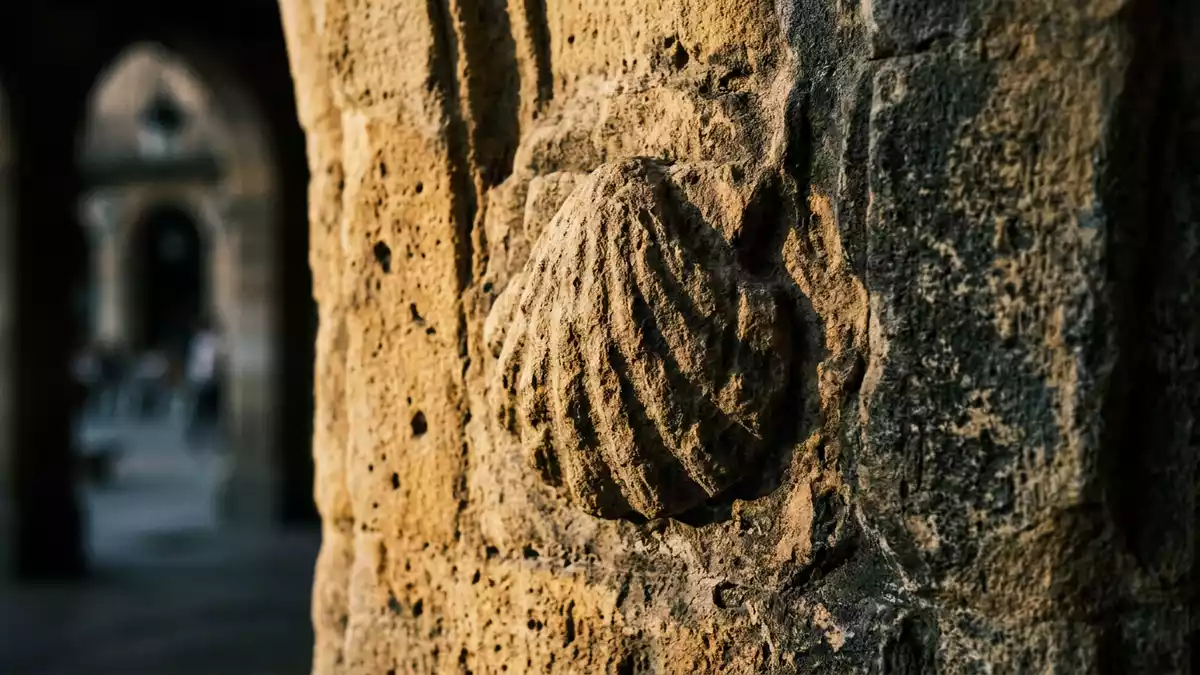
Plaza Mayor in Salamanca is a grand eighteenth-century Baroque square of golden sandstone, enclosed by arcaded façades that turn an urban space into a single architectural room at the centre of the city. Work on the present square began in 1729 under the architect Alberto de Churriguera and continued through the following decades, giving Salamanca a unified civic forum in the Bourbon period of King Philip V.
A Baroque room under the Castilian sky
From ground level, Plaza Mayor reads as a single continuous room open to the sky, with arcades running around all four sides and upper-storey façades lined with balconies. The design belongs to the Spanish Baroque tradition, with a strong link to the Churrigueresque current associated with Alberto de Churriguera, whose layout set the proportions and rhythm of the square’s pavilions.Spanish Baroque tradition The façades are built in Villamayor stone, a sandstone from the region whose colour ranges through warm golden tones and helps give Salamanca its “Golden City” character.Villamayor stone façades
The square forms an irregular quadrilateral but is ordered by a clear hierarchy of sides, with the City Hall pavilion on the north edge and corresponding ranges on the east, south and west. On the north side the Ayuntamiento de Salamanca stands as a Baroque civic building with granite arches and sculptural decoration, marking the institutional presence within the broader ring of arcades.City Hall pavilion Around the ground level, arches carried by columns define sheltered walkways, while the upper storeys rise in a steady rhythm of windows and ornamental balconies.
Eighteenth-century origins and historic status
The present Plaza Mayor emerged in the eighteenth century from a larger medieval market space known as Plaza de San Martín, which had stretched across several adjoining squares used for trade, festivities and civic ceremonies. In the Bourbon era, local authorities sought a more regular and dignified main square, and construction began in 1729 based on Alberto de Churriguera’s design, with building phases extending through the 1730s and 1740s.eighteenth-century construction The works produced a square that concentrated urban life within a clearly bounded rectangle of arcades and rooms.
Later architects, including Andrés García de Quiñones, completed elements such as the northern pavilion, but the overall composition remained close to Churriguera’s initial scheme.completion by Andrés García de Quiñones Plaza Mayor gained recognition as a National Monument in 1935, and it forms part of the historic centre of Salamanca inscribed on the UNESCO World Heritage List under the entry “Old City of Salamanca”.UNESCO World Heritage Across the centuries the square has served as a setting for civic proclamations, religious processions, markets and public spectacles, holding a central place in the life of the university city.
Details, arcades and daily life
One of the most striking aspects of Plaza Mayor is the disciplined repetition of arches and balconies around its perimeter. The ground floor carries dozens of arches, supported by columns, that define covered passages framing views across the open interior. Above, hundreds of balconies punctuate the façades, giving depth and shadow to the stone surfaces and offering vantage points from the rooms behind.arches and balconies Decorative medallions and reliefs appear on the attic level and around key openings, depicting historical figures and adding a sculptural layer to the architecture.
Plaza Mayor stands within the historic centre of Salamanca, in western Spain, a short walk from major landmarks such as the university buildings, the Casa de las Conchas and the cathedrals. Streets such as Calle Toro and Calle Zamora lead into its arcades, and the square functions as a junction between commercial areas and more academic quarters.location in the historic centre Cafés, shops and meeting places occupy many of the units beneath the arches, so architectural detail and everyday activity coexist within the same stone frame.
Visiting Plaza Mayor: what travellers from Western Europe should know
- Plaza Mayor lies in the historic centre of Salamanca in western Spain, surrounded by streets such as Calle Toro and Calle Zamora and within walking distance of the university quarter.
- The square’s perimeter is enclosed by arcades with stone columns, and the interior is paved and level, so moving around the central space involves flat walking surfaces framed by steps at some thresholds.
- Nearby landmarks include the Casa de las Conchas and the cathedrals of Salamanca, which are reached by short walks along historic streets radiating from the square.
- The official language is Spanish and the currency is the euro.
Searching for Plaza Mayor on social platforms
These links open searches for Plaza Mayor on each platform.
Frequently asked questions about Plaza Mayor
Where is Plaza Mayor located within Salamanca?
Plaza Mayor is situated in the historic centre of Salamanca in western Spain, surrounded by central streets and close to major civic and religious buildings.
What should visitors expect when they enter the square?
Visitors encounter a large paved space framed by arcades and golden sandstone façades, with cafés and meeting places beneath the arches and the City Hall on the north side.
What makes Plaza Mayor distinctive among Spanish squares?
Its eighteenth-century Baroque design, Villamayor stone construction, continuous arcades and role within a UNESCO-listed historic centre together give Plaza Mayor a distinctive character among Spanish main squares.


