
Plaza Mayor in Salamanca and the theatre of Spanish Baroque
Published on 09/18/2026 at 20:04 | Editorial responsibility: Rafael Müller, Editor-in-Chief AD HOC NEWS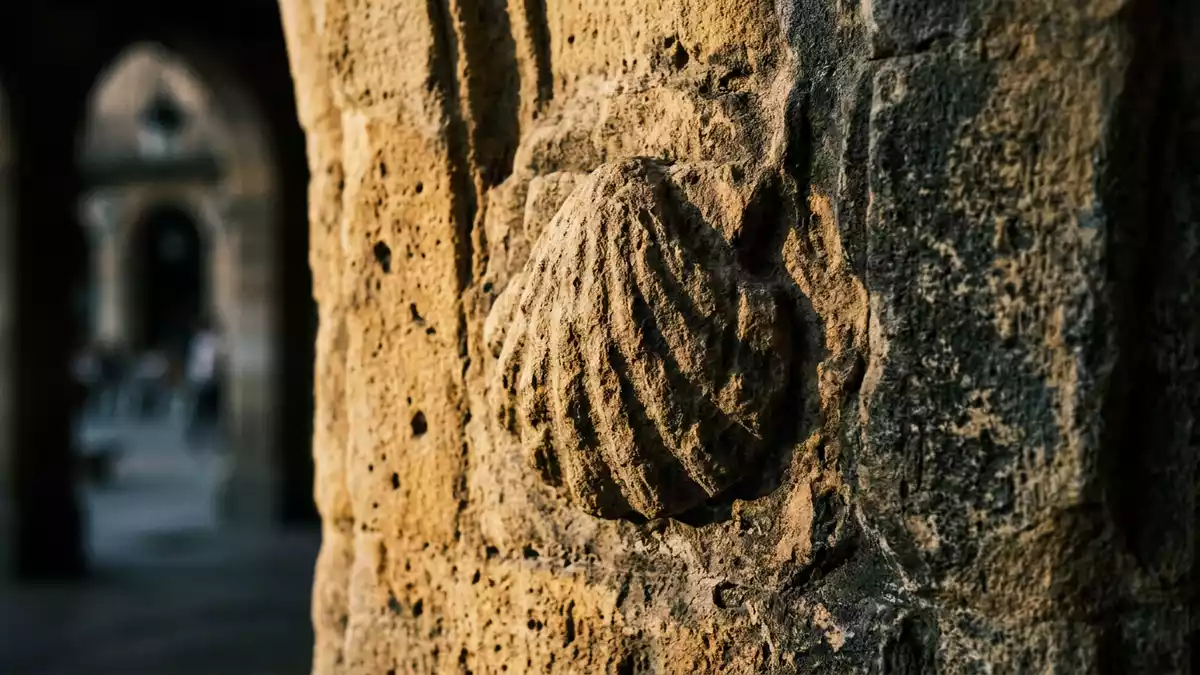
Plaza Mayor in Salamanca is a Baroque square in the city centre, framed by continuous arcades and upper-storey balconies. Its present form was laid out in the eighteenth century under Philip V and linked to the work of Alberto de Churriguera.
Baroque stone and a civic rectangle
The square is built in golden sandstone, a material that gives Salamanca much of its visual unity. The enclosing facades form an irregular quadrilateral, with the Town Hall occupying the north side and medallions set above the arches. UNESCO’s listing places it within the Old City of Salamanca, and the square is part of that wider historic centre.
The composition belongs to the Spanish Baroque, but it reads as an urban room as much as a monument. The arcades run around the perimeter, while the balconies and carved reliefs continue the same ordered pattern from one frontage to the next. The regional tourism portal identifies the project with Alberto de Churriguera, Andrés García de Quiñones and the eighteenth century.
Alberto de Churriguera and the city’s Baroque centre
Construction began in 1729 and the square was completed in 1755. Those dates place it among the most important civic works of Salamanca’s Baroque period, alongside the other stone monuments of the old city. Salamanca’s official tourism site records its designation as a National Monument in 1935.
Alberto de Churriguera is the name most closely associated with the design, while Andrés García de Quiñones completed the work. The result is a square that combines civic formality with rich surface detail, from the arcades below to the medallions and royal imagery above.
A square used as a public stage
Plaza Mayor is a public square, but its architecture gives it a strongly framed character. The arcaded edges create a sequence of sheltered bays, and the facades remain visually continuous despite the different functions of the buildings behind them. A modern account describes the square as a theatre of Spanish Baroque, a phrase that fits its ordered enclosure and ceremonial scale.
Unamuno’s familiar description of the square as irregular yet harmonious captures the same tension between symmetry and variation. That balance is part of its appeal: the square feels measured, but the facades are not mechanically repetitive, and the eye keeps returning to the details in the stone.
Visiting Plaza Mayor: what travellers from Western Europe should know
- Plaza Mayor lies in central Salamanca, within walking distance of the cathedral quarter and the university area. The square is reached on foot through the historic centre.
- The ground level is flat and fully paved, with arcades around the edges and steps only where adjoining buildings rise above the square.
- The facades carry balconies, medallions and the Town Hall pavilion on the north side. The stonework is the main feature, rather than any single isolated monument.
- The square forms part of the Old City of Salamanca, a UNESCO World Heritage area. That wider setting places it among the city’s main historic landmarks.
- The official language is Spanish and the currency is the euro.
Searching for Plaza Mayor on social platforms
These links open searches for Plaza Mayor on each platform.
Frequently asked questions about Plaza Mayor
Where is Plaza Mayor?
Plaza Mayor is in the centre of Salamanca, in western Spain. It sits within the city’s historic core and is easy to place alongside the cathedral and university district.
What does a visit involve?
A visit means crossing an open civic square, walking beneath arcades and reading the facades from ground level. The main experience is architectural rather than indoor.
What makes Plaza Mayor distinctive?
Its distinction lies in the sustained Baroque enclosure, the golden sandstone and the disciplined rhythm of arches, balconies and medallions. The square combines city life with an unusually unified architectural frame.


