

Positano, Italy’s cliffside amphitheatre above the Tyrrhenian Sea
Published on 08/14/2026 at 14:27 | Editorial responsibility: Rafael Müller, Editor-in-Chief AD HOC NEWS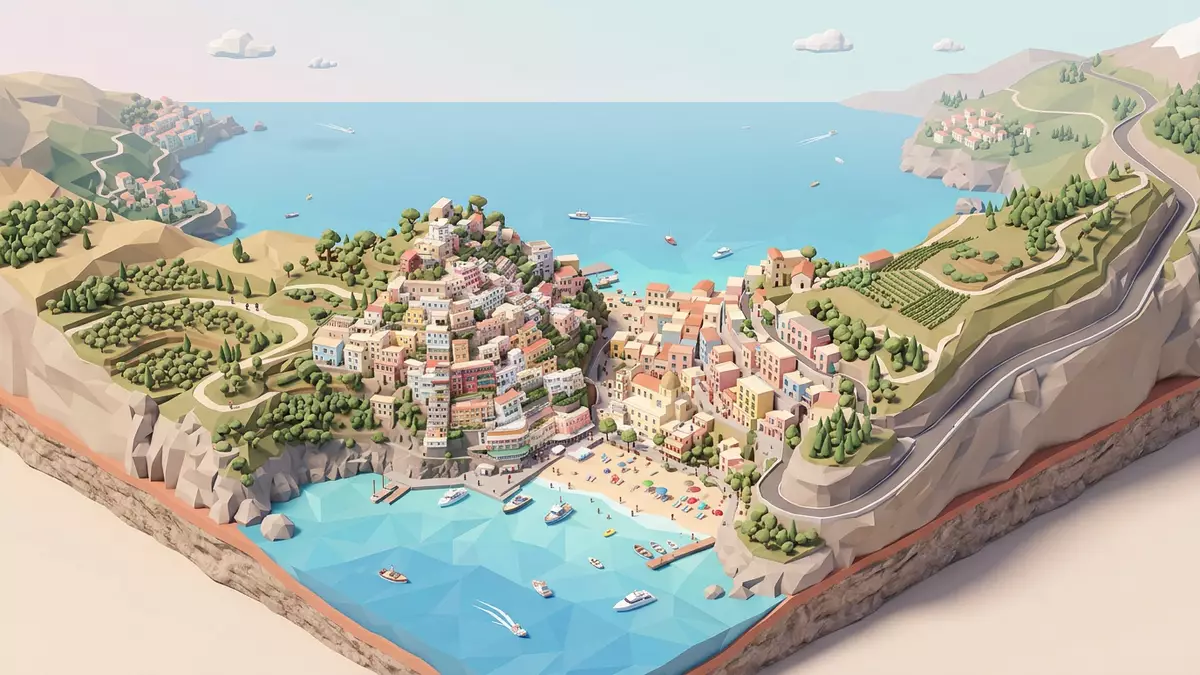
Positano is a small coastal town in southern Italy where streets, houses and terraces seem to pour down a steep slope towards the Tyrrhenian Sea. Its stacked form, climbing from the waterfront up the cliffs, gives the settlement the character of an amphitheatre facing the water and defines almost every experience of the place.
A town suspended on the Amalfi Coast
Positano stands on the Amalfi Coast in the Campania region, overlooking a bay of the Tyrrhenian Sea south of Naples. The town belongs to the Province of Salerno and forms part of the stretch of coastline recognised as an UNESCO World Heritage Site for its landscape and historic settlements. Houses, small hotels and shops rise from the shoreline in tiers, following the contours of the valley and the surrounding cliffs rather than any regular grid.
The historic centre gathers around the marina area and the beach known as Spiaggia Grande, one of the largest beaches on this coast, framed by the steep slopes behind.Spiaggia Grande forms the broad foreground to the town’s cliffside profile. Above it, narrow lanes and stairways climb between pastel-coloured buildings with balconies and terraces looking towards the sea. The overall impression is of a town suspended between rock and water, with only a few vehicular roads and many routes on foot.
Santa Maria Assunta and Positano’s built heritage
At the heart of Positano stands the Church of Santa Maria Assunta, close to Spiaggia Grande and the central piazza. The church’s dome, decorated with coloured tiles, is one of the town’s most recognisable landmarks from both land and sea.The Church of Santa Maria Assunta has origins in the tenth century as a Benedictine foundation and later took on Baroque and Neoclassical forms, with a white and gold interior created in the eighteenth century. Its position just above the waterfront links the religious centre directly to maritime life.
The wider settlement carries traces of different periods of prosperity tied to the sea. Roman patrician villas once stood near the beach, and later Positano formed part of the sphere of the medieval Republic of Amalfi, gaining wealth through Mediterranean trade.Historical accounts of Positano describe how strong boats from the town sailed towards the Middle East in the sixteenth and seventeenth centuries, and how Baroque houses with sea-facing terraces were built on the valley slopes during that era. Watchtowers such as those at Fornillo and Trasita were constructed along the coast and inland to warn of pirate raids, and several of these coastal towers remain visible on the surrounding headlands.
From maritime village to modern resort town
Positano’s built fabric reflects its shift from working maritime centre to resort town. After flourishing as a trading port linked to the Amalfi Republic in the sixteenth and seventeenth centuries, the town experienced decline under later dynasties, and by the nineteenth century many residents emigrated.Accounts of famine, plague and emigration mark this period. For much of the first half of the twentieth century Positano was described as a fishing village with limited means, before writers, film-makers and painters began to spend time here after the Second World War.
Mid-twentieth-century visitors helped to bring wider attention to Positano’s setting, and villas, hotels and restored religious buildings followed on the slopes above the harbour.Narratives of Positano’s twentieth-century transformation mention the arrival of artists and the spread of “Moda Positano”, a local fashion scene characterised by light fabrics and vivid colours. Shops and workshops selling clothing and accessories occupy many of the ground-floor spaces of the stairways and lanes, adding another layer of activity to the town’s maritime character.
Visiting Positano: what travellers from Western Europe should know
- Positano lies on the Amalfi Coast in Campania, south of Naples. It can be reached by road along State Road 163, and by buses linking coastal towns such as Sorrento and Amalfi.
- The town climbs steeply from sea level up the cliffs, with many stairways and sloping lanes. Moving between the waterfront, the church and higher districts involves sustained walking on steps.
- Spiaggia Grande forms a broad arc of sand and shingle directly beneath the town, while the smaller Fornillo beach lies along the coast and can be reached on foot via a coastal path.
- The official language is Italian and the currency is the euro.
Searching for Positano on social platforms
These links open searches for Positano on each platform.
Frequently asked questions about Positano
Where is Positano and what kind of place is it?
Positano is a coastal town on the Amalfi Coast in the Campania region of southern Italy, built on steep cliffs above the Tyrrhenian Sea.
What should visitors expect when walking through Positano?
Visitors encounter steep stairways, narrow lanes and terraces at different levels, with views over Spiaggia Grande, the Church of Santa Maria Assunta and the surrounding sea.
What makes Positano distinctive among Italian coastal towns?
Its amphitheatre-like layout on the cliffside, the tiled dome of Santa Maria Assunta and the combination of historic maritime architecture with small beaches give Positano a particularly characteristic profile.


