
Postojnska jama and its underground railway world
Published on 09/18/2026 at 07:49 | Editorial responsibility: Rafael Müller, Editor-in-Chief AD HOC NEWS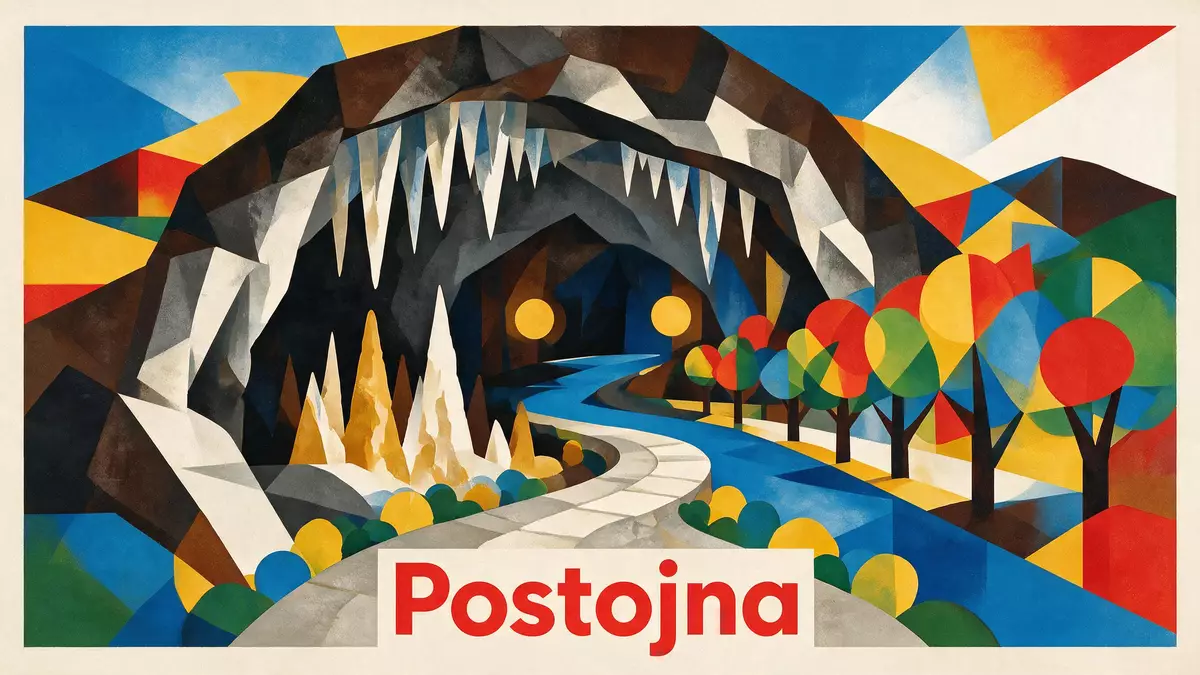
Postojnska jama, better known internationally as Postojna Cave, is a vast karst cave system near the town of Postojna in Slovenia, where visitors travel deep underground by train to walk among richly sculpted limestone halls and galleries. The system extends for more than 20 km (12.4 miles) through the Pivka river’s karst plateau, forming the longest cave system in Slovenia and a showcase of stalactites, stalagmites and flowstone created over geological time. The cave has been visited for centuries, with graffiti inside dated to 1213 and a documented description by Johann Weikhard von Valvasor in the seventeenth century, but its modern life as a show cave began in the early nineteenth century.
An underground railway through a karst landscape
The most distinctive way into Postojnska jama is the underground railway, which carries visitors from the main entrance tunnel into the deeper chambers before they continue on foot. Rails for tourist trains were first laid in the nineteenth century, and by 1872 a cave railway was operating, with cars initially pushed by guides and later drawn by locomotivescave rails laid in 1872. After gas locomotives were introduced in the early twentieth century, they were replaced by electric locomotives following the Second World War, giving the railway a quieter and more regular ride along the established routeelectric locomotives after 1945. The journey threads past chambers where the track crosses bridges over chasms and passes below ceilings draped in limestone formations.
Beyond the rail section, guided routes continue on foot along prepared paths through large halls and narrower galleries in the show cave. The main part of the system used for visits forms only a fraction of the total mapped length, which has grown as divers explored underwater connections towards Planina Cave, extending the system from about 20.6 km (12.8 miles) to more than 24 km (14.9 miles) in the early twenty-first centuryextension towards Planina Cave. Electric lighting was installed in the cave in 1884, ahead of many cities above ground, and has been modernised several times since, turning limestone formations and underground rivers into a carefully lit landscape for visitorselectric light installed in 1884.
From early descriptions to a long-running show cave
The written history of Postojnska jama reaches back to the seventeenth century, when Valvasor described the cave in his work on Carniola, then a duchy within the Habsburg landsValvasor’s description in 1689. In 1818, when the cave was being prepared for a visit by Emperor Francis I of Austria, a lamplighter named Luka ?e? discovered new areas during the installation of lamps, finding deeper galleries that expanded the known systemLuka ?e?’s discovery in 1818. The following year, in 1819, the cave was officially opened to visitors, and ?e? became its first formal tourist guide, marking the start of organised cave tourism that has continued for more than two centuriesorganised tourism since 1819.
Over the decades that followed, Postojnska jama became a well-known show cave within Central Europe and beyond, welcoming imperial visitors and serving as a site for social events such as dances in its larger hallsdance events in the Congress Room. Scientific interest grew alongside tourism, with Adolf Schmidl publishing an early comprehensive study of the cave and the Pivka basin in the nineteenth century. During the twentieth century the cave was also drawn into wider history: during the First World War Russian prisoners of war built a bridge across a chasm inside the cave, and in the Second World War German forces used a section near the entrance to store aircraft fuel, which partisans destroyed in an attack in April 1944wartime use of the cave. After the war, upgrades to the railway and lighting continued, consolidating the cave’s role as a major visitor site in what was then Yugoslavia and later Sloveniapost-war visitor attraction.
Karst geology and cave life in Postojnska jama
Geologically, Postojnska jama belongs to the Dinaric karst belt, where soluble limestone has been carved by rivers to form underground systems of galleries, shafts and chambers. The Pivka river and its predecessors cut into the limestone over hundreds of thousands to millions of years, leaving abandoned river passages high above current water levels and forming dripstone decorations where mineral-rich water percolates through the rockkarst formation by rivers. Visitors encounter halls lined with stalagmites, curtains of flowstone and columns where formations have met; the scale of some chambers allows prepared paths to weave among these features while leaving large sections of the cave in darkness.
Postojnska jama is also known for cave fauna, particularly the olm (Proteus anguinus), a blind aquatic salamander adapted to the permanent darkness of karst aquifers. The olm, sometimes called the human fish for its pale skin, lives in underground waters in the wider region and has become closely associated with Postojna Cave, where examples can be observed in dedicated areas< a href='https://www.slovenia.info/en/stories/200-years-of-cave-tourism-for-postojna-cave' target='_blank' rel='nofollow noopener noreferrer' title='Source: www.slovenia.info' style='color:inherit; text-decoration:underline dotted #999;'>olm associated with the cave. Alongside natural formations and fauna, the cave houses human-made features such as an underground post office dating from the late nineteenth centuryunderground post office opened in 1899, testament to its role as a long-established visitor destination.
Visiting Postojnska jama: what travellers from Western Europe should know
- Postojnska jama lies just outside the town of Postojna in south-western Slovenia, with access from the road network and regional rail services that link Ljubljana with the coast.
- The show cave route combines sections travelled by underground train with a walk along prepared paths and bridges, including stairways and gradients inside large chambers.
- The surrounding karst landscape includes other caves and the cliffside Predjama Castle, which are reached from the same visitor area near the cave entrance.
- The official language is Slovenian and the currency is the euro.
Searching for Postojnska jama on social platforms
These links open searches for Postojnska jama on each platform.Frequently asked questions about Postojnska jama
Where is Postojnska jama located?
Postojnska jama is situated near the town of Postojna in south-western Slovenia, in a karst region reachable from Ljubljana and the Adriatic coast.
What should visitors expect on a standard visit?
A standard visit combines an underground train ride along the established rail route with a guided walk on prepared paths through large decorated chambers and galleries.
What makes Postojnska jama distinctive among European caves?
Postojnska jama stands out for its long karst system, early electric lighting, underground railway and the presence of karst fauna such as the olm, all within a single show cave experience.


