
Prazsky hrad: a thousand years of power above Prag
Published on 09/09/2026 at 14:20 | Editorial responsibility: Rafael Müller, Editor-in-Chief AD HOC NEWS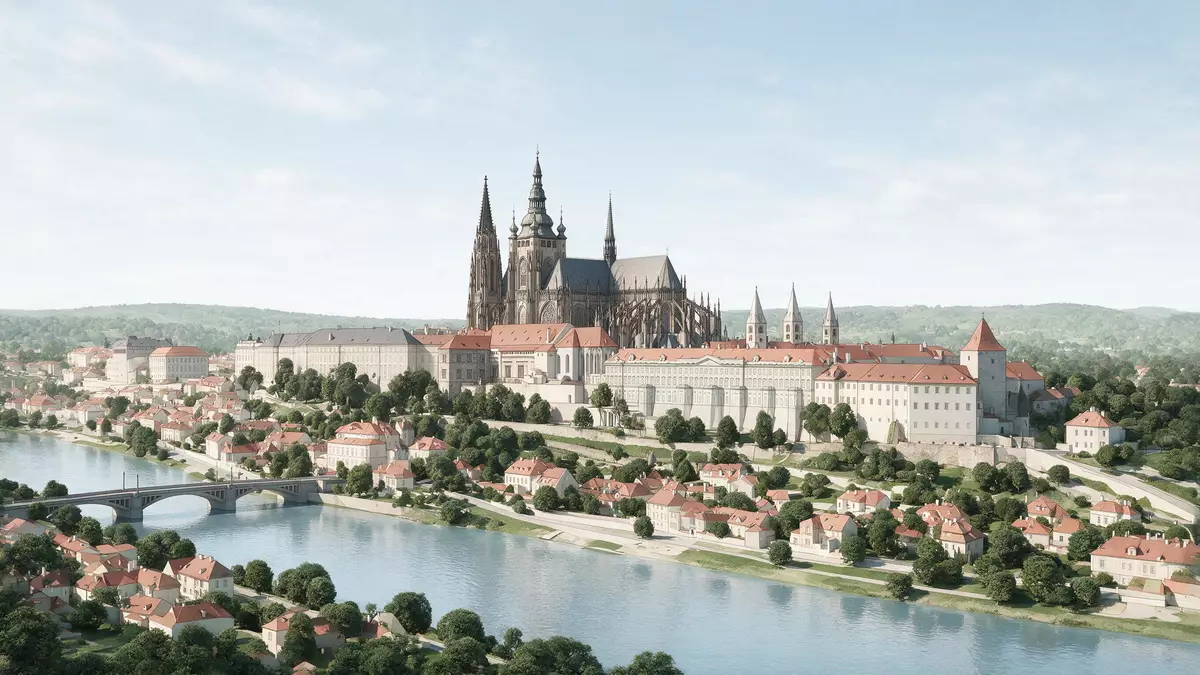
Prazsky hrad, known in English as Prague Castle, stretches along a hill above the Vltava River and has anchored power and ceremony in Prag for more than a thousand years. Founded around the late ninth century under Prince Bo?ivoj of the P?emyslid dynasty, it has grown into a layered complex of courtyards, palaces, churches and gardens that still serves as the official seat of the Czech president.
A castle that is really a city of courtyards
Seen from the Lesser Town below, Prazsky hrad reads almost like a self-contained city, with long façades, towers and roofs lining the ridge of Hrad?any Hill. The complex combines ecclesiastical buildings, defensive walls, residential palaces and office wings arranged around a series of courtyards that step back from the edge of the slope.aggregation of palaces and churches Prague’s historic centre, including Prazsky hrad, is inscribed as a UNESCO World Heritage site, underlining its significance in the urban landscape.UNESCO-listed historic centre
The castle precinct extends over dozens of hectares on the western side of the river, with buildings representing many of the major architectural styles of the last millennium.monumental complex surrounding three courtyards Romanesque masonry from the early medieval period sits beside late Gothic halls, Renaissance additions and Baroque façades, with twentieth-century interventions completing some structures. Walking through the sequence of courtyards, the changes in materials, rooflines and details mark the passing of centuries in stone.
From Bo?ivoj to Charles IV: the medieval core
The origins of Prazsky hrad lie in the reign of Bo?ivoj, the first Christian prince of Bohemia, who established a fortified seat here in the late ninth century. Around 880, the first church dedicated to the Virgin Mary rose within the enclosure, forming the nucleus of the early castle.founded around 880 by Prince Bo?ivoj In the early tenth century, new stone churches followed: the Basilica of St George and the first church of St Vitus, marking the site out as both a residence and a religious centre.origins in the late ninth century
Over the eleventh and twelfth centuries, princely and royal palaces in Romanesque stonework replaced earlier timber structures, reinforcing the castle’s status as the seat of the rulers of Bohemia.Romanesque palace in the twelfth century A decisive transformation came under Charles IV, king of Bohemia and Holy Roman emperor, who in 1344 ordered the rebuilding of the royal palace in Gothic style and laid the foundation stone for the Gothic St Vitus Cathedral. The cathedral’s construction involved architects such as Matthias of Arras and Peter Parler, whose work shaped the great choir and vaults that dominate the skyline today.foundation of St Vitus Cathedral in 1344
Layers of style: from Habsburg palaces to twentieth-century gardens
Later rulers left their marks on Prazsky hrad as tastes and political needs changed. In the late fifteenth century, during the reign of Vladislaus II, the Old Royal Palace gained the large Vladislav Hall with its elaborate late Gothic vaults, an early work with Renaissance elements in Bohemia.Vladislav Hall before 1493 Under the Habsburgs, the complex saw Baroque and Classicist alterations; in the eighteenth century, Empress Maria Theresa commissioned architect Niccolò Pacassi to rework façades and unify parts of the frontage in line with contemporary court architecture.Maria Theresa and Pacassi’s classicist façades
The twentieth century added further chapters. After the establishment of Czechoslovakia in 1918, Prazsky hrad became the seat of the president, a role it retains within the Czech Republic.seat of the president since 1918 Architect Jože Ple?nik, originally from Slovenia, redesigned parts of the courtyards, interiors and gardens in the interwar period, inserting new stairways, terraces and landscaped areas that respect the historic fabric while giving it a distinct early twentieth-century character.extensive renovations by Josip Ple?nik The result is a castle where Romanesque, Gothic, Renaissance, Baroque and modern elements coexist in a continuous sequence rather than separate ensembles.
Visiting Prazsky hrad: what travellers from Western Europe should know
- Prazsky hrad stands on Hrad?any Hill west of the Vltava, above the Lesser Town district of Prag; tram and metro lines serve the surrounding streets and approaches.
- The castle area rises on a slope, and moving between the courtyards involves walking over cobbled surfaces and climbing stairways linking different terrace levels.
- Prazsky hrad lies within the historic centre of Prague in the Czech Republic, where the official language is Czech and the currency is the Czech koruna.
- Entry requirements depend on your nationality; UK travellers can check the FCDO travel advice at gov.uk/foreign-travel-advice, Irish travellers the Department of Foreign Affairs at ireland.ie.
Searching for Prazsky hrad on social platforms
These links open searches for Prazsky hrad on each platform.
Frequently asked questions about Prazsky hrad
Where is Prazsky hrad located within Prag?
Prazsky hrad occupies Hrad?any Hill on the western bank of the Vltava River, above the Lesser Town and opposite the historic core of Prag.
What can visitors expect when exploring the castle complex?
Visitors encounter a sequence of courtyards framed by palaces, churches, fortifications and offices, with architecture ranging from early Romanesque stonework to Gothic and Baroque façades.
What makes Prazsky hrad distinctive among European castle sites?
The castle combines a role as the historic seat of Bohemian rulers and the president with a continuous architectural record from the ninth century onwards, concentrated on a single hilltop site.


