
Prazsky hrad and its centuries of Prague architecture
Published on 09/24/2026 at 00:04 | Editorial responsibility: Rafael Müller, Editor-in-Chief AD HOC NEWS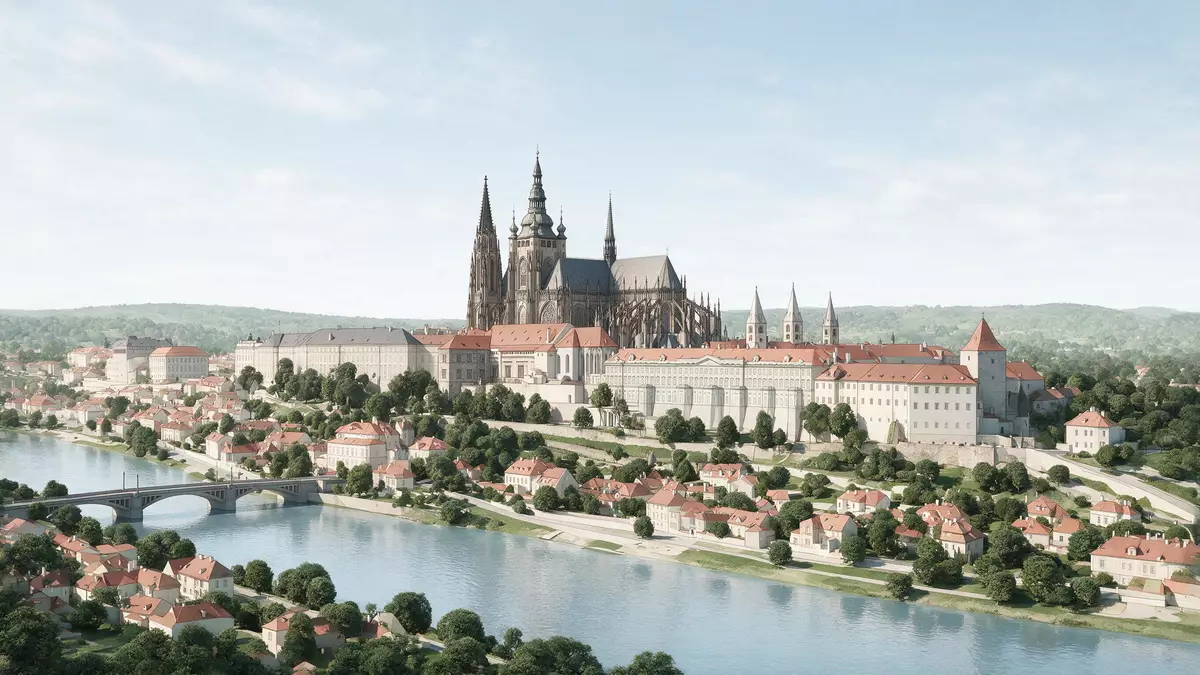
Prazsky hrad occupies a hill above the Vltava in Prag, combining a working seat of state with palaces, churches, courtyards and gardens. Its buildings span more than a millennium, from the foundation associated with Prince Bo?ivoj around 880 to the Gothic and later forms visible across the complex.
Prazsky hrad begins with Prince Bo?ivoj
The earliest history of Prazsky hrad belongs to the Premyslid dynasty. Prince Bo?ivoj, the first Christian prince of Bohemia, is associated with the foundation of the castle around 880. The first stronghold developed into a centre of political and religious life on the Prague hill.
The complex contains several buildings from different periods. St George’s Basilica began around 920 and remains a Romanesque monument. The Old Royal Palace includes Romanesque stonework from the twelfth century, later extensions by Charles IV and Wenceslas IV, and substantial rebuilding after 1483. the castle’s early foundation is linked with Bo?ivoj and the Premyslid dynasty.
St Vitus Cathedral anchors the complex
St Vitus Cathedral gives Prazsky hrad its most recognisable vertical landmark. The foundation stone was laid in 1344 during the reign of Charles IV, king of Bohemia and Holy Roman emperor. The cathedral’s Gothic fabric belongs to the long building history of the castle.
Construction continued across centuries, and the cathedral was completed in 1929. Its interior contains chapels, tombs, stained glass and royal memorials. The building also records the changing artistic language of the complex, with Gothic, Renaissance and Baroque elements appearing within the wider castle ensemble. the 1344 cathedral foundation belongs to Charles IV’s period of rule.
From royal residence to state complex
Prazsky hrad served as the residence of Bohemian princes and kings, Holy Roman emperors and heads of state. Charles IV enlarged the royal presence in the fourteenth century, while Vladislav Hall belongs to the rebuilding associated with Vladislav II between 1493 and 1510.
Renaissance and Baroque additions stand beside medieval structures. The complex includes the Old Royal Palace, St George’s Basilica, St Vitus Cathedral and Golden Lane, alongside other palaces, halls and religious buildings. Since 1918, Prazsky hrad has been the seat of the president of the Czech Republic. the presidential seat forms part of the castle’s continuing civic role.
Visiting Prazsky hrad: what travellers from Western Europe should know
- Prazsky hrad stands in Hrad?any, Prague 1, above the Vltava. Trams and Prague’s urban transport network reach the district, with the castle approached through its historic streets and gates.
- The complex occupies a hill, and several courtyards connect buildings at different levels. The approach includes slopes, paving and stairways, while individual interiors contain further steps.
- The principal buildings are distributed across a large historic complex. St Vitus Cathedral, the Old Royal Palace, St George’s Basilica and Golden Lane are separate architectural experiences.
- The official language is Czech and the currency is the Czech koruna.
Searching for Prazsky hrad on social platforms
These links open searches for Prazsky hrad on each platform.Frequently asked questions about Prazsky hrad
Where is Prazsky hrad?
Prazsky hrad is in Hrad?any, Prague 1, on the hill above the Vltava in Prag. The district forms part of Prague’s historic centre.
What can visitors see at Prazsky hrad?
The complex contains St Vitus Cathedral, the Old Royal Palace, St George’s Basilica, Golden Lane, courtyards and other historic buildings. Architectural periods range from Romanesque and Gothic to Renaissance and Baroque.
What makes Prazsky hrad distinctive?
Its buildings form a continuous record of Bohemian and Czech state history from the ninth century onwards. The complex combines a medieval royal residence, major churches and a presidential seat within one hilltop ensemble.


