
Predjamski grad and the castle in the cliff above Postojna
Published on 09/17/2026 at 17:04 | Editorial responsibility: Rafael Müller, Editor-in-Chief AD HOC NEWS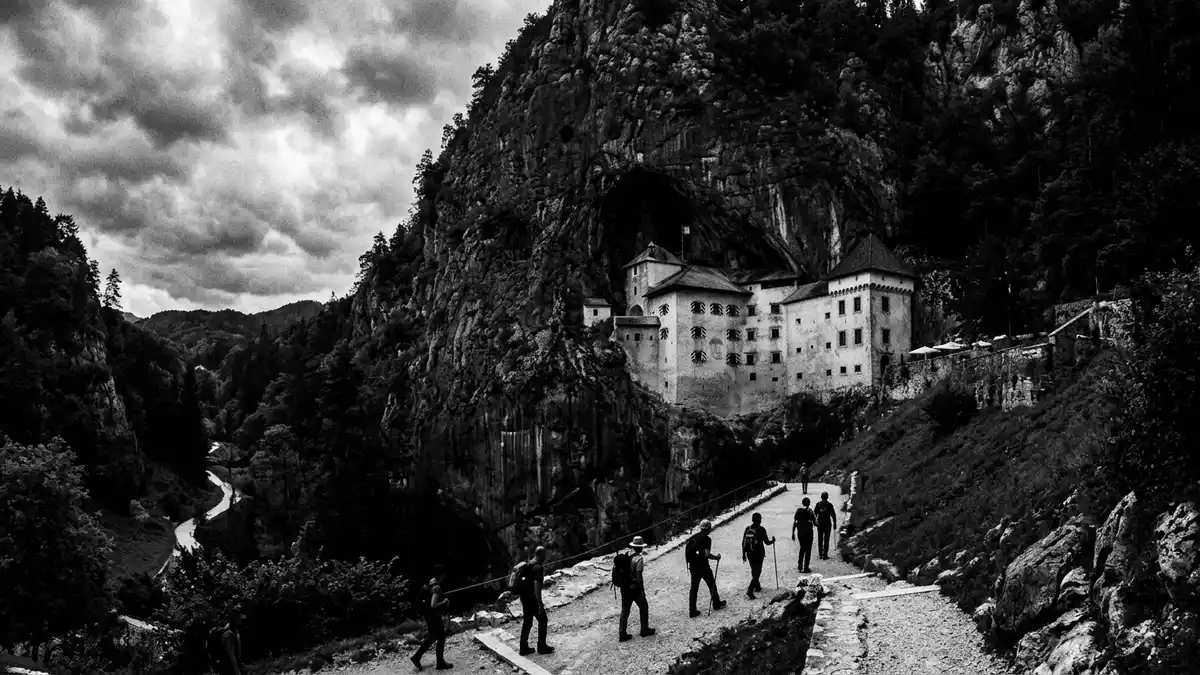
Predjamski grad near Postojna in Slovenia is a Renaissance castle built directly into a limestone cliff, its masonry pressed against the entrance to a karst cave system that disappears into the rock behind it. The present castle form dates from the sixteenth century and stands on the remains of a medieval stronghold that is mentioned in records of the thirteenth century.
A fortress recessed into a karst cliff
The setting of Predjamski grad is a sheer limestone wall in the karst landscape of Inner Carniola, where the village of Predjama lies north of Postojna in south-central Slovenia. The castle occupies a cavity in the cliff face, so that its outer walls are built against the rock and its upper storeys reach across the mouth of the cave known as Erazmova jama.Renaissance castle The height of the wall above the village gives the castle a layered profile, with the lowest levels close to the rock ledge and higher rooms standing above a steep drop.
Predjamski grad is recognised as the largest cave castle in the world, a status recorded in international listings that note its particular combination of fortification and natural cavern.largest cave castle The inhabited spaces extend both in front of and behind the cliff wall, with masonry rooms leading towards the rock and service areas that continue inside the cave entrance.
From medieval fortress to sixteenth-century residence
Written records first mention the castle in 1274 under the German name Luegg, when it belonged to the Patriarchate of Aquileia and took the form of a Gothic fortress recessed into the rock cavity.first mentioned in 1274 This early stronghold used the depth of the cave as a defensible site, with walls that followed the contours of the cliff and wooden elements that have not survived. Accounts trace the origins of fortification in this cliff to the twelfth century, with later expansion giving the castle a more substantial profile above the village.
In the fifteenth century Predjamski grad became associated with the knight Erasmus Lueger, also known as Erasmus of Predjama, whose name appears in descriptions of the castle’s role in regional conflicts of that era.Erasmus Lueger legend Later damage to the medieval fortress and an earthquake in 1511 led to rebuilding, and the present Renaissance appearance dates from 1570, when a new residence was constructed on the remains of the old stronghold.Renaissance appearance dates from 1570
Architecture where castle and cave meet
The architecture of Predjamski grad combines stone walls, timber floors and defensive galleries with the irregular surfaces of the limestone cliff. The multi-storey façade faces the valley and carries rows of windows and openings, while the rear of the complex is formed by natural rock, with passages that connect to the cave system behind the cliff.castle in cave mouth Inside, rooms occupy several levels, and staircases link living spaces, storage areas and vantage points above the entrance.
The mixture of Gothic and Renaissance elements reflects the successive building phases on the same cliff site, with later work retaining parts of the earlier fortress and adding more representative residential spaces. The overall impression is of a castle embedded in a karst landscape, where the man-made structure and the natural cavern form a single complex of fortification, residence and rock.
Visiting Predjamski grad: what travellers from Western Europe should know
- Predjamski grad stands above the village of Predjama in the municipality of Postojna in south-central Slovenia, and is reached by road from Postojna and the surrounding region.
- The castle is built high in a limestone cliff, and visiting the interior involves ascending staircases and moving through rooms connected by passages that follow the rock.
- The surrounding terrain consists of karst hills and a valley below the cliff, and the approach to the castle passes through the village before rising towards the entrance.
- The official language is Slovene and the currency is the euro.
Searching for Predjamski grad on social platforms
These links open searches for Predjamski grad on each platform.
Frequently asked questions about Predjamski grad
Where is Predjamski grad located?
Predjamski grad stands above the village of Predjama in the municipality of Postojna in Inner Carniola, a region of south-central Slovenia.
What can visitors expect inside the castle?
Visitors encounter rooms spread across several levels, staircases that climb within the cliff and spaces that combine masonry walls with exposed limestone rock from the cavern.
What makes Predjamski grad distinctive among European castles?
Predjamski grad is recognised as the largest cave castle in the world, with a Renaissance residence built directly into a karst cliff and connected to a deep cave system.


