
Qalat Salah al-Din above Kairo’s historic streets
Published on 08/14/2026 at 14:00 | Editorial responsibility: Rafael Müller, Editor-in-Chief AD HOC NEWS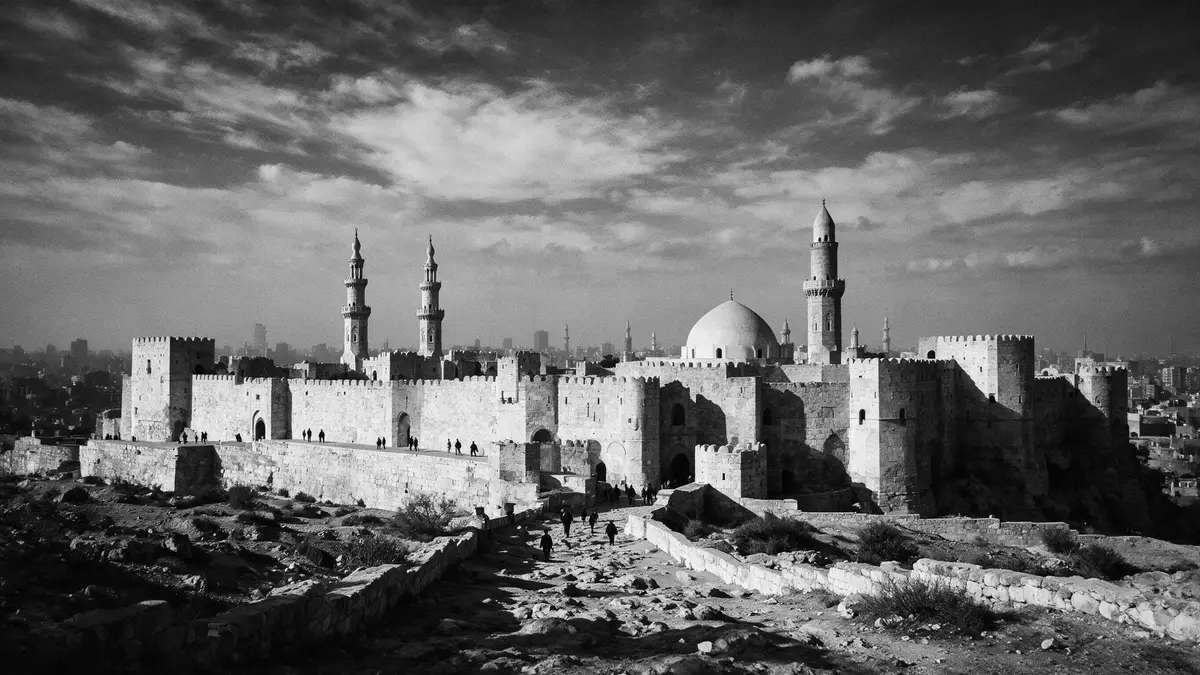
High on the slopes of the Mokattam Hills, Qalat Salah al-Din dominates the eastern edge of Kairo with a belt of stone walls, towers and courtyards that have watched over the city for centuries. Built in the late 12th century under the Ayyubid ruler Salah al-Din al-Ayyubi, the fortress later became the seat of Egyptian government and a core part of the historic urban landscape now recognised as Historic Cairo.
The medieval fortress on the Mokattam Hills
Qalat Salah al-Din, known in English as the Citadel of Saladin or Cairo Citadel, occupies a limestone spur rising above the older quarters of the city and looking across the plains of the Nile valley.The Citadel of Saladin The site was chosen on the eastern side of Kairo, close to the Mokattam Hills, where the natural elevation could be enclosed within thick defensive walls and towers.
Construction of the citadel began in 1176 under Salah al-Din, the founding figure of the Ayyubid dynasty in Egypt.built in 1176 by Saladin The complex grew into a fortified enclosure of stone ramparts, bastions and gates arranged around inner courts and service areas. From its vantage point on the hill, the citadel formed a visible symbol of rule over the city and the routes that passed through it.
From Ayyubid stronghold to Ottoman-era residence
For centuries, Qalat Salah al-Din served as the residence of rulers and the centre of government, a role reflected in the number of palaces, mosques and administrative buildings within its perimeter.served as the seat of government Under the Mamluk sultans from the thirteenth century onwards, the citadel was expanded with audience halls, gardens and noble residences that turned the fortress into a royal city above the city.
In 1517 the Ottomans brought Egypt under their rule and kept the citadel as an administrative and military centre, adding new gates and fortifications such as Bab al-Azab on the western side.Ottoman control from 1517 During the nineteenth century, the focus of power shifted towards new palaces in Kairo, yet Qalat Salah al-Din remained a key stronghold and retained garrisons and administrative functions even as parts of the complex took on ceremonial and commemorative roles.
Mosques, museums and views across Historic Cairo
Within the walls of Qalat Salah al-Din, several important mosques stand among former palaces and barracks, marking different periods of Egyptian and Ottoman architecture. The most prominent is the Mosque of Muhammad Ali, a large domed structure with twin minarets and stone cladding that draws the eye from many points in Kairo.Mosque of Mohamed Ali inside the citadel Nearby, the mosque of al-Nasir Muhammad and the mosque of Sulayman Pasha represent earlier phases of religious architecture within the citadel walls.three mosques inside the Cairo Citadel
Several museum collections occupy former palace buildings and service blocks, presenting arms, decorative arts and historical artefacts linked to different periods of Egyptian rule. Open terraces along the upper walls offer long views over Kairo’s historic quarters, with minarets, domes and modern districts spreading below. Since 1979, Qalat Salah al-Din has formed part of the UNESCO World Heritage Site of Historic Cairo, underscoring its role in the wider urban and cultural history of Egypt.part of Historic Cairo since 1979
Visiting Qalat Salah al-Din: what travellers from Western Europe should know
- Qalat Salah al-Din stands on a hill on the south-eastern side of Historic Cairo, on the slopes of the Mokattam Hills above the district of El Abageyah in Qesm Al Khalifah. It is reached by road from central Kairo and is included in many organised city tours.
- The approach from the lower streets rises steadily towards the main gates, and movement inside the citadel involves walking over stone paving, climbing exterior stairways and crossing large open courtyards.
- Within the enclosure, visitors encounter both indoor museum spaces and open-air terraces, so a visit combines covered interiors with exposed areas on the ramparts.
- The official language is Arabic and the currency is the Egyptian pound.
- Entry requirements depend on your nationality; UK travellers can check the FCDO travel advice at gov.uk/foreign-travel-advice, Irish travellers the Department of Foreign Affairs at ireland.ie.
Searching for Qalat Salah al-Din on social platforms
These links open searches for Qalat Salah al-Din on each platform.
Frequently asked questions about Qalat Salah al-Din
Where is Qalat Salah al-Din located in Kairo?
Qalat Salah al-Din stands on a hill on the south-eastern side of Historic Cairo, on a spur of the Mokattam Hills above older districts of the city.
What can visitors expect inside the citadel?
Visitors encounter stone walls and courtyards, mosques from different periods, museum collections in former palaces and terraces with wide views over Kairo.
What makes Qalat Salah al-Din distinctive among Kairo’s landmarks?
The citadel combines a medieval fortress built under Salah al-Din with later Mamluk and Ottoman additions and houses major mosques, museums and viewpoints within one walled complex.


