
Quebrada de Humahuaca, an Andean valley of colour and history
Published on 09/03/2026 at 06:23 | Editorial responsibility: Rafael Müller, Editor-in-Chief AD HOC NEWS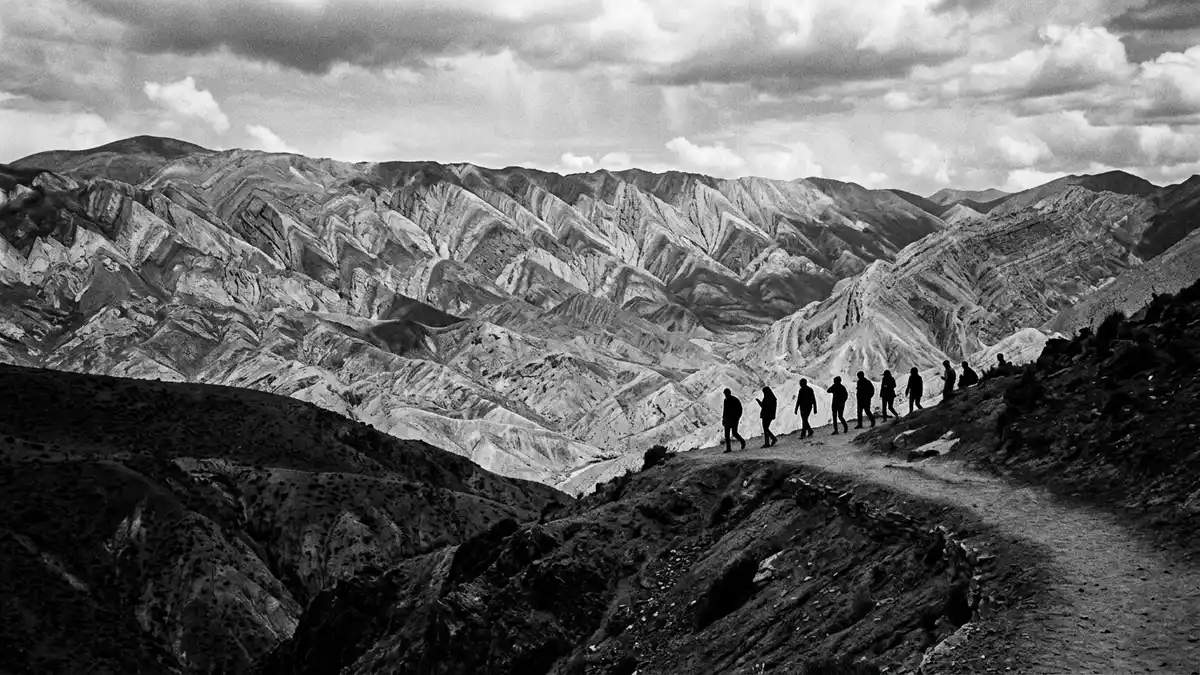
Quebrada de Humahuaca in the province of Jujuy is an Andean valley where coloured mountain slopes, ancient settlements and a long-travelled route come together in a single landscape. In 2003 the valley was inscribed as a UNESCO World Heritage Site as a cultural landscape, recognising both its geology and the human history that runs along it.UNESCO World Heritage Site The valley follows the course of the Río Grande and stretches across northern Jujuy towards the Bolivian border, linking a chain of Andean villages.
An Andean valley carved by the Río Grande
Quebrada de Humahuaca is a narrow north–south valley cut by the Río Grande through the eastern flank of the Andes in north-west Argentina.narrow mountain valley The river has carved a corridor more than 150 km (around 93 mi) in length, with the main settlements lying along Route 9 on its floor.Humahuaca Gorge The surrounding ranges rise to high Andean altitudes, and in places peaks above 4,500 m (14,764 ft) overlook the valley and its patchwork of villages and terraced slopes.peaks as high as 4500 metres
The rock faces along Quebrada de Humahuaca show bands of sedimentary layers in reds, ochres, greens and pale blues. This colouring gives the valley its reputation as a rainbow landscape and makes road journeys through it a long sequence of changing patterns on the slopes.geological history dates back millions of years Hills such as the Cerro de los Siete Colores near Purmamarca display these layers at a smaller scale, rising above adobe houses and village plazas.
A route of 10,000 years between highlands and plains
Settlement in Quebrada de Humahuaca goes back around 10,000 years, with traces of hunter-gatherer communities and later agricultural societies recorded along the valley.People first arrived here about 10,000 years ago Over that long period the gorge formed part of a corridor linking the high Andean plateaus with the lowland plains to the south and east, carrying caravans, goods and ideas.
In the fifteenth and sixteenth centuries Quebrada de Humahuaca lay on the southern edge of the Inca Empire, and sections of the Inca road system ran along the valley.part of the ancient Inca Trail Later, during the struggle for independence from Spain in the early nineteenth century, the region became a corridor for military campaigns heading between the highlands and the cities further south.revolution for independence from Spain That combination of prehistoric occupation, pre-Columbian states and modern national history contributes to its designation as a cultural landscape.
Villages, terraces and contemporary Andean life
Along the floor and lower slopes of Quebrada de Humahuaca, villages such as Tilcara, Purmamarca, Maimará and Humahuaca form a chain of settlements with plazas, churches and streets lined by adobe houses.Five Villages in Quebrada de Humahuaca Many of these towns sit at the foot of coloured slopes, so that church towers, markets and hillside cemeteries are backed by ridges with stripes in multiple hues.multi-striated hills
The valley also carries traces of pre-Columbian fortified settlements and agricultural terraces, including sites such as the Pucará of Tilcara where stone walls rise on spurs above the river. In the surrounding villages, religious processions, local markets and Andean music continue longstanding cultural traditions that formed part of the case for the UNESCO inscription.crucial passage for the transport of people and ideas In recent decades the valley has also become recognised as a high-altitude wine region, with Maimará and neighbouring settlements forming a corridor of vineyards between about 2,200 and 3,330 m (7,218 to 10,925 ft).wine route in Quebrada stretches about 50 miles
Visiting Quebrada de Humahuaca: what travellers from Western Europe should know
- Quebrada de Humahuaca lies in northern Jujuy in north-west Argentina, with the town of Humahuaca towards its northern end along National Route 9. The valley is reached by road from cities such as Salta and San Salvador de Jujuy, with Purmamarca, Tilcara and Humahuaca forming common stopping points.
- The terrain combines high-altitude Andean conditions with sections of steep road and paths on loose rock and gravel. Some viewpoints and archaeological sites are reached by short but inclined walks above the valley floor.
- The valley stands in the subtropics near the latitude of the Tropic of Capricorn, and its climate reflects its elevation and semi-arid setting in the Andean rain shadow.
- In several villages Quebrada de Humahuaca is also a corridor of vineyards, and some estates sit at over 2,200 m (7,218 ft), where strong sun and thermal variation shape the growing conditions.
- The official language is Spanish and the currency is the Argentine peso. Entry requirements depend on your nationality; UK travellers can check the FCDO travel advice at gov.uk/foreign-travel-advice, Irish travellers the Department of Foreign Affairs at ireland.ie.
Searching for Quebrada de Humahuaca on social platforms
These links open searches for Quebrada de Humahuaca on each platform.
Frequently asked questions about Quebrada de Humahuaca
Where is Quebrada de Humahuaca?
Quebrada de Humahuaca is in the far north of Jujuy Province in north-west Argentina, running along the Río Grande towards the border with Bolivia.
What should travellers expect on a visit?
Travellers encounter an Andean valley with coloured rock faces, high-altitude conditions, villages such as Tilcara and Purmamarca, and archaeological sites overlooking the river.
What makes Quebrada de Humahuaca distinctive?
The combination of multicoloured geology, a route used for around 10,000 years, Inca and colonial history and living Andean villages led to its inscription as a UNESCO cultural landscape in 2003.


