
Queen Elizabeth National Park: savanna, lakes and craters around Kasese
Published on 08/14/2026 at 14:56 | Editorial responsibility: Rafael Müller, Editor-in-Chief AD HOC NEWS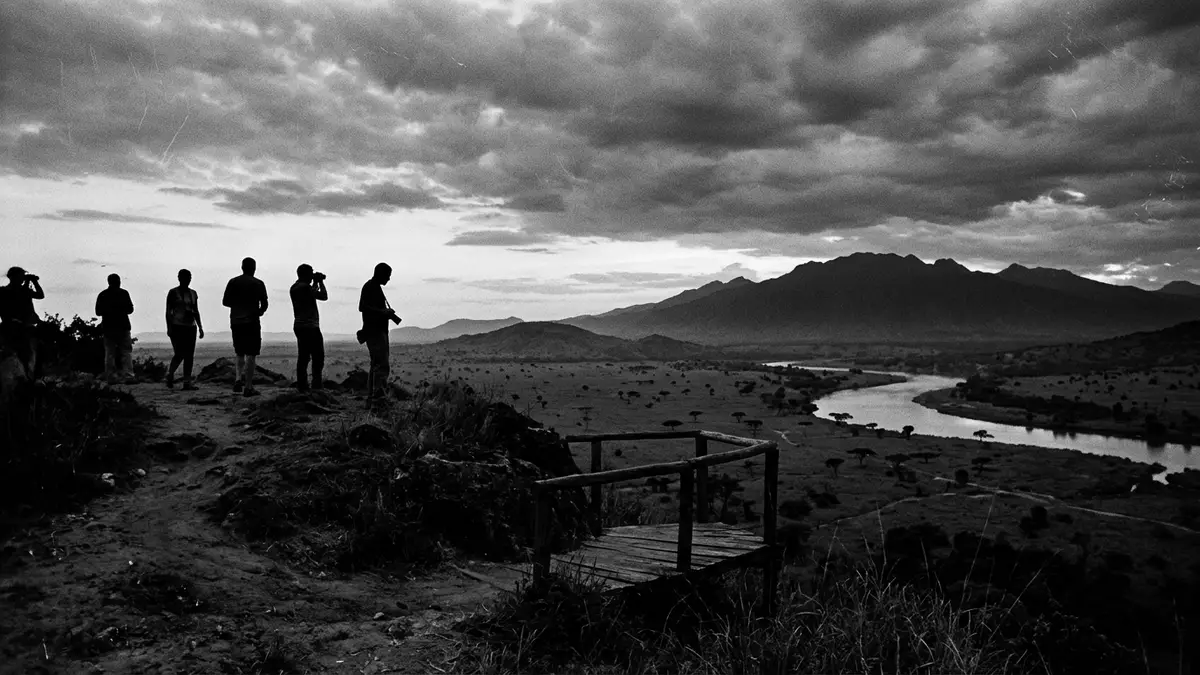
Queen Elizabeth National Park in western Uganda brings together savanna plains, broad lakes and volcanic craters in a single sweeping landscape on the floor of the Albertine Rift Valley. Established in 1952 as Kazinga National Park and renamed in 1954 after the visit of Queen Elizabeth II, it lies close to the town of Kasese and between Lake George and Lake Edward, giving travellers a rare sense of how water, grassland and ancient geology meet at one protected site.Established in 1952
Rift valley setting between lakes and mountains
Queen Elizabeth National Park occupies part of the Western Rift Valley, east of Lake Edward and around the southern foothills of the Rwenzori Mountains, so a visit always feels framed by water and height.Western Rift Valley location The protected area covers around 1,978 square kilometres (764 square miles), stretching across several districts including Kasese, Kamwenge, Rubirizi and Rukungiri, which means that its habitats change noticeably from one sector to another.1,978 square kilometres
The park straddles the equator and lies between Lake George in the east and Lake Edward in the west, linked by the Kazinga Channel, a long waterway that cuts through the protected area and is central to its character.Kazinga Channel between the lakes Altitudes range roughly from 910 m (2,985 ft) near Lake Edward to around 1,390 m (4,560 ft) on higher ground, so the park’s plains rise gently into crater fields and low ridges while the higher Rwenzori peaks remain visible beyond its boundaries.Altitudinal range
Savanna, forest and wetland: varied habitats in one park
One of Queen Elizabeth National Park’s defining features is the variety of ecosystems within a single protected landscape, from open grassland to tropical forest and wetland. Grassy plains and savanna woodlands cover large areas, dominated by acacia and other small trees that create classic East African game-viewing scenery.Savanna woodlands and grassland In other sections, semi-deciduous tropical high forest forms a dense canopy, especially around the Kyambura Gorge and Maramagambo Forest, where the vegetation closes in and wildlife differs from that of the open plains.Semi-deciduous tropical forest
Wetlands and lakeshores add a further layer of diversity, including partly saline lakes and swamps that support specialised plant and bird communities. Lake George is recognised as a Ramsar site, underlining its international importance as a wetland, and the Kazinga Channel carries water between the two major lakes while attracting large congregations of hippos, crocodiles and birds along its banks.Lake George Ramsar site Elsewhere, the park’s crater fields present short grass and scrub vegetation, set within shallow volcanic depressions that punctuate the plains.
Wildlife and distinctive sectors around Kasese
Queen Elizabeth National Park is known for its rich mammal and bird life, with large mammals such as elephants, buffaloes, lions, leopards and hippos present in different sectors of the park.Large mammals present Antelope species including topi, Uganda kob and reedbuck graze the plains, while chimpanzees use forested areas such as Kyambura Gorge, making primate tracking a contrasting experience to open savanna wildlife viewing.Chimpanzees and antelopes
The park’s southern Ishasha sector, added in 1967, has become associated with lions that rest in trees, a behaviour that gives this area a distinctive character within the wider savanna.Ishasha sector tree-climbing lions Around Kasese in the north-eastern parts of the park, views towards the Rwenzori Mountains accompany drives through grasslands and along the Kazinga Channel, while crater lakes and explosion craters mark higher points in the landscape and offer vantage points over surrounding plains.Explosion craters and plains
Visiting Queen Elizabeth National Park: what travellers from Western Europe should know
- Queen Elizabeth National Park lies in western Uganda, with Kasese just outside its north-eastern edge and the protected area spreading across several districts including Kasese and Rubirizi.
- The terrain includes flat savanna plains, gentle rises leading into crater fields and stretches of lakeshore, so some viewpoints are reached along unpaved tracks and short walks on uneven ground.
- Lake George, Lake Edward and the Kazinga Channel all fall within the park, so boat trips and shoreline viewpoints are integral parts of many itineraries alongside vehicle-based wildlife viewing.
- The official language is English and the currency is the Ugandan shilling.
- Entry requirements depend on your nationality; UK travellers can check the FCDO travel advice at gov.uk/foreign-travel-advice, Irish travellers the Department of Foreign Affairs at ireland.ie.
Searching for Queen Elizabeth National Park on social platforms
These links open searches for Queen Elizabeth National Park on each platform.
Frequently asked questions about Queen Elizabeth National Park
Where is Queen Elizabeth National Park in relation to Kasese?
Queen Elizabeth National Park lies in western Uganda on the floor of the Western Rift Valley, with Kasese town close to its north-eastern boundary and park sectors extending across several districts.
What can travellers expect when visiting the park?
Travellers encounter a mix of savanna, forest and wetland habitats, framed by lakes and crater fields, with wildlife ranging from elephants and lions to hippos, chimpanzees and varied birdlife on game drives and boat trips.
What makes Queen Elizabeth National Park distinctive among Ugandan parks?
The park combines equatorial rift valley scenery, the Kazinga Channel between Lake George and Lake Edward, rich biodiversity and sectors such as Ishasha with tree-climbing lions, all within a single contiguous protected area.


