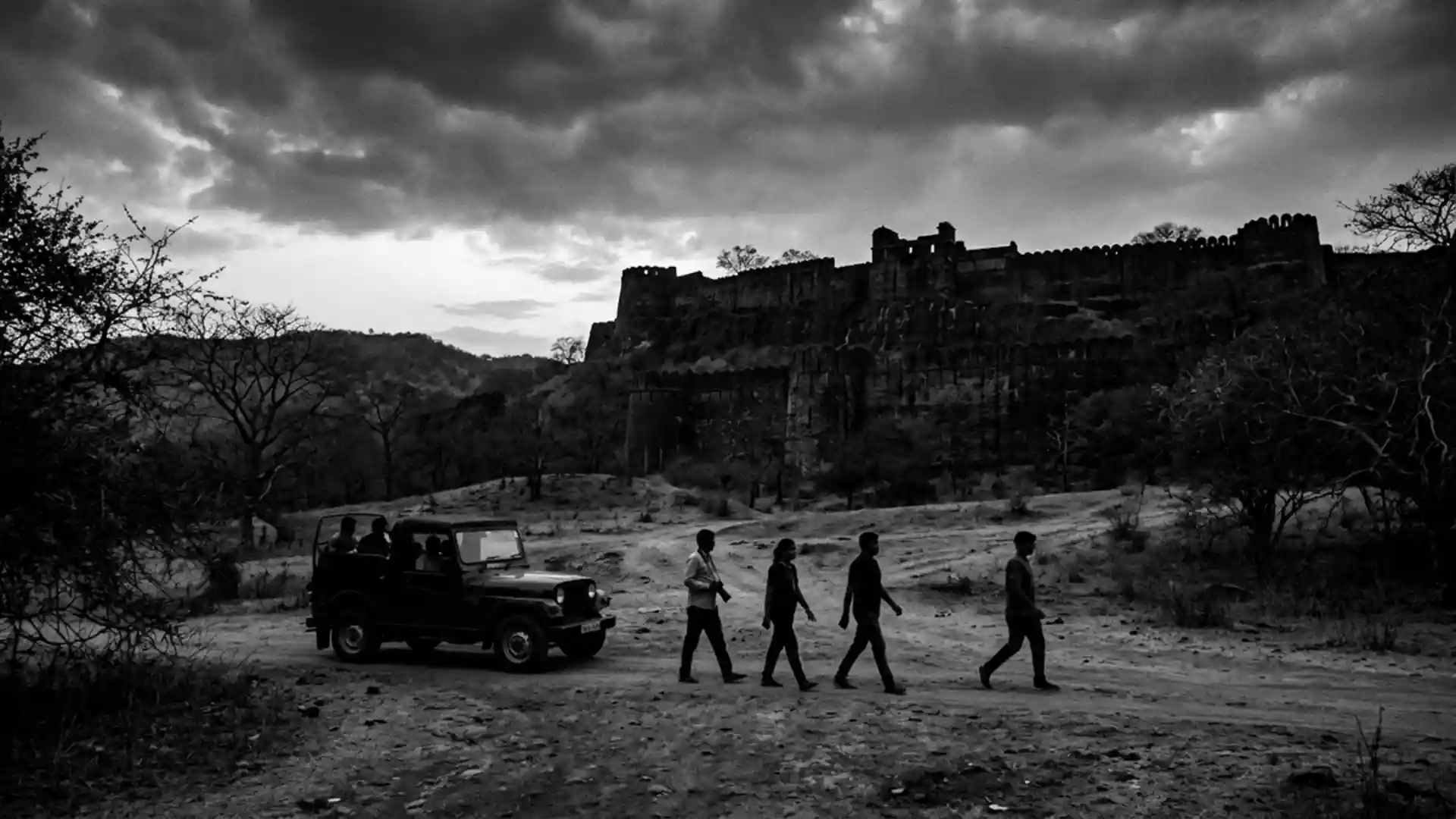
Ranthambore National Park where fort and forest meet
Published on 08/25/2026 at 16:15 | Editorial responsibility: Rafael Müller, Editor-in-Chief AD HOC NEWS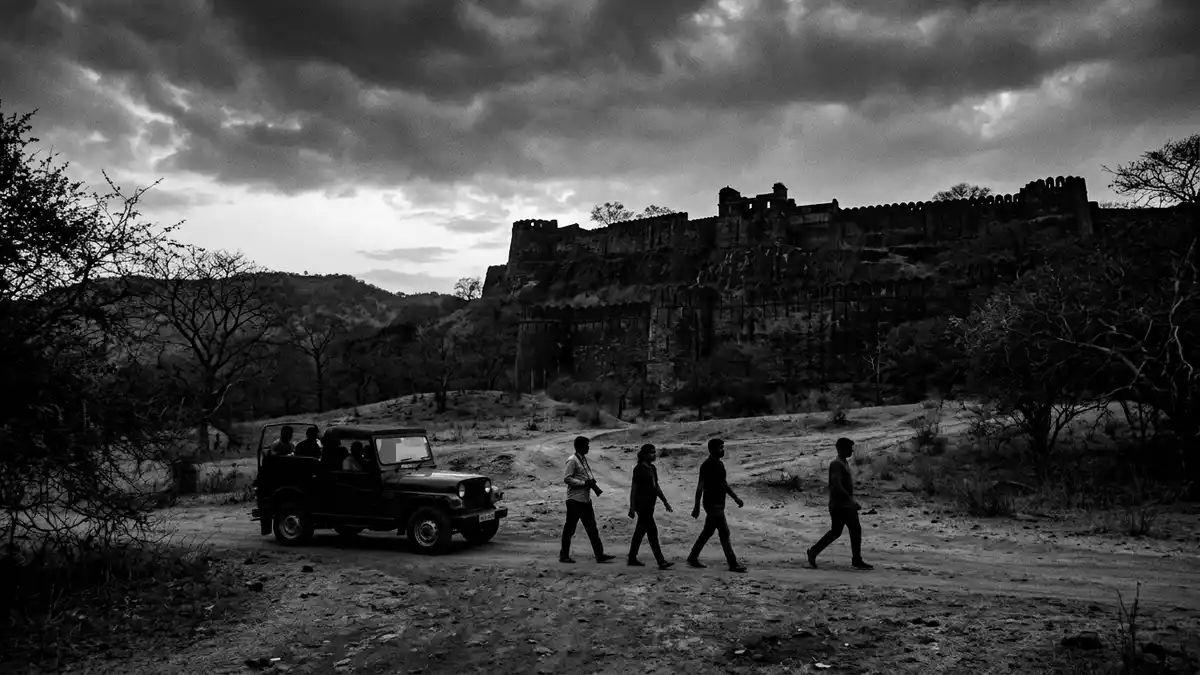
Ranthambore National Park in Sawai Madhopur, Rajasthan, is one of India’s best known tiger reserves, where dry forest, ancient stone and a hilltop fort share the same rugged plateau. Set in the southeastern part of the state at the junction of the Aravalli and Vindhya hill ranges, it brings big cats, broad valleys and medieval architecture into a single protected landscape that has grown through successive conservation measures since the twentieth century.
Fort, forest and a dry Rajasthan landscape
Ranthambore National Park lies in the Sawai Madhopur district of eastern Rajasthan, with its core forest rising from plains cut by seasonal streams and backed by rocky escarpments.Sawai Madhopur district The protected area sits close to the meeting point of the Aravalli and Vindhya hill systems, so visitors move through a landscape where older metamorphic rocks and younger sandstones appear within the same vista.junction of the Aravallis and Vindyas Valleys carry dry deciduous woodland, with dhok trees and other hardy species dropping their leaves in the dry season and flushing green after the monsoon.
The park’s rivers form natural boundaries, with the Banas to the north and the Chambal to the south marking broad arcs of water beyond the forested core.Banas and Chambal rivers Inside the reserve, small lakes and marshy depressions break the otherwise dry terrain, attracting deer, birds and crocodiles. The forest itself is described as extending over more than 280 km² (108 sq mi) of deep woodland in the core zone, with canals, rocky ridges and scattered clearings creating a patchwork of habitats for tigers and other wildlife.area of 282.03 sq kms
Ranthambore Fort and the long history of the reserve
The park takes its name from Ranthambore Fort, a sprawling hilltop stronghold that stands inside the protected area on a rocky outcrop above the forest.named after Ranthambore Fort The fort’s origins go back to the tenth century, when Chauhan Rajputs built defences on this height to control the surrounding countryside, and its walls, temples and ruined palaces still overlook the lakes and valleys below.10th century Chauhan Rajputs Over later centuries it passed between Rajput rulers, the Delhi Sultanate and the Mughal Empire, with Emperor Akbar capturing the fort in 1568 as part of his campaigns in Rajasthan.Akbar captures the fort in 1568
In the twentieth century Ranthambore Fort was recognised as part of the Hill Forts of Rajasthan group and inscribed on the UNESCO World Heritage list in 2013, linking its medieval architecture to a wider narrative about Rajput hill defences.2013 UNESCO inscription Around the fort, the forests that now form the national park once served as the hunting grounds of the Jaipur rulers in the late eighteenth century and nineteenth century, with shikar expeditions pursuing tigers and other large game in the valleys below the walls.late 18th century hunting grounds That royal history has given way to conservation, but the same rocky plateaux and forest tracks now form the setting for wildlife watching rather than organised hunts.
From sanctuary to national park and tiger reserve
The protected landscape around Ranthambore Fort was formally organised as the Sawai Madhopur Wildlife Sanctuary in 1955, marking the start of a legal framework for conserving the forest and its animals.1955 Sawai Madhopur Wildlife Sanctuary In 1973 Ranthambore became one of the original reserves under India’s Project Tiger programme, a nationwide effort to protect the Bengal tiger by securing core habitats and limiting disturbance.1973 Project Tiger reserve Seven years later, in 1980, the core forest was notified as Ranthambore National Park, focusing protection on an area of roughly 282 km² around the fort and its surrounding valleys and lakes.national park area 282.03 sq kms
Over subsequent decades the protected area expanded further as adjoining forests were brought under formal conservation. The Sawai Man Singh Sanctuary and the Kailadevi Sanctuary to the north and south were added to create a larger Ranthambore Tiger Reserve, described as covering over 1,400 km² (540 sq mi) of connected habitat once core and buffer zones are included.reserve of 1,411 square kilometres These successive changes have turned what began as a hunting preserve into a sizeable conservation landscape, where tigers, leopards, deer and other species move between dry forest, grassland and rocky hill country under a unified management regime.
Visiting Ranthambore National Park: what travellers from Western Europe should know
- Ranthambore National Park lies south-east of Jaipur in the Sawai Madhopur district of Rajasthan, with Sawai Madhopur town serving as the main railhead linking the reserve to Delhi and other Indian cities.
- The terrain inside the park is rugged, with forest tracks crossing stony ground and low ridges; some viewpoints around Ranthambore Fort are reached by stairways that climb steeply up the hill.
- The national park sits in the Indian state of Rajasthan, where the official language is Hindi and the currency is the Indian rupee.
- Entry requirements depend on your nationality; UK travellers can check the FCDO travel advice at gov.uk/foreign-travel-advice, Irish travellers the Department of Foreign Affairs at ireland.ie.
Searching for Ranthambore National Park on social platforms
These links open searches for Ranthambore National Park on each platform.
Frequently asked questions about Ranthambore National Park
Where is Ranthambore National Park located?
Ranthambore National Park is in the Sawai Madhopur district of Rajasthan in northern India, between the Banas and Chambal rivers and close to the junction of the Aravalli and Vindhya hill ranges.
What can visitors expect on a visit to Ranthambore National Park?
Visitors move through dry deciduous forest and rocky valleys where lakes, streams and cliffs provide habitat for tigers, deer and other wildlife, with the hilltop Ranthambore Fort adding a distinct historical element above the forest.
What makes Ranthambore National Park distinctive among India’s tiger reserves?
Ranthambore combines a Project Tiger reserve and national park declared in 1980 with a tenth-century fort that became part of a UNESCO-listed group of hill forts in 2013, so conservation, royal hunting history and medieval architecture share a single protected landscape.