
Rapa Nui and its moai on volcanic stone
Published on 08/16/2026 at 14:00 | Editorial responsibility: Rafael Müller, Editor-in-Chief AD HOC NEWS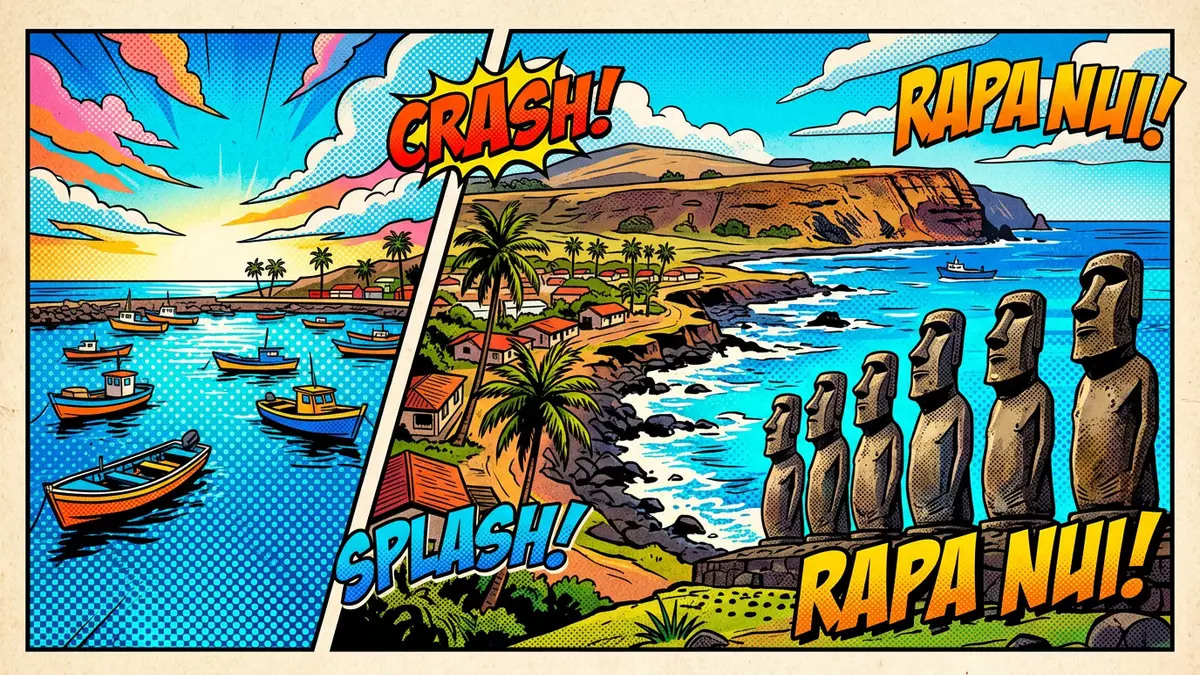
Rapa Nui is the indigenous name of Easter Island, a Chilean island in the South Pacific with a landscape shaped by volcanic stone and monumental sculpture. Near Hanga Roa, the island’s archaeological sites bring together Rano Raraku, ahu platforms and the moai that define its cultural identity.
Volcanic quarries and stone figures across Rapa Nui
The island’s most recognisable forms are the moai, carved figures made from yellow-brown lava tuff and linked to Rapa Nui National Park, a World Heritage site since 1995World Heritage site since 1995. The park contains the island’s most important archaeological sites, including the Rano Raraku quarry where many statues were carvedRano Raraku quarry.
The UNESCO description places the settlement of the island around AD 300 and the main flourishing of its monumental sculpture between the tenth and sixteenth centuriessettlement of the island. Those dates frame a culture that left stone figures, ceremonial platforms and working quarries rather than timber structures.
Ahu, Orongo and the island’s ceremonial landscape
Across Rapa Nui, the ahu are raised stone platforms that carry moai, and some sites preserve open courts and masonry work. Britannica notes that the island has more than 600 statues and ruined platforms with open courtyards on their landward sidesmore than 600 statues.
Orongo, on the crater rim of Rano Kau, belongs to a later ritual world and contains stone houses and petroglyphs. The Chilean heritage ministry describes it as the centre of the bird man cult and notes 54 semi-subterranean stone houses therebird man cult.
Stone, scale and the Rapa Nui horizon
The site’s force lies in the relation between quarry, platform and statue. The moai are not freestanding monuments isolated from their setting; they belong to a wider archaeological landscape of carvings, roads, shelters and rock artarchaeological landscape.
That wider landscape includes volcanic material, basalt picks and the island’s remaining ceremonial works. Rapa Nui National Park protects a large share of the island’s archaeological record, and the park’s integrity rests on that concentration of sites rather than on a single monumentpark’s integrity.
Visiting Rapa Nui: what travellers from Western Europe should know
- Rapa Nui lies in the South Pacific and is reached by air from Santiago de Chile. Hanga Roa is the island’s main town.
- The terrain includes volcanic cones, exposed stone and archaeological sites spread across the island. Many places are reached on foot, by road or by short local drives.
- The official language is Spanish and the currency is the Chilean peso.
- The island’s main protected area is Rapa Nui National Park, and the archaeological sites are dispersed rather than concentrated in a single urban centre.
Searching for Rapa Nui on social platforms
These links open searches for Rapa Nui on each platform.
Frequently asked questions about Rapa Nui
Where is Rapa Nui?
Rapa Nui is the indigenous name of Easter Island, a Chilean island in the South Pacific. Hanga Roa is the main settlement.
What does a visit involve?
The island combines coastal scenery with archaeological sites, volcanic quarrying areas and ceremonial platforms. Stone figures, rock art and open platforms are part of the same cultural landscape.
What makes Rapa Nui distinctive?
Its identity rests on the moai, the ahu platforms and the island’s Polynesian cultural history. The combination of quarry, sculpture and ceremonial space is the island’s defining feature.


