
Rapa Nui National Park and its stone ancestors
Published on 09/23/2026 at 23:48 | Editorial responsibility: Rafael Müller, Editor-in-Chief AD HOC NEWS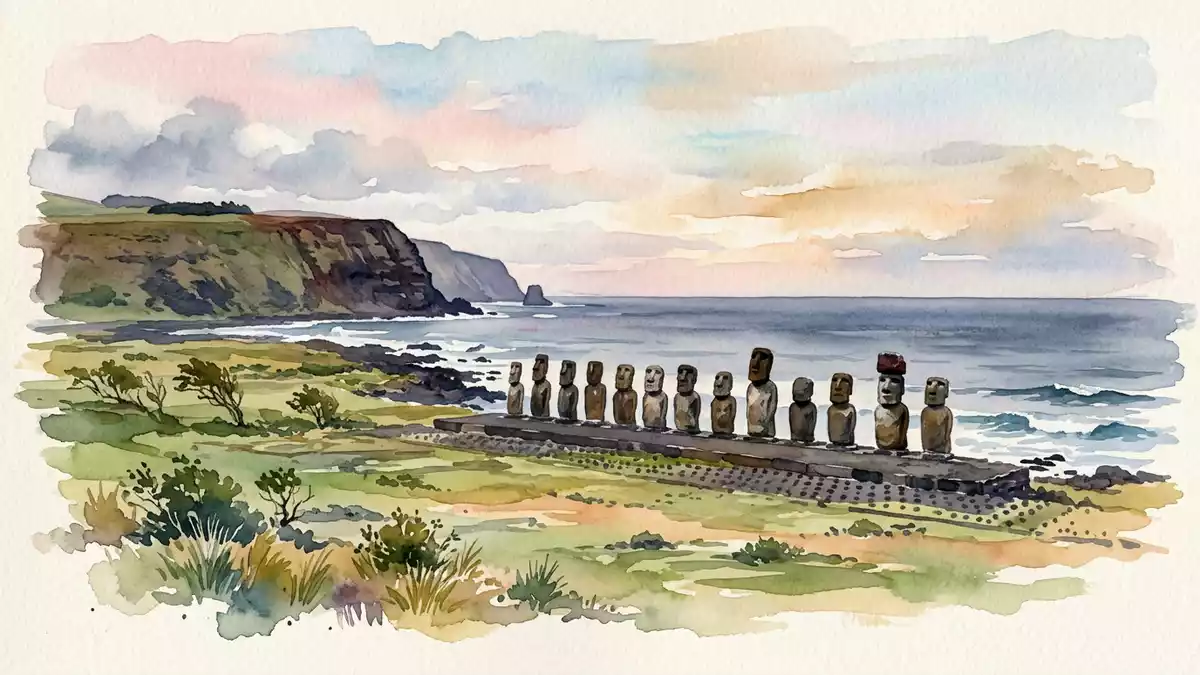
Rapa Nui National Park is a cultural landscape on Easter Island, Chile, where monumental stone figures stand among volcanic craters, grasslands and coastal platforms. The moai are its most recognisable feature, yet the park also preserves quarries, rock art, village remains and agricultural structures linked to Rapa Nui society.
Moai across a volcanic cultural landscape
Rapa Nui was settled by people of Polynesian origin around AD 300. From the tenth to the sixteenth century, the island’s society developed monumental sculpture and architecture expressed through moai and ahu, the ceremonial platforms associated with them.
The park contains about 900 moai and more than 300 ahu, alongside thousands of structures connected with agriculture, housing, funeral rites and production. The figures range from 2 m to 20 m (6.6 ft to 65.6 ft) and were carved mainly from yellow-brown volcanic tuff.
The relationship between statue, platform and landscape defines the park. Coastal ahu stand near the Pacific, while inland archaeological areas include quarries, caves, petroglyphs and traces of habitation. Rapa Nui’s archaeological sites form a connected record of sculpture, ceremony and everyday life.
Rano Raraku, Ahu Tongariki and Orongo
Rano Raraku is the principal quarry associated with the moai. Its volcanic slopes contain unfinished figures and evidence of carving in tuff, while hard basalt toki were used as tools. The quarry presents the statues as works in progress, before their movement to ceremonial platforms.
Ahu Tongariki carries 15 moai on a broad ceremonial platform. The arrangement places monumental sculpture beside the island’s volcanic terrain, linking architecture, stone and open horizon in one archaeological setting.
At the Rano Kau volcano, Orongo is a ceremonial village with semi-subterranean stone houses and rock art. Petroglyphs refer to the bird-man tradition and fertility, marking a cultural phase distinct from the ancestor imagery associated with the moai. Orongo’s ceremonial village adds political and religious history to the park’s monumental sculpture.
From national monument to World Heritage landscape
Rapa Nui National Park has been protected as a national park since 1935, and the island was declared a National Monument in the same year. In 1995, UNESCO inscribed the park as a World Heritage Site under cultural criteria.
The protected area covers approximately 40 per cent of Easter Island and includes archaeological sites representing several forms of Rapa Nui culture. These include ahu, moai, rock shelters, caves, petroglyphs, agricultural features and domestic structures.
Its cultural value lies in the combination of tangible remains and volcanic setting. The park is not a single monument enclosed within one building; it is an island-scale collection of places connected by the history of Rapa Nui communities. The World Heritage documentation records the range of archaeological evidence, from megalithic statues to houses, villages and rock paintings.
Visiting Rapa Nui National Park: what travellers from Western Europe should know
- Rapa Nui National Park occupies much of Easter Island, with Hanga Roa as the principal settlement. The island belongs to Chile in the southeastern Pacific.
- Named sites include Rano Raraku, Rano Kau, Ahu Tongariki, Orongo, Anakena, Puna Pau and Ahu Akivi. Their settings range from volcanic craters and quarry slopes to coastal ceremonial platforms.
- Terrain includes volcanic rock, open grassland, crater edges and exposed coastal areas. The archaeological sites are spread across the island rather than concentrated in one compact enclosure.
- The official language is Spanish and the currency is the Chilean peso.
- Entry requirements depend on your nationality; UK travellers can check the FCDO travel advice at gov.uk/foreign-travel-advice, Irish travellers the Department of Foreign Affairs at ireland.ie.
Searching for Rapa Nui National Park on social platforms
These links open searches for Rapa Nui National Park on each platform.Frequently asked questions about Rapa Nui National Park
Where is Rapa Nui National Park?
Rapa Nui National Park is on Easter Island, a Chilean island in the Pacific Ocean. Hanga Roa is the principal settlement.
What can visitors expect to see?
The park contains moai, ahu, volcanic quarries, crater landscapes, petroglyphs, caves and remains linked to housing and agriculture.
What makes the park distinctive?
Its distinctive feature is the combination of Polynesian monumental sculpture, ceremonial architecture and volcanic island terrain. The World Heritage designation dates from 1995.


