
Rapa Nui National Park and the stone ancestors of the Pacific
Published on 09/18/2026 at 17:00 | Editorial responsibility: Rafael Müller, Editor-in-Chief AD HOC NEWS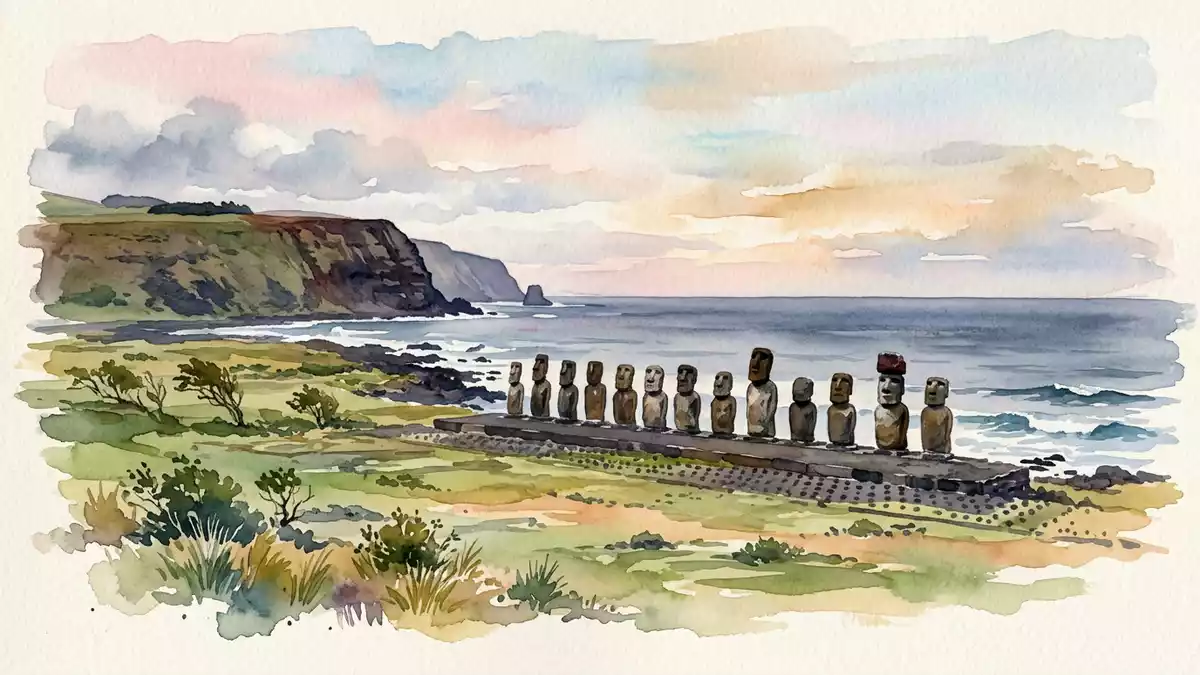
Rapa Nui National Park on Easter Island in Chile is a cultural landscape where carved stone ancestors, volcanic craters and the Pacific Ocean share the same isolated territory. Recognised as a UNESCO World Heritage Site in the 1990s, the park wraps around Hanga Roa and preserves the archaeological record of the Rapa Nui people across several centuries of Polynesian settlement.
Stone faces, ceremonial platforms and a living landscape
The defining experience of Rapa Nui National Park is encountering the moai, the elongated stone figures carved to represent important ancestors of the island’s Polynesian society.the carved moai statues stand on ceremonial platforms known as ahu along stretches of coastline and within the interior, forming lines of figures that face inland towards former village sites.ceremonial platforms called ahu Across the park there are hundreds of these statues and platforms, turning the whole island into an open?air gallery of monumental sculpture.
Most moai are carved from volcanic tuff, a relatively soft rock formed from compacted ash, and many of them remain partly embedded in quarry slopes at sites such as Rano Raraku where work was abandoned.moai carved from lava tuff Others stand fully upright on restored ahu near the ocean, some topped with separate red stone elements known as pukao, creating a horizon line of faces and torsos against waves and sky.nearly 900 moai statues
Polynesian settlement and World Heritage recognition
Easter Island, known to its inhabitants as Rapa Nui, was settled by people of Polynesian origin sometime in the first millennium AD, bringing with them their own traditions and language.Polynesian settlers reached Rapa Nui Between roughly the tenth and sixteenth centuries the island’s society developed a powerful tradition of building ahu and erecting moai, creating a distinctive corpus of monumental stone sculpture and associated structures that still mark the landscape.monumental sculpture and architecture
Much of Easter Island has been declared Rapa Nui National Park, and in December 1995 the property was inscribed on the UNESCO World Heritage List as site number 715 under cultural criteria that recognise its outstanding universal value.World Heritage inscription in 1995 The designation covers a network of archaeological areas and landscapes, including coastal ahu complexes, inland quarries, petroglyphs and remains of dwellings, all of which together document the life, beliefs and social organisation of the Rapa Nui people over several centuries.around 20,000 archaeological remains
Quarries, crater lakes and sections of the park
Within Rapa Nui National Park, the landscape is structured into distinct sections that combine geological formations with cultural remains. Rano Raraku is the main quarry where most moai were carved directly from the slopes of a volcanic crater, and its interior holds a lake surrounded by unfinished statues in various stages of completion.main quarry with hundreds of moai Nearby, the north coast carries long sequences of ahu and toppled or re?erected moai along a rugged shore, while Anakena in the north offers a sandy bay bordered by archaeological sites where early settlement is associated.
Other sectors of the park include the Rano Kau crater with the ceremonial village of Orongo on its rim, Puna Pau where the red stone pukao elements were quarried, and inland complexes such as Ahu Akivi, where a row of statues stands away from the sea.park sections like Rano Kau and Puna Pau Taken together these areas show how Rapa Nui society used both coastal and interior landscapes for ritual, living and production, and how the island’s volcanic geology underpins its monumental art.
Visiting Rapa Nui National Park: what travellers from Western Europe should know
- Rapa Nui National Park occupies large parts of Easter Island around Hanga Roa in the south?central Pacific, reached by air links with mainland Chile.
- Many of the main sites involve walking over uneven volcanic terrain with slopes, loose rock and sections of coastal path, and some viewpoints are reached by stairways.
- The island’s climate brings strong sunlight and exposure to wind along open headlands, while crater interiors and inland valleys can feel more sheltered.
- The official language is Spanish and the currency is the Chilean peso.
- Entry requirements depend on your nationality; UK travellers can check the FCDO travel advice at gov.uk/foreign-travel-advice, Irish travellers the Department of Foreign Affairs at ireland.ie.
Searching for Rapa Nui National Park on social platforms
These links open searches for Rapa Nui National Park on each platform.
Frequently asked questions about Rapa Nui National Park
Where is Rapa Nui National Park located?
Rapa Nui National Park is on Easter Island in the south?eastern Pacific Ocean, surrounding Hanga Roa and forming part of Chile’s remote territory.
What can visitors expect on a visit to the park?
Visitors encounter moai statues on ahu platforms, volcanic craters, quarries with unfinished figures and coastal and inland archaeological sites spread across varied terrain.
What makes Rapa Nui National Park distinctive?
The park combines a dense concentration of monumental stone sculpture, a documented Polynesian cultural tradition and an isolated volcanic island landscape recognised as World Heritage.


