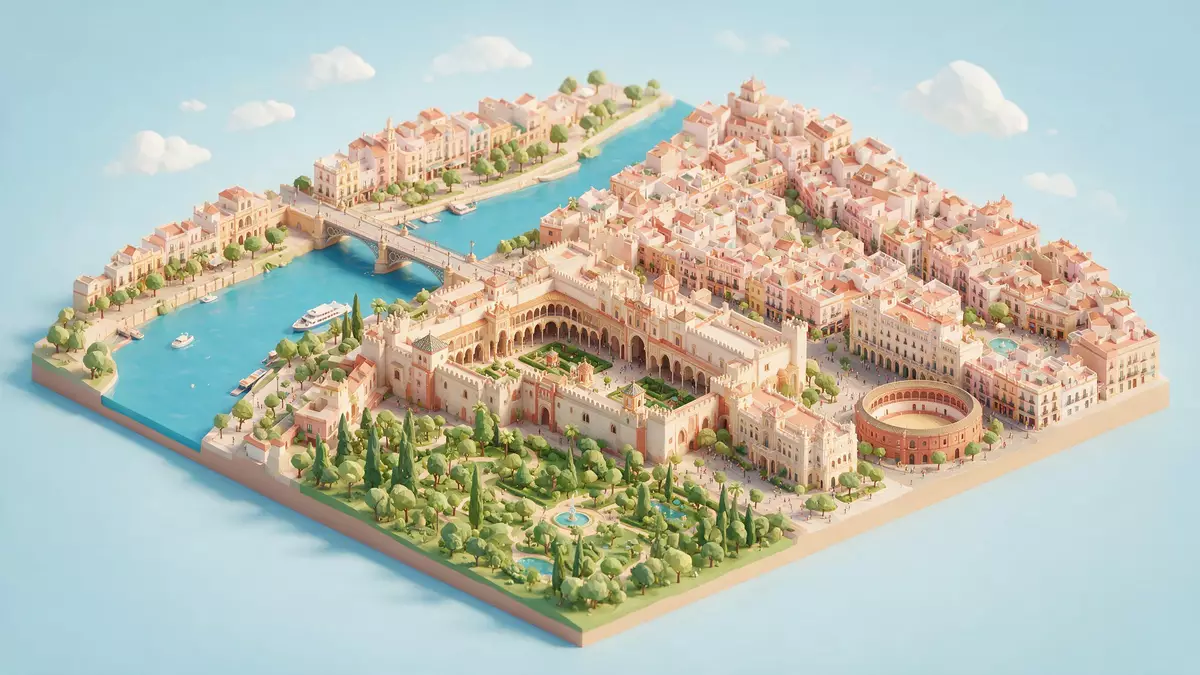
Real Alcazar de Sevilla and its layered courtyards
Published on 08/11/2026 at 15:16 | Editorial responsibility: Rafael Müller, Editor-in-Chief AD HOC NEWS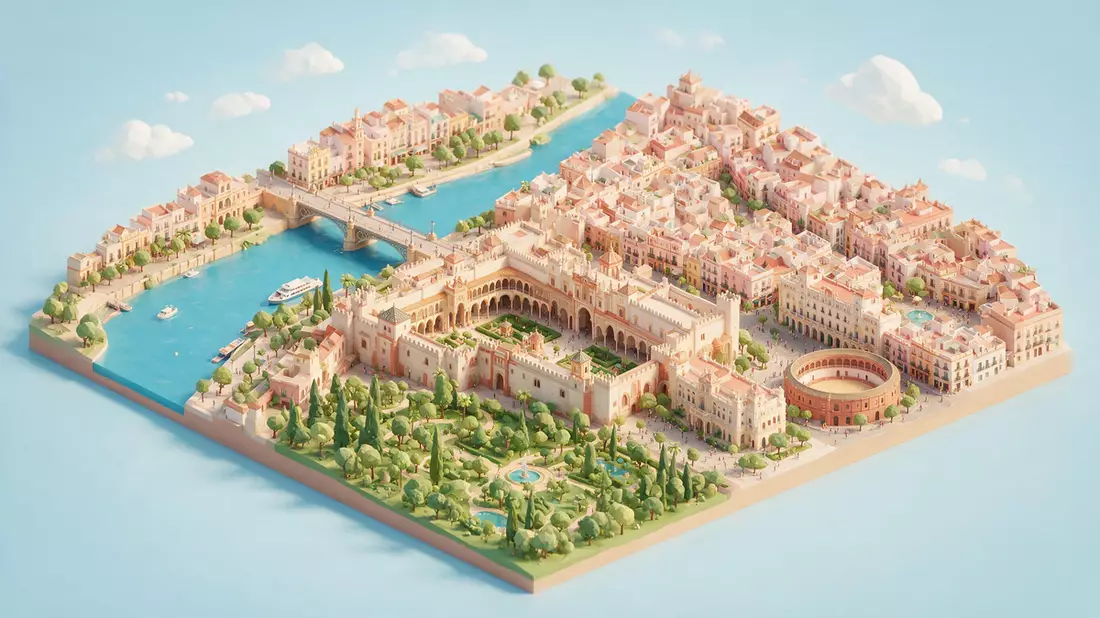
Real Alcazar de Sevilla is the royal palace complex at the centre of Sevilla, and its most striking quality is the layering of medieval and later architecture around gardens and courtyards. The site was associated with the Crown of Castile and later became a major royal residence in southern Spain.
Mudéjar rooms and royal courts
The palace contains some of the finest Mudéjar work in Spain, with brick, plaster, timber ceilings and dense tile surfaces. That combination gives the interiors a rhythmic, enclosed character, especially in the principal reception spaces.
The Hall of Ambassadors belongs to the 14th century and is one of the palace’s best-known ceremonial rooms. Nearby courts, arcades and doorways keep the scale varied, moving from intimate passages to larger, more formal spaces.
Gardens inside a palace complex
The gardens are an essential part of Real Alcazar de Sevilla, with water channels, planted beds, galleries and terraces arranged inside the fortified enclosure. Orange trees, clipped hedges and tiled surfaces give the grounds a strong Andalusian character.
The Royal Alcazar also preserves elements from different eras in close proximity, so a walk through the grounds moves between Islamic, Christian and Renaissance settings. That mixture is visible in the walls, vaults, arches and decorative surfaces rather than hidden behind a single style.
From medieval fortress to living palace
The site began as a fortification in the Islamic period and was transformed under Christian rule after the conquest of Sevilla in 1248. Pedro I commissioned major palace work in the 14th century, and the result remains one of the clearest examples of royal Mudéjar architecture.
Later additions from the Renaissance and subsequent centuries extended the complex without removing its older core. The palace therefore reads as a sequence of royal tastes, building campaigns and decorative traditions gathered into one enclosure.
Visiting Real Alcazar de Sevilla: what travellers from Western Europe should know
- Real Alcazar de Sevilla is in central Sevilla and is reached by metro, bus, taxi and on foot from the historic core.
- Admission arrangements and opening hours are set by the site's operator and change with the season; the official website is the only binding source.
- Spring and autumn suit the gardens best, while summer visits call for early starts and careful planning in the heat.
- The palace complex includes courtyards, steps, tiled floors and long stretches of walking between rooms and gardens.
- Spanish is the main language used on site, and card payment is common in the city.
- Entry requirements depend on your nationality. UK travellers should check the FCDO travel advice at gov.uk/foreign-travel-advice; Irish travellers the Department of Foreign Affairs at ireland.ie; EU and EEA citizens their own national foreign ministry.
Searching for Real Alcazar de Sevilla on social platforms
These links open searches for Real Alcazar de Sevilla on each platform.
Frequently asked questions about Real Alcazar de Sevilla
Where is Real Alcazar de Sevilla?
It stands in central Sevilla, close to the city’s historic core and major civic buildings. The complex sits within the old urban fabric rather than in an isolated park.
What should visitors expect?
Expect a palace complex with decorated rooms, courtyards and gardens linked by passages and arcades. The visit moves between enclosed interior spaces and open planted areas.
What makes it distinctive?
Its layered architecture is the defining feature, with Islamic, Mudéjar, Gothic, Renaissance and later elements in one royal setting. The gardens are part of the experience rather than an exterior add-on.