
Real Alcazar de Sevilla and its layered royal architecture
Published on 09/23/2026 at 09:43 | Editorial responsibility: Rafael Müller, Editor-in-Chief AD HOC NEWS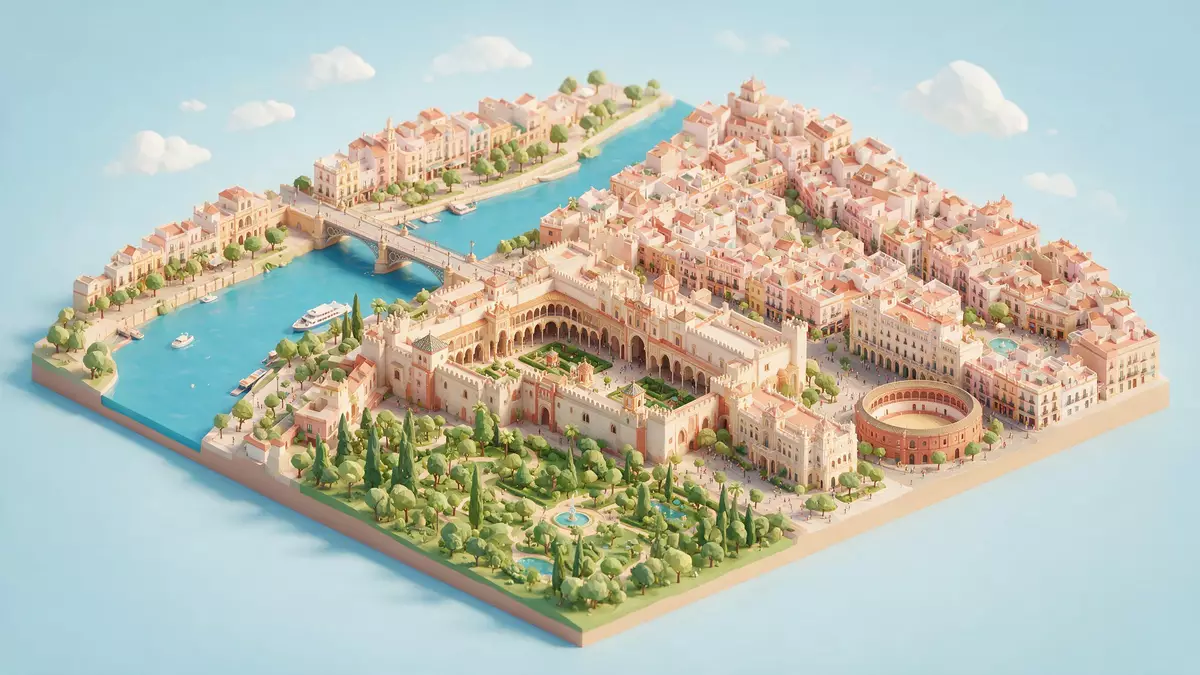
Real Alcazar de Sevilla is a fortified royal palace where architectural layers remain visible within one enclosed complex. Islamic foundations, Pedro I’s Mudéjar palace, Gothic rooms and Renaissance gardens meet in the historic centre of Sevilla.
Real Alcazar de Sevilla: a palace built in layers
The earliest nucleus dates from the tenth century, when Umayyad rulers established a fortified complex in the city. The Abbadid dynasty expanded the palace in the eleventh century, while the Almohads added further buildings and defensive work during the twelfth and early thirteenth centuries.
That Islamic beginning remains legible in the enclosure, courtyards and surviving architectural fragments. The tenth-century Islamic citadel forms the oldest historical layer associated with the complex.
Castilian rulers took possession of Sevilla in 1248, and the palace acquired new Christian buildings beside the inherited Islamic structures. Alfonso X added a Gothic palace in the thirteenth century, creating a clear contrast between pointed medieval forms and the courtyards shaped by al-Andalus.
Pedro I’s Mudéjar palace and its decorated interiors
The central architectural expression of Real Alcazar de Sevilla belongs to Pedro I of Castile. His palace was constructed in the 1360s in the Mudéjar style, a Christian royal architecture using forms, techniques and ornament associated with Islamic building traditions.
Its rooms contain glazed azulejo tiles, carved stucco, geometric ornament, Arabic inscriptions and timber ceilings. The Patio de las Doncellas organises the palace around a decorated courtyard, while the Salón de Embajadores contains an elaborate interior beneath a richly ornamented ceiling.
The palace does not present Mudéjar architecture as an isolated style. Christian royal use appears alongside Islamic decorative language, and the combination continues through arches, tile surfaces, plasterwork and carved wood. Pedro I’s Mudéjar palace remains the defining architectural layer of the complex.
Further additions connect the palace with the Spanish monarchy and the Habsburg period. Charles V married in the Alcazar in 1526, and Renaissance work introduced another visual language into the royal enclosure.
Courtyards, gardens and water within the royal enclosure
The gardens extend beyond the palace rooms as a sequence of enclosed spaces, planted areas, walls, paths and water features. Their development belongs to several periods, with Islamic, Renaissance and later European garden forms present across the grounds.
Courtyards provide the clearest transition between architecture and garden. The Patio de las Doncellas has tiled surfaces, arcades and planted beds, while the Patio del Yeso preserves an important Almohad element. These spaces remain connected by passages, gateways and changes in level.
Water appears in channels, pools and fountains across the gardens. The design is not a single period composition, but a layered landscape associated with the palace’s long royal history. Renaissance interventions altered sections of the grounds, and nineteenth-century work added further garden character.
The complex covers more than seven hectares, with the palace buildings occupying part of a larger enclosure. the Alcazar gardens include spaces associated with Moorish, Renaissance and later European design.
Real Alcazar de Sevilla became part of the UNESCO World Heritage ensemble formed with Sevilla Cathedral and the General Archive of the Indies in 1987. The designation recognises a group of monuments that records successive phases of the city’s history.
Visiting Real Alcazar de Sevilla: what travellers from Western Europe should know
- Real Alcazar de Sevilla is in the historic centre of Sevilla, beside the Cathedral and the Archivo de Indias. The complex is reached through the streets around the Patio de Banderas.
- The visit combines palace interiors with courtyards, planted gardens, tiled surfaces, steps and changes in level. Comfortable walking shoes suit the mixture of rooms and outdoor paths.
- The official language is Spanish and the currency is the euro.
- The palace and gardens form a large enclosed complex, so the visit involves movement between separate rooms, courtyards and garden sections.
Searching for Real Alcazar de Sevilla on social platforms
These links open searches for Real Alcazar de Sevilla on each platform.
Frequently asked questions about Real Alcazar de Sevilla
Where is Real Alcazar de Sevilla?
Real Alcazar de Sevilla is in Sevilla’s historic centre, beside the Cathedral and the Archivo de Indias. Its entrances are associated with the Patio de Banderas and the surrounding palace quarter.
What does a visit include?
A visit combines royal rooms, decorated courtyards and extensive gardens. The route includes Mudéjar interiors, Gothic architecture, tiled surfaces, water features and planted spaces.
What makes the complex distinctive?
Its character comes from the combination of Islamic foundations, Pedro I’s fourteenth-century Mudéjar palace, Gothic additions and Renaissance garden work. The layers remain together inside one royal enclosure.


