

Recife Antigo, the island heart of Recife’s history
Published on 08/15/2026 at 14:08 | Editorial responsibility: Rafael Müller, Editor-in-Chief AD HOC NEWS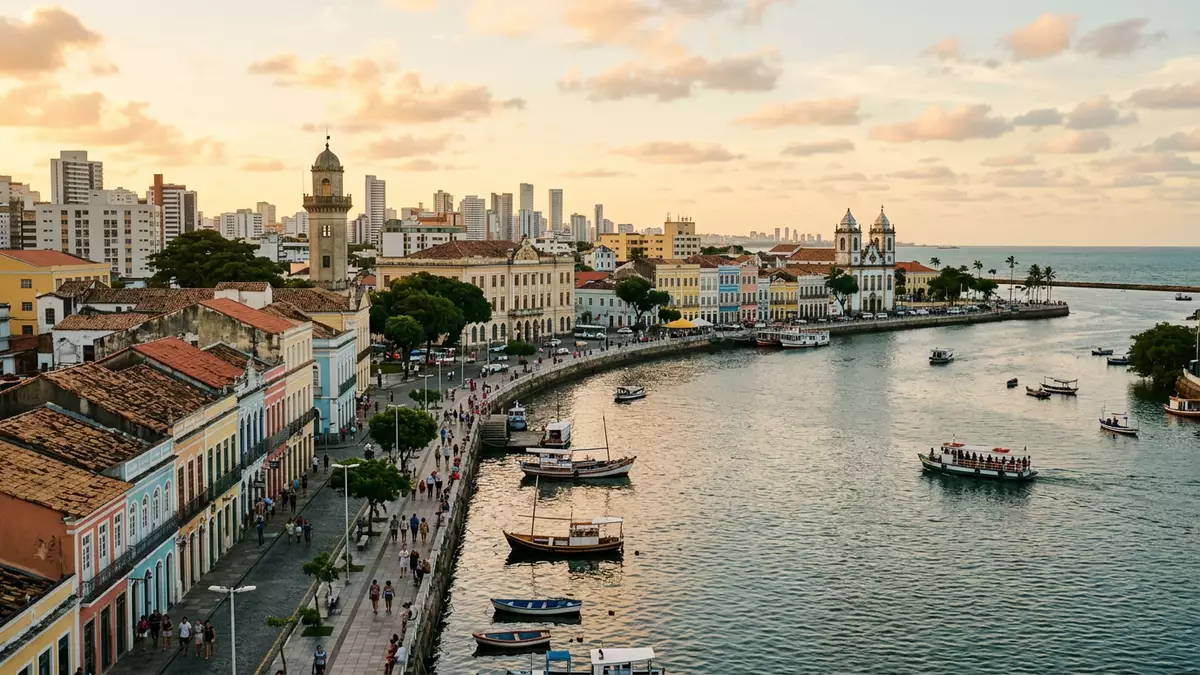
Recife Antigo is the historic quarter of Recife that grew around the city’s harbour on an island at the mouth of the Capibaribe and Beberibe rivers in north-east Brazil. It preserves streets and buildings that reflect the growth of Recife as a major Atlantic trading port from the sixteenth century onwards, while hosting cultural institutions and creative industries in former warehouses and civic buildings.
An island of history at the mouth of two rivers
The official name of Recife Antigo is Bairro do Recife, and the district occupies the eastern part of Recife’s historic centre on the Island of Recife, close to the harbour installations.Recife Antigo is the historical section The area is bounded by waterways where the Capibaribe and Beberibe rivers meet the Atlantic Ocean, giving many streets views across docks, quays and estuarine channels.marged by the encounter of the rivers The urban fabric combines narrow early streets with broader later avenues, reflecting centuries of expansion.
The district developed from a port known as Arrecife dos Navios during the sixteenth century, when Portuguese colonists established trading facilities along the reef-protected shoreline.surgiu no século XVI Planning of streets and plots was formalised in the seventeenth century under Count Maurice of Nassau, whose arrival in 1637 introduced a more ordered layout to what had previously been a haphazard port settlement.chegada do conde Maurício de Nassau Later legislation in the twentieth century recognised the historic value of the neighbourhood and set out special preservation and revitalisation rules for its streets and buildings.Plano Específico de Revitalização
From port warehouses to museums and cultural centres
Recife Antigo contains some of Recife’s most recognisable historic buildings, many of which line the waterfront and the streets radiating inland. On Praça Rio Branco, also known as Marco Zero Square, civic and commercial buildings frame an open space that marks the kilometre zero point for road distances in the state of Pernambuco.Praça Rio Branco marco zero Here, former customs and trading premises have been reused as cultural centres, craft markets and event spaces, while the quay across the water carries sculptures by Francisco Brennand visible from the square.Parque das Esculturas Francisco Brennand
Several port-side warehouses now house museums and institutions dedicated to the culture of Pernambuco. The Museu Cais do Sertão occupies one of the dock buildings, interpreting the semi-arid hinterland and the music associated with it.Museu Cais do Sertão Nearby, the Paço do Frevo in a former public building explores the dance and music style frevo through exhibitions and performances.Paço do Frevo The Centro de Artesanato de Pernambuco presents regional craft traditions in renovated port structures, and shopping galleries such as Paço Alfândega occupy former customs premises with preserved façades.Alfândega and craft centre
Streets of religion, technology and everyday life
Beyond the waterfront, Recife Antigo’s grid of streets carries a mix of religious heritage, technological development and daily leisure spaces. On Rua do Bom Jesus, historically known as the Street of the Jews, stands the Kahal Zur Israel Synagogue, regarded as the first synagogue built in the Americas and now functioning as a museum and cultural site.first synagogue in the Americas Churches such as Igreja do Corpo Santo recall the maritime roots of the neighbourhood, and the nineteenth-century Malakoff Tower remains a distinctive landmark rising above surrounding roofs.Torre Malakoff símbolo marcante
Modern institutions sit alongside these older structures. The Porto Digital technology park is based in Recife Antigo, occupying restored buildings and bringing software and creative businesses into the historic setting.high-tech center called Porto Digital Streets such as Rua da Moeda host bars and music venues, and public spaces are used for events including carnival celebrations, with large boneco (giant puppet) figures stored and displayed in dedicated premises.Casa de Bonecos Gigantes Despite its central role in Recife’s cultural life, the neighbourhood has a relatively small resident population compared with other districts, leaving many of its historic façades occupied by workplaces, institutions and hospitality venues rather than dense housing.cerca de 700 pessoas vivem no bairro
Visiting Recife Antigo: what travellers from Western Europe should know
- Recife Antigo lies in the central area of Recife, on the Island of Recife by the harbour, with neighbouring districts including São José, Boa Vista and Santo Amaro.
The wider city is served by Recife/Guararapes–Gilberto Freyre International Airport and urban bus routes connect the centre with other neighbourhoods. - Much of Recife Antigo is flat waterfront terrain with paved streets and squares, but approaches to towers such as Malakoff Tower involve staircases inside historic structures.
Walking between key sights such as Marco Zero Square, Rua do Bom Jesus and Paço do Frevo involves short stretches on foot along city pavements. - Marco Zero Square stands on Avenida Alfredo Lisboa beside the docks in Recife Antigo, and views across the water include the sculpture park on the opposite quay.
Several museums and cultural centres are housed in former port warehouses close to this square. - The official language is Portuguese and the currency is the Brazilian real.
- Entry requirements depend on your nationality; UK travellers can check the FCDO travel advice at gov.uk/foreign-travel-advice, Irish travellers the Department of Foreign Affairs at ireland.ie.
Searching for Recife Antigo on social platforms
These links open searches for Recife Antigo on each platform.
Frequently asked questions about Recife Antigo
Where is Recife Antigo within Recife?
Recife Antigo occupies the Bairro do Recife on the Island of Recife at the eastern side of the historic centre, bordered by rivers and the Atlantic harbour.
What should a visitor expect when exploring Recife Antigo?
Visitors encounter historic port buildings, churches, a landmark square at Marco Zero, museums housed in former warehouses and streets with bars, craft shops and cultural institutions.
What makes Recife Antigo distinctive compared with other parts of Recife?
Recife Antigo combines the city’s earliest harbour-front development with preserved religious and civic landmarks, while also hosting the Porto Digital technology hub and major cultural venues.


