
Reserva Nacional de Paracas: desert meets the Pacific
Published on 08/19/2026 at 18:02 | Editorial responsibility: Rafael Müller, Editor-in-Chief AD HOC NEWS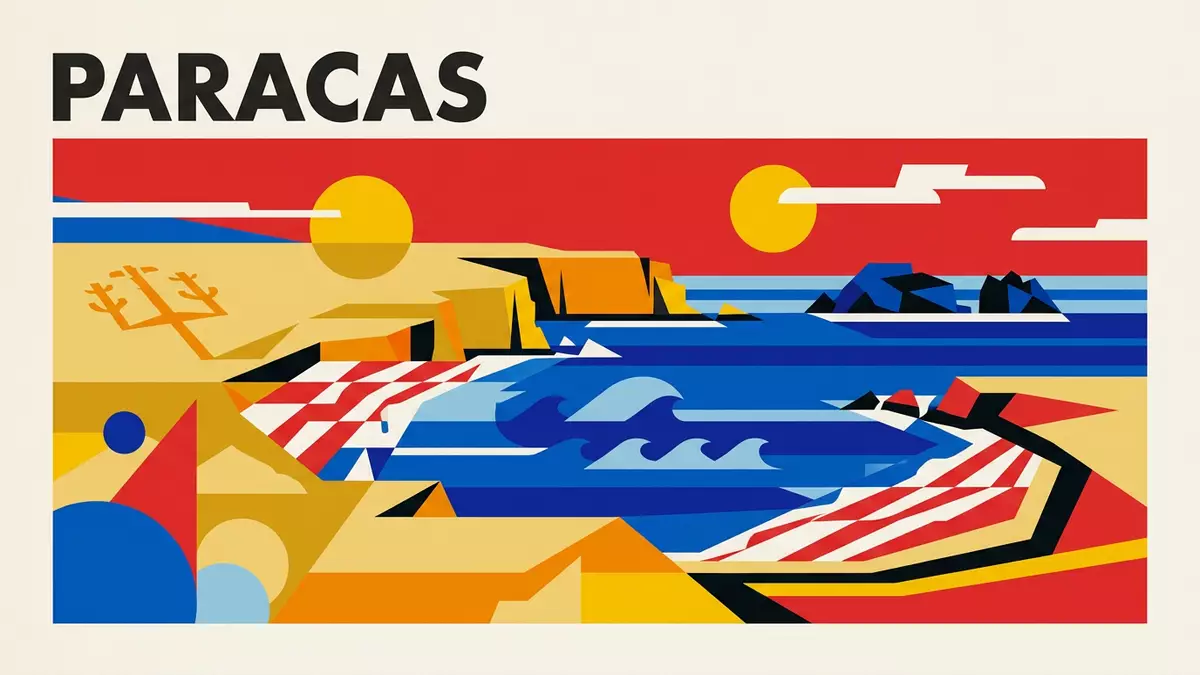
Reserva Nacional de Paracas is a protected coastal landscape near Paracas on Peru’s Ica coast, where sand desert runs directly into the Pacific Ocean and marine wildlife thrives along a dramatic shoreline. Established as a national reserve in 1975, it spans both land and sea in the department of Ica and has become a key site for conserving desert and marine ecosystems.
Desert peninsula and Pacific bays
Reserva Nacional de Paracas occupies a broad peninsula and surrounding waters in the provinces of Pisco and Ica, forming one of Peru’s largest protected coastal areas. The reserve covers about 335,000 hectares (827,801 acres), with a significant proportion lying offshore in the cold waters of the Peruvian current, which meet the Pacific coastal desert along headlands, bays and islands.covers about 335,000 hectares The terrain on land is largely arid, with wide desert plains and cliffs above the ocean, while the marine area includes shallow waters, rocky shores and sandy beaches shaped by wind and waves.
The reserve sits roughly 250 km south of Lima and close to the town and port of Pisco, anchored in the region of Ica along the Panamericana Sur highway.located in the region of Ica, 250 km south of Lima Within its boundaries are bays such as Paracas and Independencia and a coastline that includes islands and promontories used by seabirds and marine mammals. The meeting of ocean and desert creates strong visual contrasts: pale sand and reddish earth above deep blue water, and long views across a largely unbuilt shoreline.
A protected area for desert and marine ecosystems
Reserva Nacional de Paracas was created as a national reserve on 25 September 1975, recognising the importance of conserving both terrestrial desert and marine environments along this section of Peru’s coast.created the 25 September 1975 It forms part of Peru’s national system of protected natural areas and is the only protected area in the country that formally combines extensive marine ecosystems with adjoining terrestrial zones under this status.única área natural protegida del Perú que comprende territorios y ecosistemas marinos además de los terrestres Its protected categories recognise wetlands, bays and rocky coasts alongside desert plains.
On the international level, Reserva Nacional de Paracas is listed as a Ramsar wetland of international importance and is recognised within the Western Hemisphere Shorebird Reserve Network (WHSRN) as a site of regional importance.Ramsar wetland of international importanceWHSRN Site of Regional Importance The wetland designation dates from 30 March 1992 and highlights the role of its bays, shallow waters and tidal areas in supporting migratory shorebirds and other water-dependent species. The WHSRN status, granted in 1991, reflects its function as a staging and stopover point for Nearctic shorebirds moving along the Pacific flyway.
Wildlife, geology and human traces
The combination of cold, nutrient-rich sea and dry coastal desert at Reserva Nacional de Paracas supports varied wildlife, including many marine and coastal species. Surveys report hundreds of species of flora and fauna, with notable representation of seabirds, shorebirds, marine mammals, reptiles, fish and algae.alberga más de 400 especies de flora y fauna These include species such as Humboldt penguins, South American sea lions and several dolphin and sea turtle species recorded in the coastal waters, alongside numerous migratory shorebirds using the tidal zones.
Geologically, the reserve lies within the Pacific coastal desert and the marine ecoregion influenced by the Peruvian current, with cliffs and sedimentary formations along the shoreline.representative of the ecoregions of the cold sea of the Peruvian current and of the Pacific coastal desert Within this landscape are traces of human history linked to the Paracas culture, which flourished on Peru’s south coast during the first millennium BC, and to later coastal settlements; the broader region has produced archaeological finds such as textiles and geoglyphs, though these lie outside the scope of the reserve’s main conservation focus.
Visiting Reserva Nacional de Paracas: what travellers from Western Europe should know
- Reserva Nacional de Paracas lies near the town of Paracas in the department of Ica, south of the city of Pisco, and is reached from the Panamericana Sur highway via local roads to the peninsula.
- The terrain combines desert tracks, coastal cliffs and beaches, and visits commonly involve stretches on foot across sandy or gravel surfaces and exposed ground with little shade.
- The reserve’s shoreline is adjacent to the Pacific Ocean, and boat excursions from nearby ports navigate coastal waters around parts of the protected marine area.
- The official language is Spanish and the currency is the Peruvian sol.
- Entry requirements depend on your nationality; UK travellers can check the FCDO travel advice at gov.uk/foreign-travel-advice, Irish travellers the Department of Foreign Affairs at ireland.ie.
Searching for Reserva Nacional de Paracas on social platforms
These links open searches for Reserva Nacional de Paracas on each platform.
Frequently asked questions about Reserva Nacional de Paracas
Where is Reserva Nacional de Paracas?
Reserva Nacional de Paracas is on Peru’s south-central coast in the department of Ica, near the town of Paracas and south of Pisco along the Pacific shoreline.
What should travellers expect on a visit?
Travellers encounter wide desert landscapes meeting the ocean, with cliffs, beaches and coastal waters that support seabirds and marine mammals within a large protected area.
What makes Reserva Nacional de Paracas distinctive?
Reserva Nacional de Paracas is distinctive for combining extensive marine ecosystems and Pacific coastal desert within one national reserve, recognised internationally for its wetlands and shorebird habitats.


