Roatan Reef along Honduras’s Mesoamerican barrier
Published on 08/20/2026 at 17:14 | Editorial responsibility: Rafael Müller, Editor-in-Chief AD HOC NEWS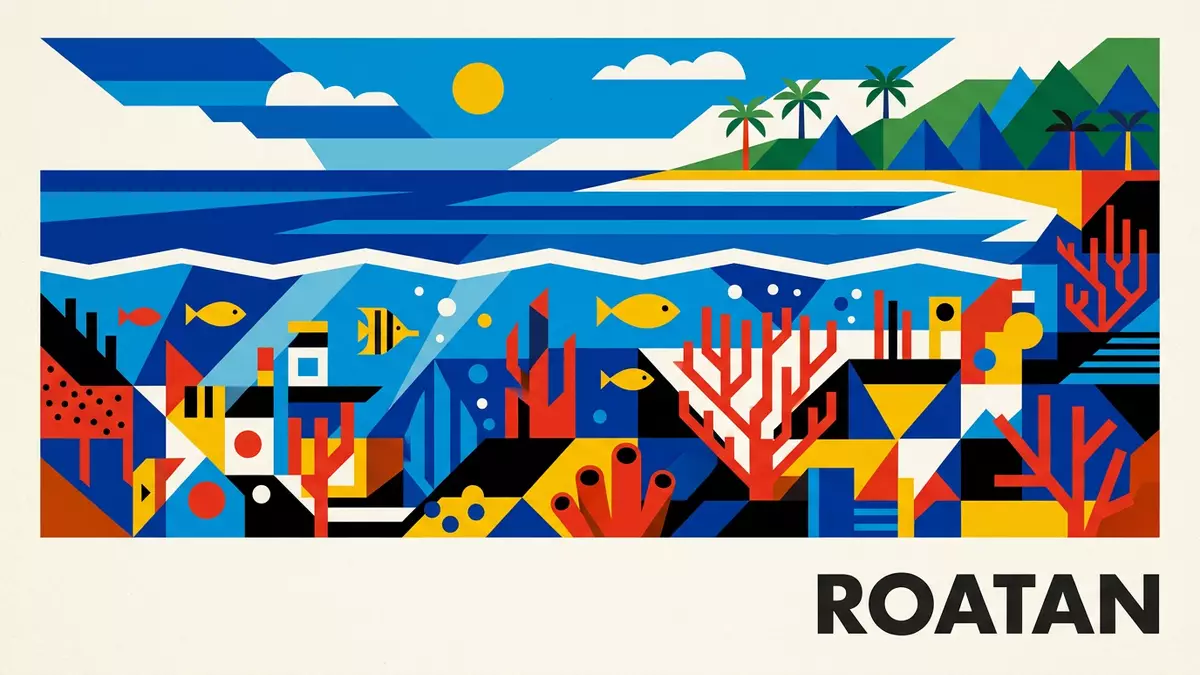
Roatan Reef skirts the shores of Roatan in Honduras, where a band of living coral runs close to the island and drops away towards deep blue water. This reef forms part of the wider Mesoamerican Barrier Reef, a system that stretches along the coasts of Mexico, Belize, Guatemala and Honduras and is recognised as the second-largest barrier reef on Earth after Australia’s Great Barrier Reef.Mesoamerican Barrier Reef
An island wrapped in coral
Roatan lies in the Bay Islands of Honduras, in the western Caribbean Sea, several dozen kilometres off the country’s northern coast.Bay Islands of Honduras The island’s elongated shape runs roughly east to west, with coral formations fringing much of its coastline and creating a near-continuous reef around the island.offshore waters surrounding Roatán
The offshore waters around Roatan form the southern end of the Mesoamerican Barrier Reef System, which runs for more than 600 miles (around 965 km) from the Yucatán Peninsula down to the Bay Islands of Honduras.runs for over 600 miles Roatan Reef is the local expression of this vast chain of coral, lying close enough to shore in places that patches of reef can be reached in a short boat ride from beach settlements such as West End and West Bay.fringing reef system
Layers of life on the reef
Roatan Reef hosts a dense community of corals, fish and other marine species, typical of the tropical Caribbean but concentrated along the edge of the island. The offshore waters surrounding Roatan contain dozens of species of stony corals and hundreds of species of fish, ranging from small reef dwellers to larger pelagic visitors.over 65 species of stony corals Corals form ridges, walls and outcrops that shape the underwater terrain into channels, terraces and slopes.
Individual reef sites around Roatan take advantage of this varied underwater topography. On the northwest shore, in the Roatan Marine Park, dive locations such as Canyon Reef are known for canyons, swim-throughs, gulches and coral towers, some rising many metres from the sea floor.Canyon Reef dive site In other areas, the reef presents gentler slopes and sandy patches, where seagrass meadows and small coral heads create habitats for parrotfish, angelfish and other reef species. Beyond the shallow zones, the coral platform drops away towards deeper water, marking the transition from the fringing reef to the open Caribbean.
Protection within a wider marine park
Roatan Reef sits within a broader protected seascape. The Bay Islands National Marine Park was declared a large marine protected area in June 2010, covering the municipalities of Utila, Roatan, Santos Guardiola and Guanaja over an area of more than 647,000 hectares.Bay Islands National Marine Park Within this designation, coral reefs, seagrass beds, wetlands and beaches are recognised as key ecosystems.
Conservation work on Roatan focuses on water quality, fisheries management and the protection of particularly sensitive reef zones. On the south-west side of the island, Cordelia Banks has been identified as a Site of Wildlife Importance, noted for patches of staghorn coral that remain relatively healthy within the wider Mesoamerican region.Cordelia Banks Site of Wildlife Importance Alongside these specific areas, the fringing reefs around Roatan act as natural breakwaters, helping to shield the island from storm surge while sustaining local fisheries and tourism.
Visiting Roatan Reef: what travellers from Western Europe should know
- Roatan Reef surrounds Roatan in the Bay Islands of Honduras, in the western Caribbean Sea off the country’s northern coast; access to the reef typically begins from coastal communities such as West End and West Bay, where boats reach nearby coral formations.
- The reef environment involves entering the water from boats or shore and moving over uneven seabed, with coral structures, sandy patches and occasional drop-offs, so visitors encounter depth changes and areas where careful finning is needed to avoid contact with coral.
- Roatan lies off the northern coast of Honduras in the Caribbean Sea, where Spanish is the official language and the currency is the Honduran lempira.
- Entry requirements depend on your nationality; UK travellers can check the FCDO travel advice at gov.uk/foreign-travel-advice, Irish travellers the Department of Foreign Affairs at ireland.ie.
Searching for Roatan Reef on social platforms
These links open searches for Roatan Reef on each platform.Frequently asked questions about Roatan Reef
Where is Roatan Reef located?
Roatan Reef surrounds the island of Roatan in the Bay Islands of Honduras, in the western Caribbean Sea off the country’s northern coast.
What can visitors expect when exploring Roatan Reef?
Visitors encounter coral formations, reef fish and varied underwater topography, ranging from shallow coral gardens to canyons and slopes that drop away towards deeper Caribbean water.
What makes Roatan Reef distinctive within the Caribbean?
Roatan Reef forms the southern end of the Mesoamerican Barrier Reef, recognised as the second-largest barrier reef system in the world and partly protected within a designated marine park.