Roman Baths in Bath: a living monument of water and stone
Published on 08/12/2026 at 14:15 | Editorial responsibility: Rafael Müller, Editor-in-Chief AD HOC NEWS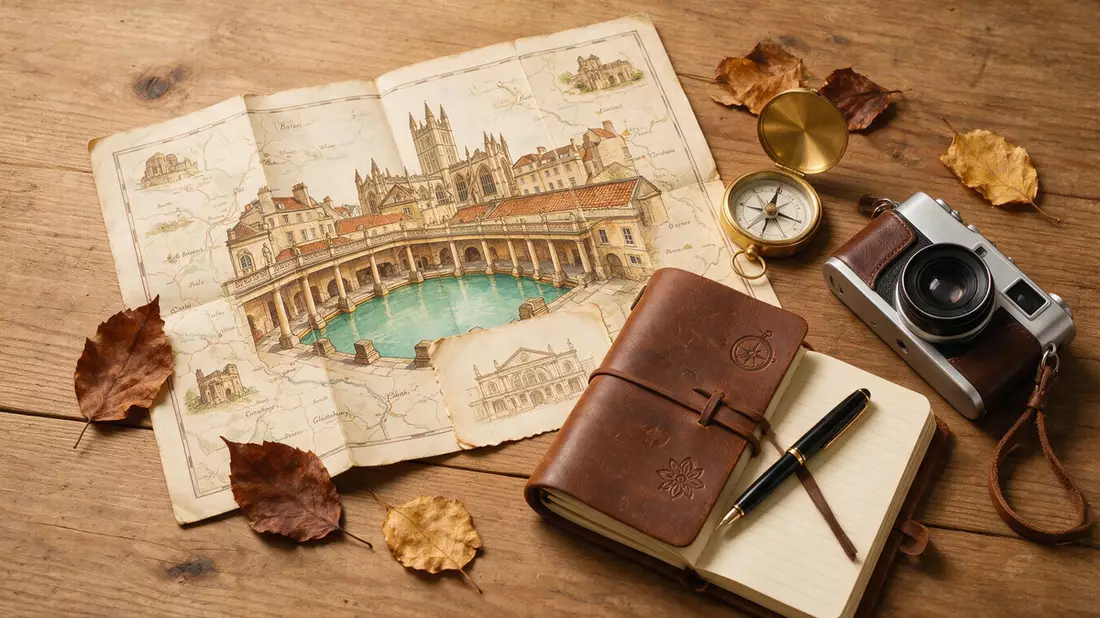
The Roman Baths in Bath are a rare place where a natural hot spring, Roman engineering and later Victorian architecture share the same intimate courtyard space. Set in the historic centre of Bath, they combine the remains of the Roman bathing complex of Aquae Sulis with an nineteenth-century museum and terraces that frame the steaming water below.
Hot springs and the birth of Aquae Sulis
The story of the Roman Baths begins with the geothermal springs that rise beneath what is now the heart of Bath in south-west England. The main spring brings mineral-rich water to the surface at a temperature above 40 °C, sustaining a flow measured in hundreds of thousands of litres per day, which made the site an obvious focus for settlement and ritual from an early date.hot mineral springs The Romans founded the town of Aquae Sulis in the first century AD, seeing the spring as both a resource and a sacred place linked with the goddess Sulis Minerva.Aquae Sulis emerged around the bath complex
A temple complex rose beside the spring in the later first century AD, forming a religious focus that drew visitors from across Roman Britain. The sacred character of the waters is clear from carved altars and dedicatory inscriptions found at the site, which record offerings made to Sulis Minerva. Around the spring the Romans constructed a substantial bathing establishment, with spaces for bathing, socialising and ritual that remained in use until the end of Roman rule in Britain in the fifth century AD.temple was constructed on the site between 60 and 70 AD
The Roman bathing complex: Sacred Spring and Great Bath
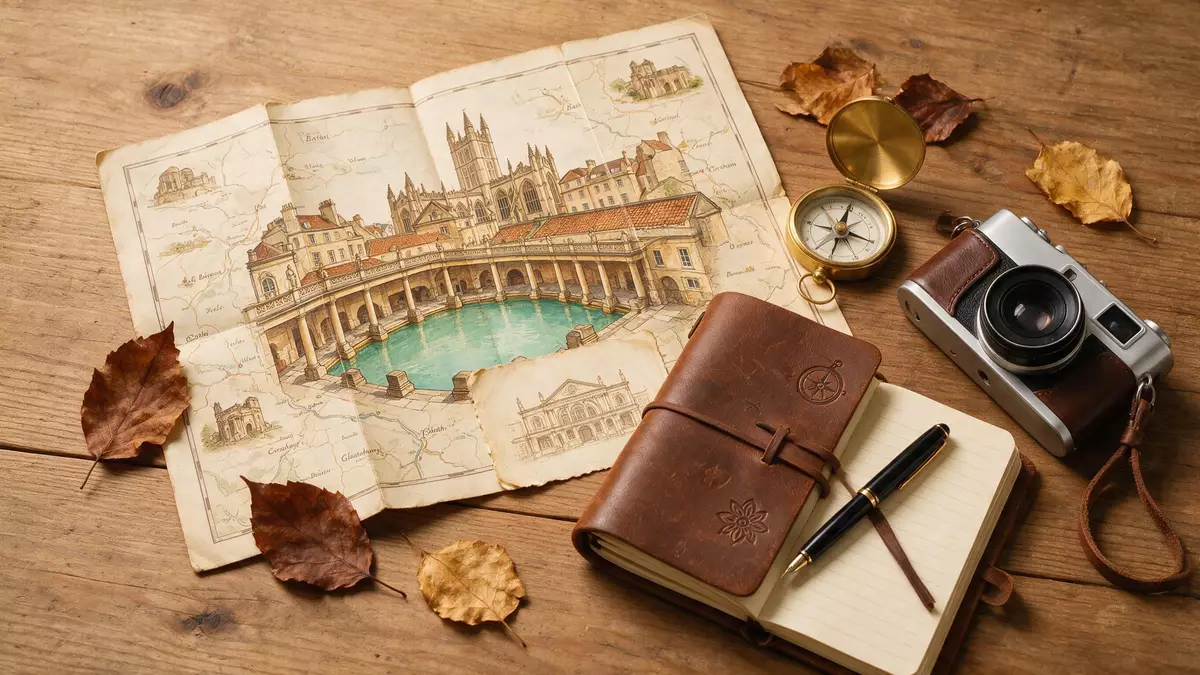
Seen from the museum walkways, the Roman Baths reveal a layered complex arranged around a central pool known as the Great Bath. This bath lies below present street level, in a hall defined by heavy stone walls and Roman columns, and it was once roofed, enclosing the water in a covered interior. Today the water still rises from the spring and is channelled into the pools, but bathing in the ancient structures is no longer permitted, preserving the archaeology while allowing visitors to walk around the edges and look down on the steamy surface.
The complex is conventionally described in four principal elements: the Sacred Spring, the Roman Temple, the Roman Bath House and the on-site museum. The Sacred Spring marks the point where hot water from deep underground first emerges into the constructed pool, enclosed in stone and lined by Roman masonry. Nearby the foundations and fragments of the temple of Sulis Minerva show how the religious and bathing functions were intertwined, with worship spaces closely integrated into the layout of the baths.Sacred Spring, temple and bath house Around these cores, subsidiary rooms of the bath house reflect the typical sequence of Roman bathing, with pools and heated rooms arranged to guide bathers through different temperature zones.Roman baths were designed for bathing and relaxing
From ruins to Victorian museum within a World Heritage city
After the end of Roman rule, the buildings around the spring fell into disrepair, and medieval and later structures rose above the buried baths. Only in the nineteenth century were the full remains of the Roman complex systematically uncovered and incorporated into a new public museum. The present building that frames the baths at street level was constructed in the 1890s, with façades and chambers in a consciously historical style that echo classical and Georgian forms while giving access down to the Roman remains below.buildings at street level date from the 19th century
The Roman Baths now sit within the wider World Heritage city of Bath, recognised by UNESCO for its Roman archaeology and Georgian architecture. The entire city forms a cultural World Heritage Site, first inscribed in 1987 and later recognised as part of The Great Spa Towns of Europe, with the Roman Baths and Pump Room highlighted as central elements in Bath’s spa tradition.City of Bath inscription Standing on the upper terrace, visitors see this continuity directly, with the stone balustrades and statues of the Victorian building looking down onto the Roman pools, and the tower and roofline of Bath Abbey rising beyond.
Visiting Roman Baths: what travellers from Western Europe should know
- Roman Baths stand in the centre of Bath in south-west England, close to Bath Abbey and within easy reach of Bath Spa railway station, which connects the city with London and other parts of England.
- The historic pools and structures lie below modern street level, so visiting involves descending stairways and walking on stone surfaces around the water and archaeological remains.
- The city of Bath is in England; the official language is English and the currency is the pound sterling.
Searching for Roman Baths on social platforms
These links open searches for Roman Baths on each platform.
Frequently asked questions about Roman Baths
Where are the Roman Baths and what is their setting?
Roman Baths stand beside Bath Abbey in the centre of Bath, England, surrounded by Georgian and Victorian streets that frame the excavated Roman pools below.
What can visitors expect to see at the Roman Baths?
Visitors walk around the Great Bath and Sacred Spring, explore rooms of the Roman bath house and view carved stones, inscriptions and everyday objects in the museum galleries.
What makes the Roman Baths distinctive among ancient sites?
The Roman Baths combine an active hot spring, substantial Roman remains and later architecture within a compact site that lies at the core of a recognised World Heritage city.