
Roman Baths in Bath, where hot spring and stone meet
Published on 09/19/2026 at 20:24 | Editorial responsibility: Rafael Müller, Editor-in-Chief AD HOC NEWS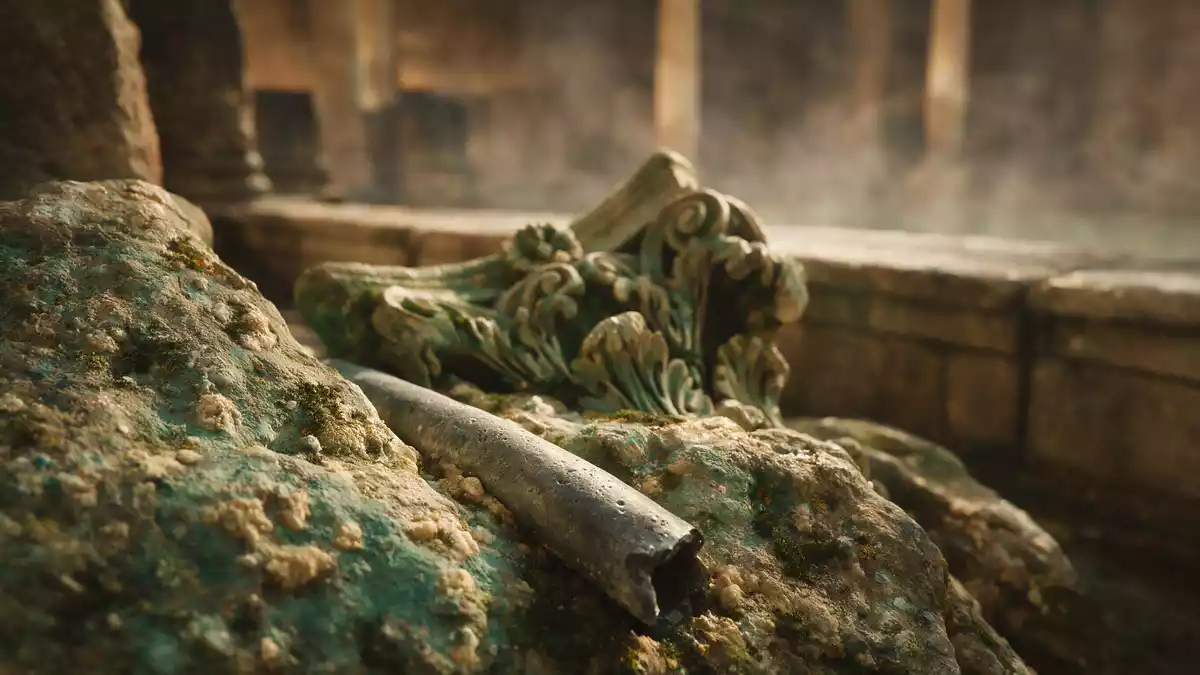
Roman Baths in Bath is a Roman-era bathing and temple complex built around a hot spring that rises through limestone beneath the Avon valley, enclosed today within Georgian and Victorian buildings at street level. The complex formed the core of the Roman town of Aquae Sulis in Roman Britain and stands within the UNESCO-listed historic fabric of Bath, where Roman remains and eighteenth-century architecture share the same urban block.
A hot spring at the heart of Aquae Sulis
The defining feature of Roman Baths is the mineral-rich spring that emerges from deep underground, feeding the pools with naturally heated water that rises at temperatures measured well above 40 °C. The main spring produces large volumes of water each day, a flow that sustained Roman bathing rituals and later British spa traditions over many centuries.Hot mineral springs The Romans built their complex directly around this source, capturing the water in reservoirs and channels before it reached the open baths.
Archaeological evidence indicates that the site of the spring was already a centre of worship for local Celtic communities before Roman conquest, with the waters dedicated to the goddess Sulis. When Rome established formal rule in Britain in the first century AD, builders constructed a temple complex here between about 60 and 70 AD, gradually adding the bathing facilities over the following centuries.Temple constructed in 60–70 AD The resulting town, Aquae Sulis, was laid out as a spa-focused settlement, its name tying the goddess Sulis to the Latin word for waters.
The Roman bathing and temple complex
Within the complex, four main elements structure a visit: the Sacred Spring, the remains of the Roman Temple, the Roman Bath House and a museum displaying artefacts from Aquae Sulis. The Sacred Spring marks the point where the hot water rises to the surface, enclosed by Roman stonework that frames the steaming pool as a focus of ritual and engineering. Around it, channels lead the water towards the Great Bath and other spaces in the bathing sequence.
The temple dedicated to Sulis Minerva occupied a prominent position near the spring, with architectural remains that include sculpted stonework and inscriptions recording dedications from visitors across Roman Britain. The bath house shows how the Romans organised their bathing routines, with rooms for different water temperatures and stone floors that once sat above hypocausts, the underfloor heating systems that warmed the spaces. Excavations have revealed the overall footprint of the baths, which cover an area of roughly one acre and measure about 110 yards from east to west and 40 yards from north to south.Extent of the Roman baths These remains sit below Bath’s present street level, giving visitors a layered view of ancient structures beneath later city fabric.
Georgian architecture above Roman stone
Although the bathing complex and temple date to the Roman period, the buildings that frame Roman Baths at street level belong largely to the eighteenth and nineteenth centuries. During the Georgian era, Bath architects such as John Wood the Elder and John Wood the Younger laid out neoclassical facades and formal public rooms around the spring, integrating the historic site into a planned spa city streetscape.Georgian buildings by John Wood These upper-level structures include the Pump Room, an elegant hall where visitors have historically gathered to drink the spring water.
The entire city of Bath, including Roman Baths, is recognised as a cultural World Heritage Site, first inscribed in 1987 and later included in The Great Spa Towns of Europe. The inscription highlights the combination of Roman archaeology, hot springs, Georgian architecture and town planning within a single urban landscape.Bath’s World Heritage status Roman remains centred on the temple of Sulis Minerva and the baths complex are described as among the most important north of the Alps, while the eighteenth-century buildings above them show how later generations shaped the spa environment around the enduring spring.
Visiting Roman Baths: what travellers from Western Europe should know
- Roman Baths stands beside Bath Abbey in the historic centre of Bath, with entrances facing Abbey Churchyard and streets such as Stall Street and York Street that define the surrounding block.
- The main route through the complex involves a series of interior levels, with stone steps and walkways leading down from street level to the Roman baths below.
- Bath is in south-west England and is reached by rail from major cities; Bath Spa railway station lies within walking distance of Roman Baths along level urban streets.
- The official language is English and the currency is the pound sterling.
Searching for Roman Baths on social platforms
These links open searches for Roman Baths on each platform.
Frequently asked questions about Roman Baths
Where are Roman Baths located?
Roman Baths is in the city of Bath in south-west England, beside Bath Abbey and within the streets that frame the historic centre.
What can visitors expect to see inside Roman Baths?
Visitors move from Georgian-era rooms into the excavated Roman level, where the Sacred Spring, the Great Bath, temple remains and a museum of artefacts reveal the site’s layered history.
What makes Roman Baths distinctive among historic sites?
Roman Baths combines an active hot spring, substantial Roman bathing and temple remains, and later Georgian architecture within a single compact block at the heart of a World Heritage city.


